Bremen Poster — Germany Wall Art
Minimalist posters and wall art of Bremen, Germany — premium print on 170 gsm coated silk paper, shipped to 32 countries.
Bremen on the wall, with all its quiet Hanseatic character
Our designs
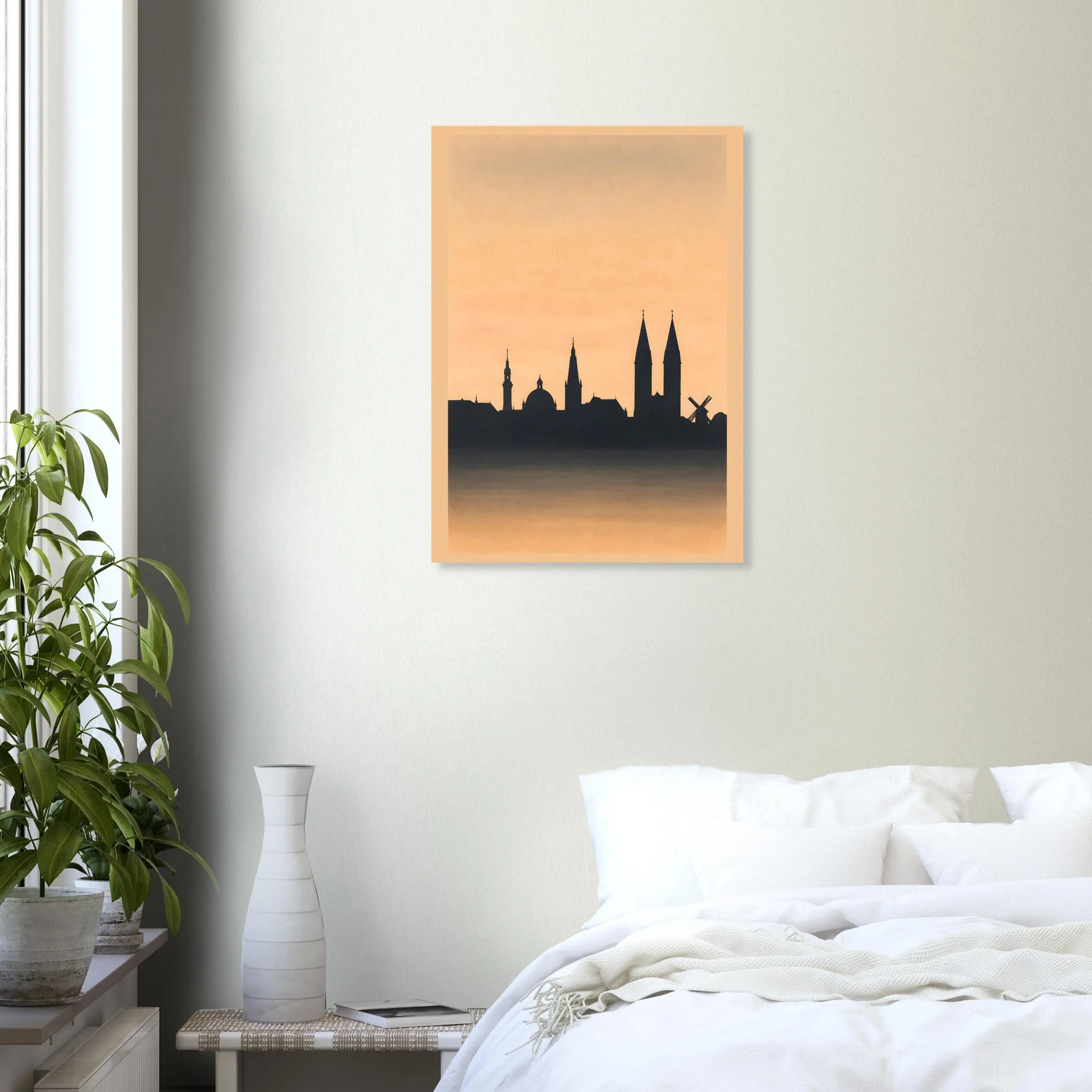
Silhouette skyline
from €19
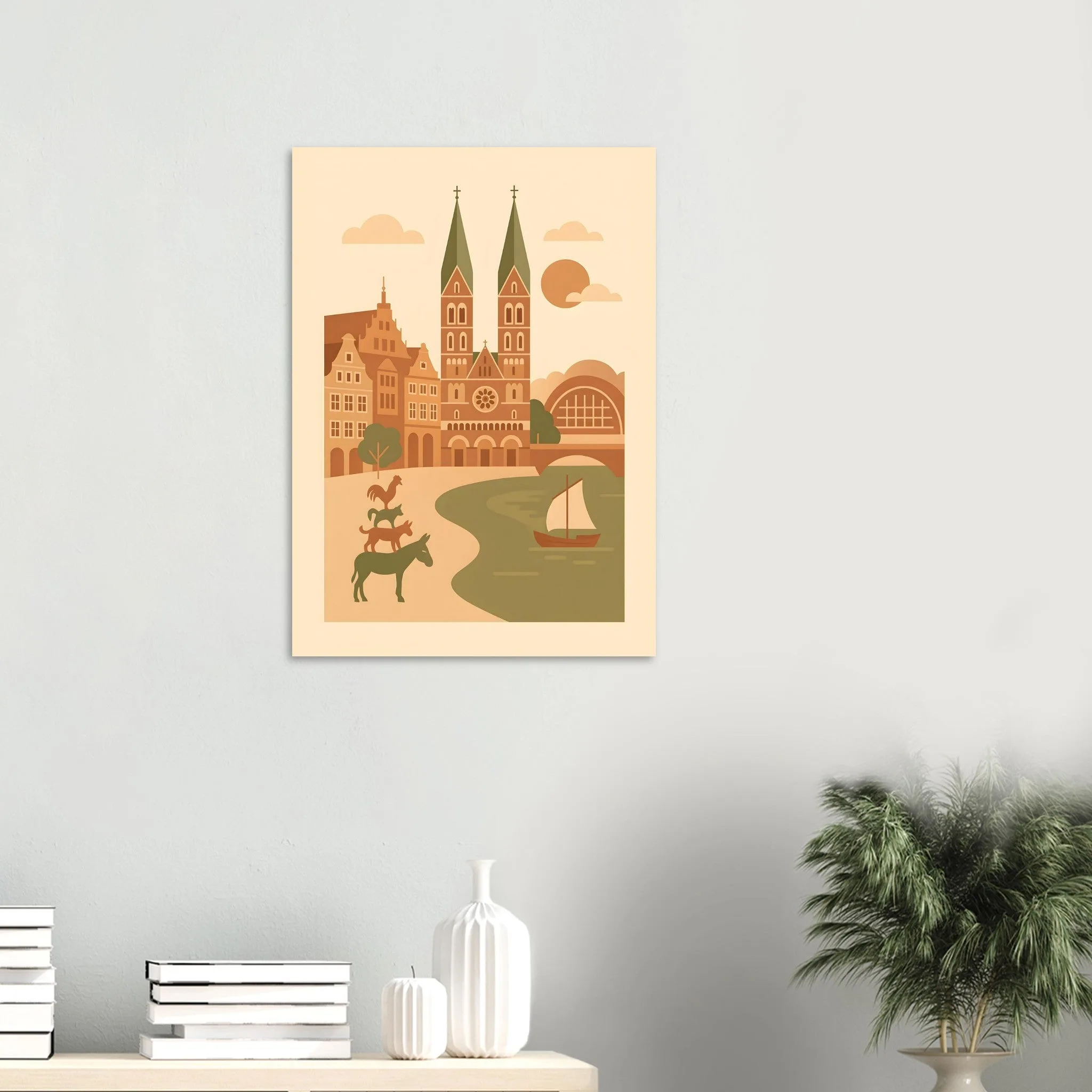
Flat vector illustration
from €19
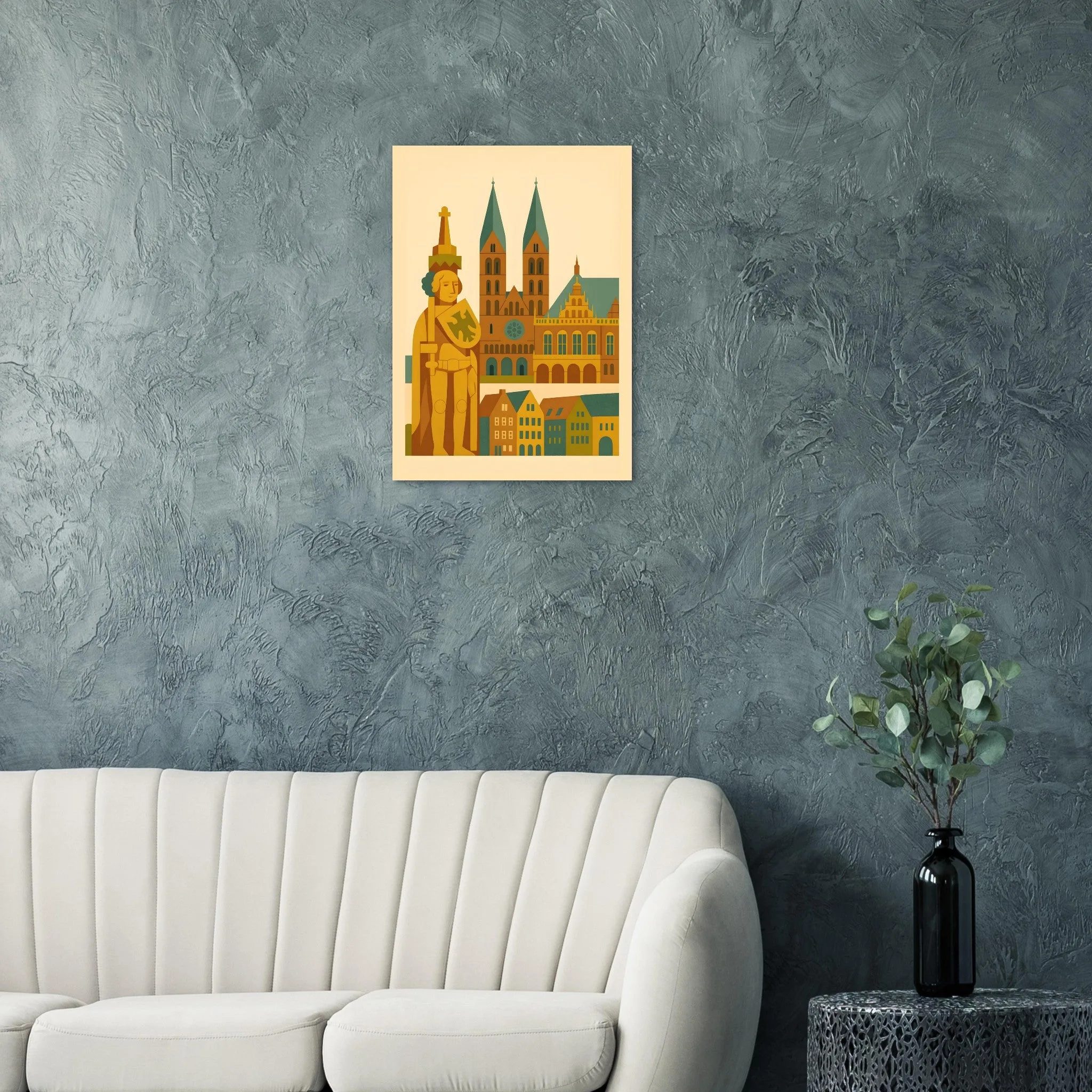
Mid-century modern
from €19
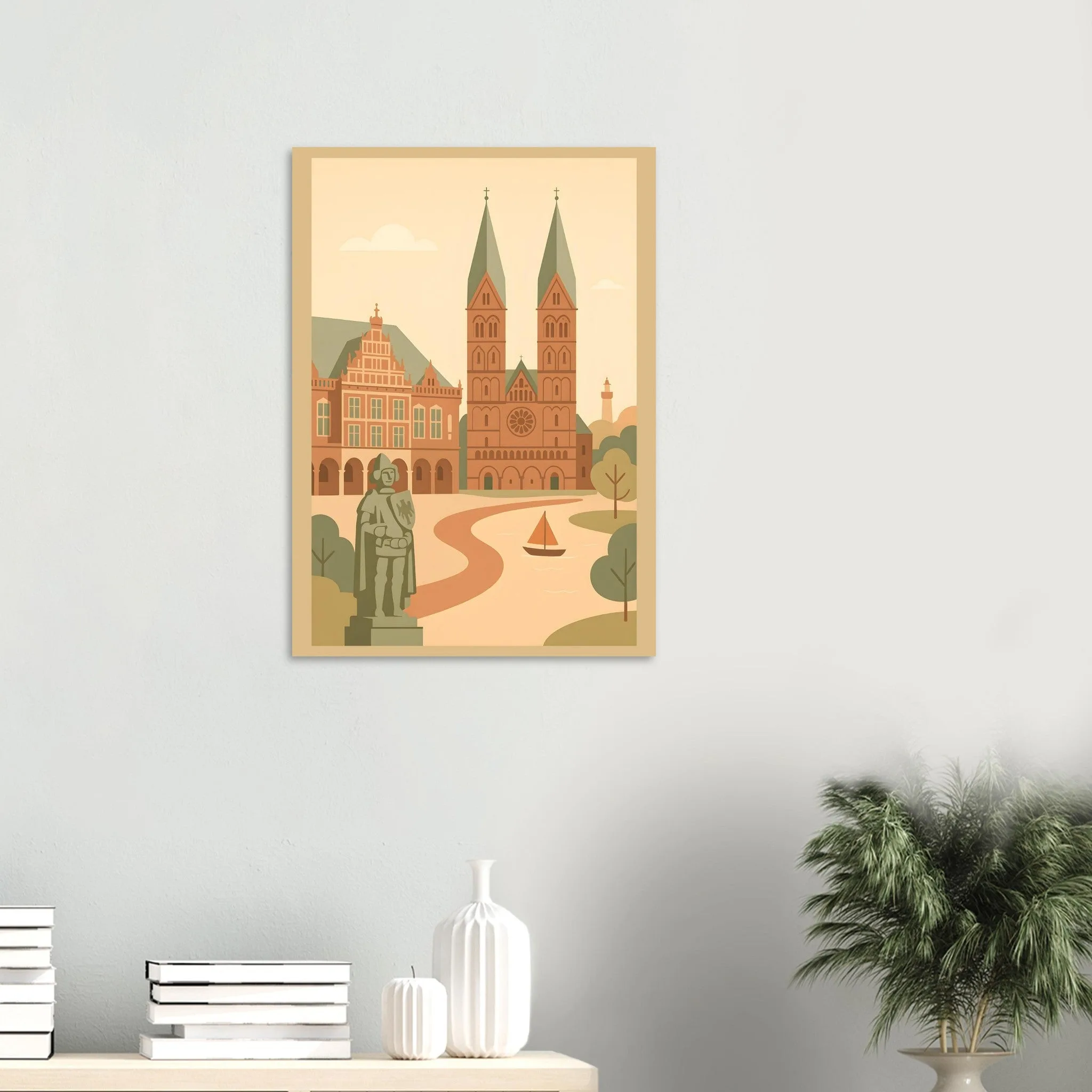
Flat vector illustration
from €19
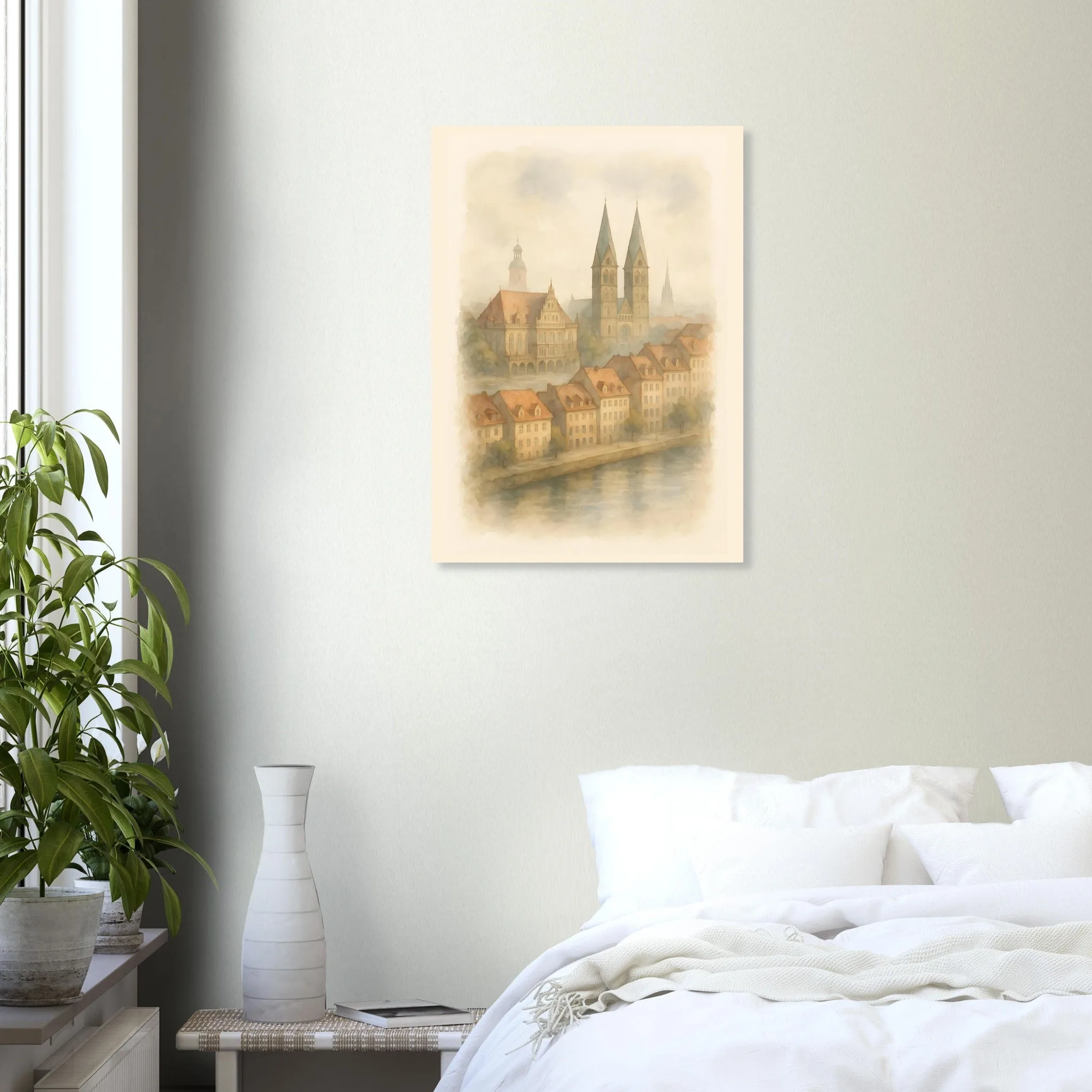
Watercolour landscape
from €19
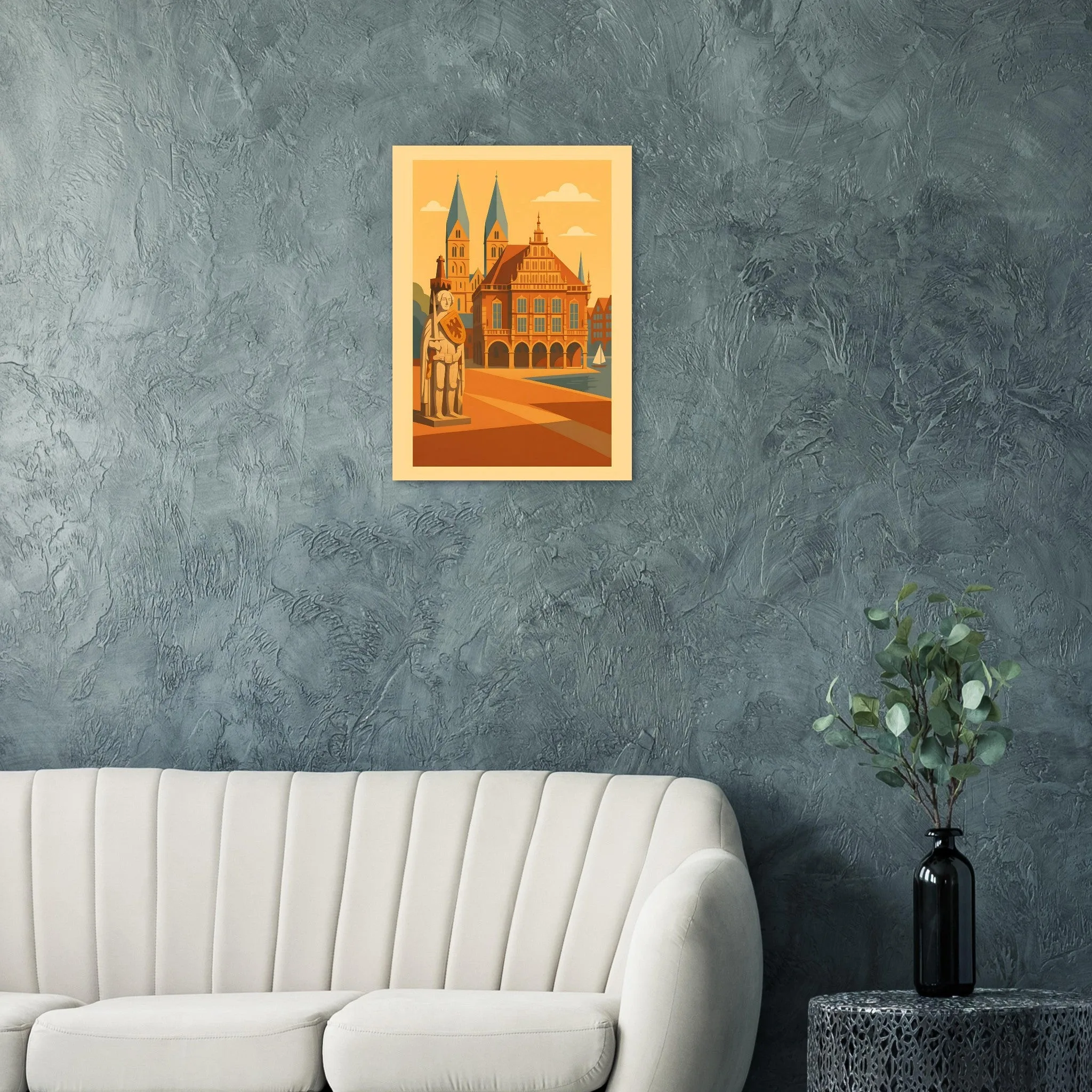
Vintage travel poster
from €19
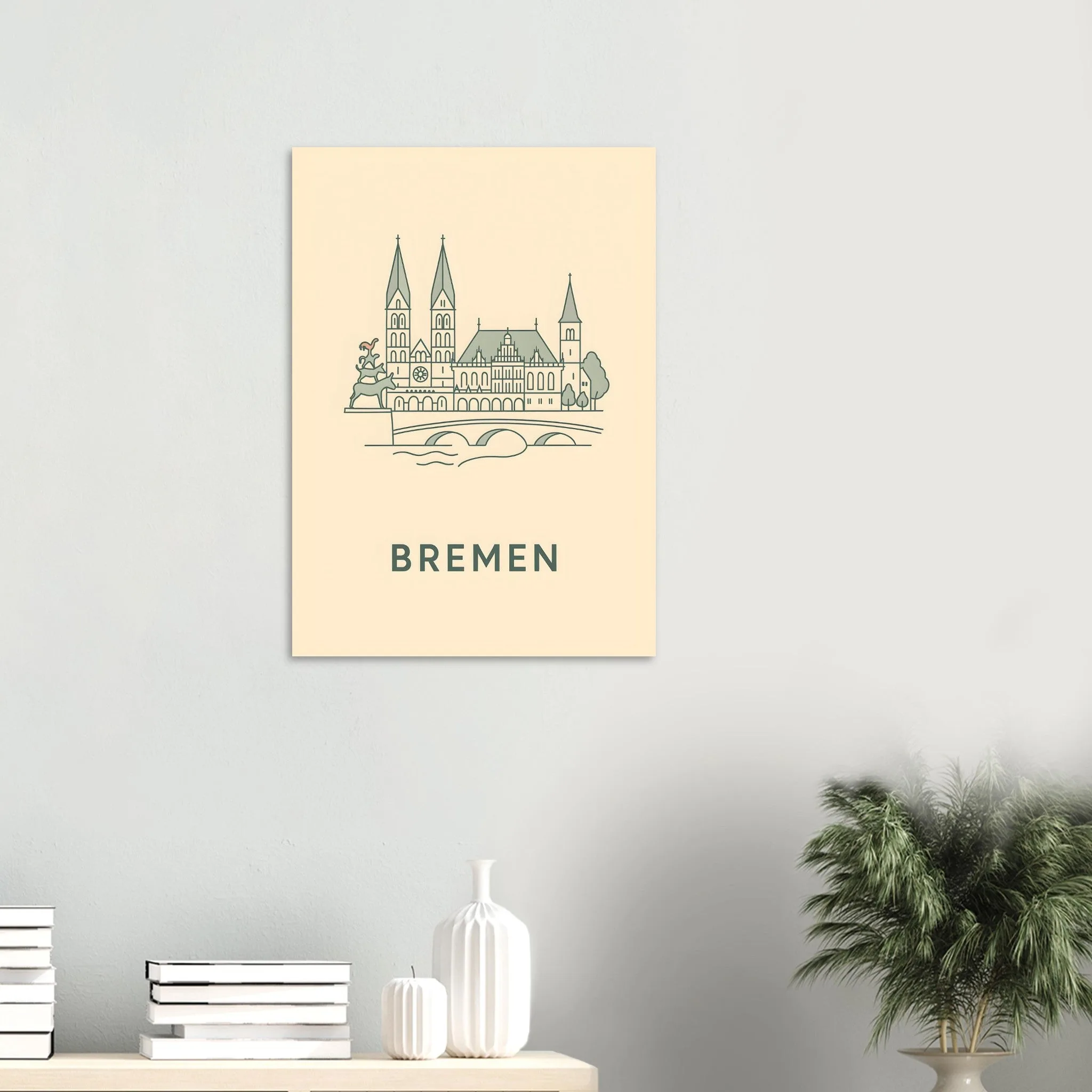
Minimalist line art
from €19
Bremen has a way of feeling familiar even before you know it well. The city sits on the Weser in northern Germany, a port city with a long Hanseatic memory and a rhythm shaped by water, trade, and everyday life. In the old centre, the Town Hall and Roland still hold the square with a calm kind of dignity, while the cathedral nearby adds a different note: stone, shadow, and centuries of weather.
At 53.133333333 latitude and 8.733333333 longitude, Bremen is both precise and atmospheric, the capital of the Free Hanseatic City of Bremen and part of a two-city-state that also includes Bremerhaven. With an area of 419.38 km² and a population of 693,204, it is large enough to feel varied, yet intimate in the details that stay with you: the river air, the brick facades, the soft bustle around the market square, and the sense that history still belongs to daily life.
People often remember Bremen in fragments like these. A bridge at dusk. The sound of bicycles over stone. The old Hanseatic confidence in the architecture. For some, it is home; for others, a place visited once and not quite forgotten. That is usually where a city becomes wall art.
Bremen belongs to that rare group of cities that reveal themselves slowly. Officially the City Municipality of Bremen, it is the capital of the German state of the Free Hanseatic City of Bremen, and it carries that title with an unforced sense of continuity. The city is known as an important port city, and even if you never stand at the waterfront with the wind coming off the river, you can feel how the Weser shapes its mood. Bremen has the measured confidence of a place that has done business for centuries, but it is never only practical. It is also a city of thresholds: between old and new, river and street, civic pride and quiet neighbourhood life.
The centre holds some of the city’s best-known images. The Town Hall and the Roland statue stand in the market square, and together they give Bremen a profile that feels both ceremonial and lived-in. Nearby, the cathedral adds vertical weight to the skyline, while the narrow lanes around the old centre soften the grandeur with everyday textures. You notice cobbles, brick, windows reflecting a pale northern sky. Bremen is the 11th-largest city in Germany and the second-largest in Northern Germany after Hamburg, yet it often feels smaller than those numbers suggest, especially at street level, where the city’s character is made from pauses, not spectacle.
There is also something distinctly Hanseatic in the way Bremen holds itself. The old trading city remembers its place in the network of North Sea commerce, but that history survives less as museum display than as atmosphere. The language, too, carries traces of regional identity. In everyday speech, people may still hear the local Bremen dialect and the broader northern cadence that marks the city as part of Germany’s north-western world. It is a city where the past has not been staged away; it remains folded into the present, in the façades, in the names, in the way people move through the centre with a certain unhurried assurance.
For many, Bremen is also a memory city. Former residents remember the river and the long light of summer evenings. Visitors remember the square, the stately civic buildings, the sense of being in a place that values its own history without turning it into theatre. Locals carry smaller memories: a route to work, a favourite bakery, the sound of rain on the tram stop, the way the city changes colour after dark. That is why Bremen works so well as a subject for the home. It does not need exaggeration. Its appeal lies in recognition.
Because Bremen is both specific and open-ended, it suits many kinds of interiors. A calm hallway can hold its civic geometry well. A living room with warm wood and linen can draw out the softness of the river city. Cooler, more minimal rooms can benefit from Bremen’s stone, brick, and restrained northern palette, which naturally gives structure without heaviness. The city’s visual language is balanced: enough heritage to feel rooted, enough openness to feel contemporary.
Finding the right Bremen piece for your room
Choosing Bremen wall art often starts with the room rather than the city itself. In a smaller hallway or reading corner, a compact format can echo the neatness of the old centre and keep the wall from feeling crowded. Over a sideboard or in a narrow vertical space, the city’s architecture and skyline details tend to work beautifully because Bremen naturally carries a sense of order. In a larger living room, dining area, or above a sofa, a bigger format can let the river-city atmosphere breathe, especially if the room already has simple furniture and open surfaces.
Warm interiors usually welcome Bremen’s quieter side: the ochres of historic façades, the soft greys of stone, the muted greens that often belong to northern light. In cooler interiors, the city’s clean lines and civic landmarks bring just enough warmth through memory and association. If your room is already busy, Bremen can act as a visual pause. If the space is sparse, it adds character without noise. That balance is part of what makes the city so adaptable at home.
Framed or unframed can both work, depending on the room and the mood you want. A frame can make the piece feel settled and architectural, while an unframed print keeps the look lighter and more immediate. The important thing is that Bremen does not ask for decoration around it. It has enough presence of its own.
Why Bremen makes such a thoughtful gift
A city print is often most meaningful when it carries a personal story, and Bremen has many. It can be a gift for someone who once lived by the Weser and misses the shape of the streets, the sound of the tram, or the way the light settles over the square in the evening. It can also suit travellers who remember the market square, the old Hanseatic atmosphere, or a weekend that felt longer than it was. Expats often appreciate a city they can live with every day, one that feels less like a souvenir and more like a piece of continuity.
Bremen also makes sense for locals, especially when the gift needs to feel personal without becoming overly sentimental. For a housewarming, it brings a sense of place to a new wall. For a birthday, it can be a quiet nod to shared history. At Christmas, it becomes a present that feels considered rather than hurried. And for retirement, a city with such a strong civic memory can be a lovely way to honour where someone has spent years of their life. The best gifts often speak gently, and Bremen does exactly that.
There is a certain comfort in giving someone a city they already know in their bones. A place can hold family stories, first jobs, student years, winter walks, or the simple routine of daily life. Bremen carries all of that well. It is not loud about itself, and that restraint makes it easy to live with.
What sets our Bremen posters apart
Our Bremen collection is shaped by verified geographic and historical facts, so the city remains recognisable in the details that matter. The relationship to the Weser, the position in northern Germany, the role as capital of the Free Hanseatic City of Bremen, and the presence of landmarks such as the Town Hall, Roland, and the cathedral all help anchor the design in the real city rather than in a generic idea of it. That matters when the place is personal. People notice when a city feels true.
The prints are produced locally and made on 170 gsm FSC semi-gloss silk paper with archival inks, which gives the surface a refined, durable finish without losing warmth. The palette is kept minimalist and gentle, so the work can sit easily in modern homes while still carrying the character of Bremen’s stone, brick, and northern light. The result is not loud decoration, but a calm visual memory that feels at home in both contemporary and classic interiors.
Bremen does not need to be reinvented to be beautiful. Its strength is already there: in the river air, the civic square, and the quiet confidence of a city that knows its own name.
Sizes, prices, and what to expect
If you are choosing by budget or wall size, the format range keeps things simple. A4 starts at €19, which works well for smaller spaces, shelves, or gallery walls. A3 is €29 and suits most standard rooms if you want a clear presence without committing to a large statement. The 30×40 cm size is €34 and often feels especially balanced above furniture or in a home office. The 50×70 cm format is €49 and gives Bremen room to breathe in larger living spaces, hallways, or open-plan rooms.
The choice between framed and unframed usually comes down to how finished you want the room to feel. Unframed keeps the look light and flexible, while a frame can add structure and help the piece settle into the rest of the interior. Either way, the quality of the print is designed to hold fine detail and a soft tonal range, so the city’s atmosphere remains clear from near and far.
For many buyers, the practical question is not whether Bremen belongs on the wall, but which version of the city feels right for the room they already have. That is often the best way to choose: by the memory you want to keep close, and the space where it will quietly live.
Frequently asked questions
What sizes do Bremen posters come in?
Our Bremen posters come in four standard sizes: A4 (21×30 cm) from €19, A3 (30×42 cm) from €29, 30×40 cm from €34, and 50×70 cm from €49. All sizes are printed on 170 gsm semi-gloss FSC-certified silk paper.
How long does shipping take?
We print locally via Gelato in 32+ countries. In Europe, your order typically arrives within 3–5 business days of purchase. Free EU shipping on every order — no minimum.
What's the print quality like?
We print on 170 gsm FSC-certified semi-gloss silk paper using archival inks. Colours are warm, muted, and lightfast for years — made to stay on a wall, not fade in a season.
Can I order a framed Bremen poster?
Framed options are coming soon. For now, we ship unframed posters — our standard sizes fit common off-the-shelf frames from IKEA, HAY, Desenio, and others.
Where do the designs come from?
Each Bremen design begins with verified facts from open geographic sources — Wikipedia, OpenStreetMap, GeoNames. We only depict what's historically and culturally rooted in a place, never inventions.
Can I return my poster if I'm not happy?
Yes. We offer 30-day free returns. If your poster doesn't feel right once it's on your wall, send it back for a full refund.