Dresden Poster — Germany Wall Art
Minimalist posters and wall art of Dresden, Germany — premium print on 170 gsm coated silk paper, shipped to 32 countries.
Dresden wall art for people who know the city by heart
Our designs
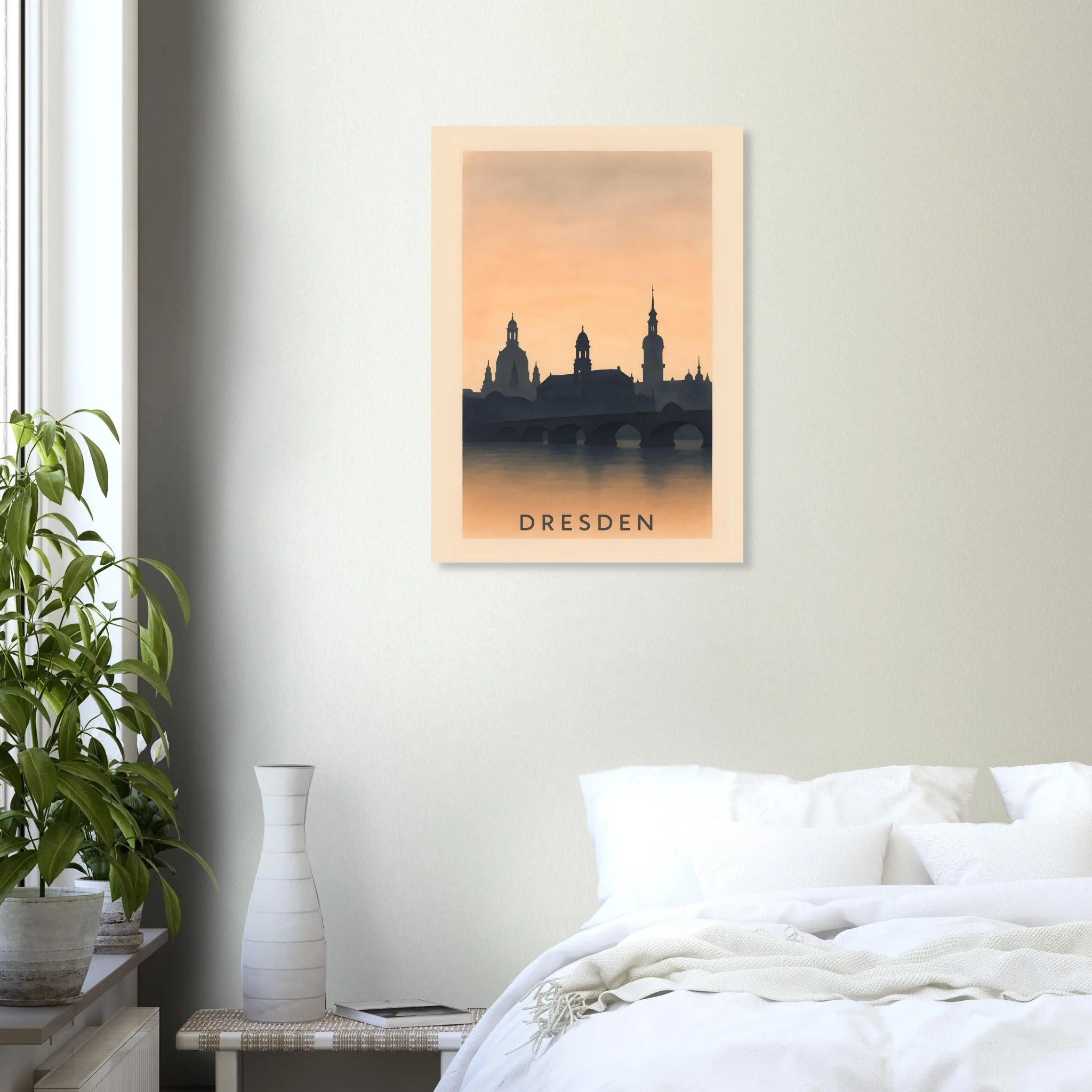
Silhouette skyline
from €19
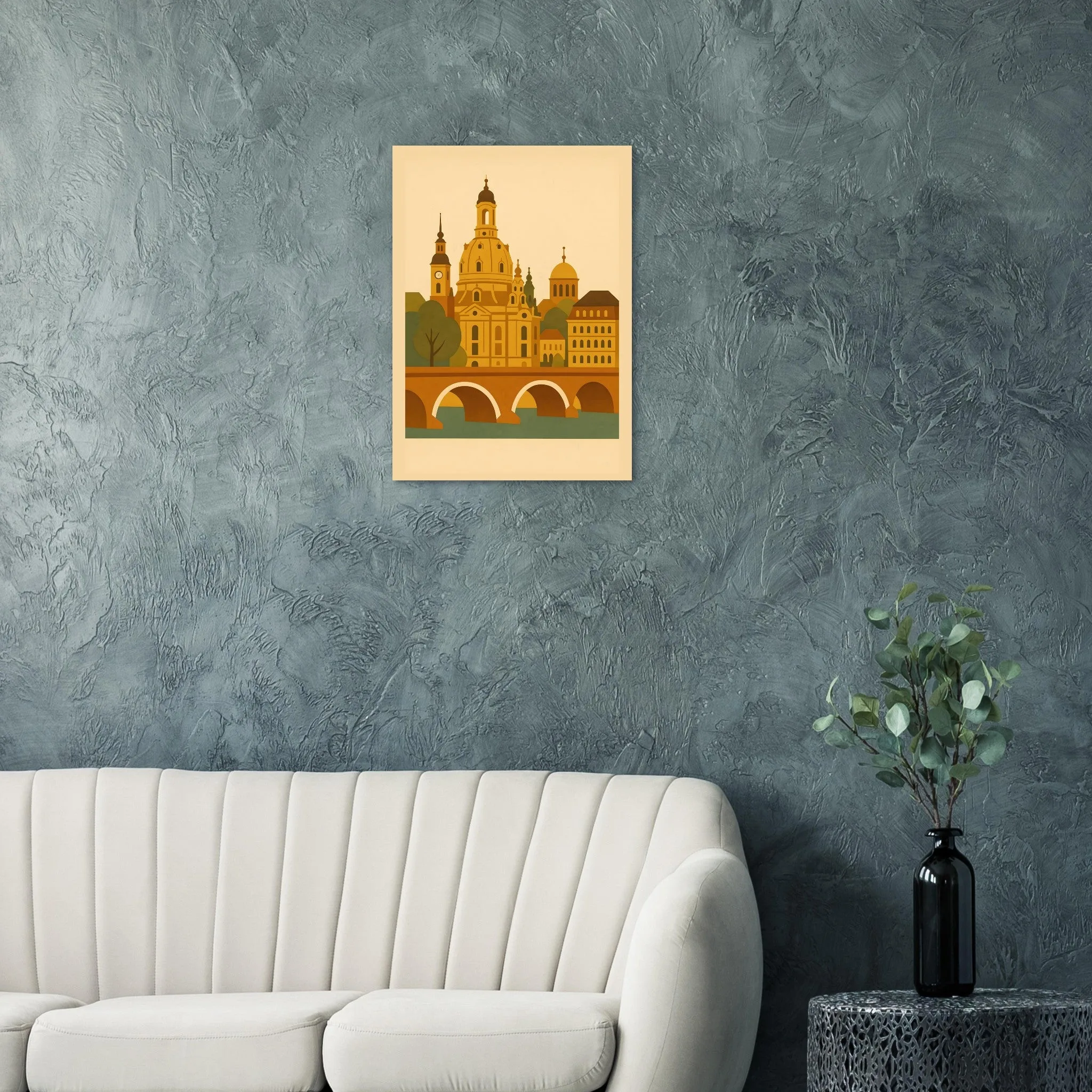
Mid-century modern
from €19
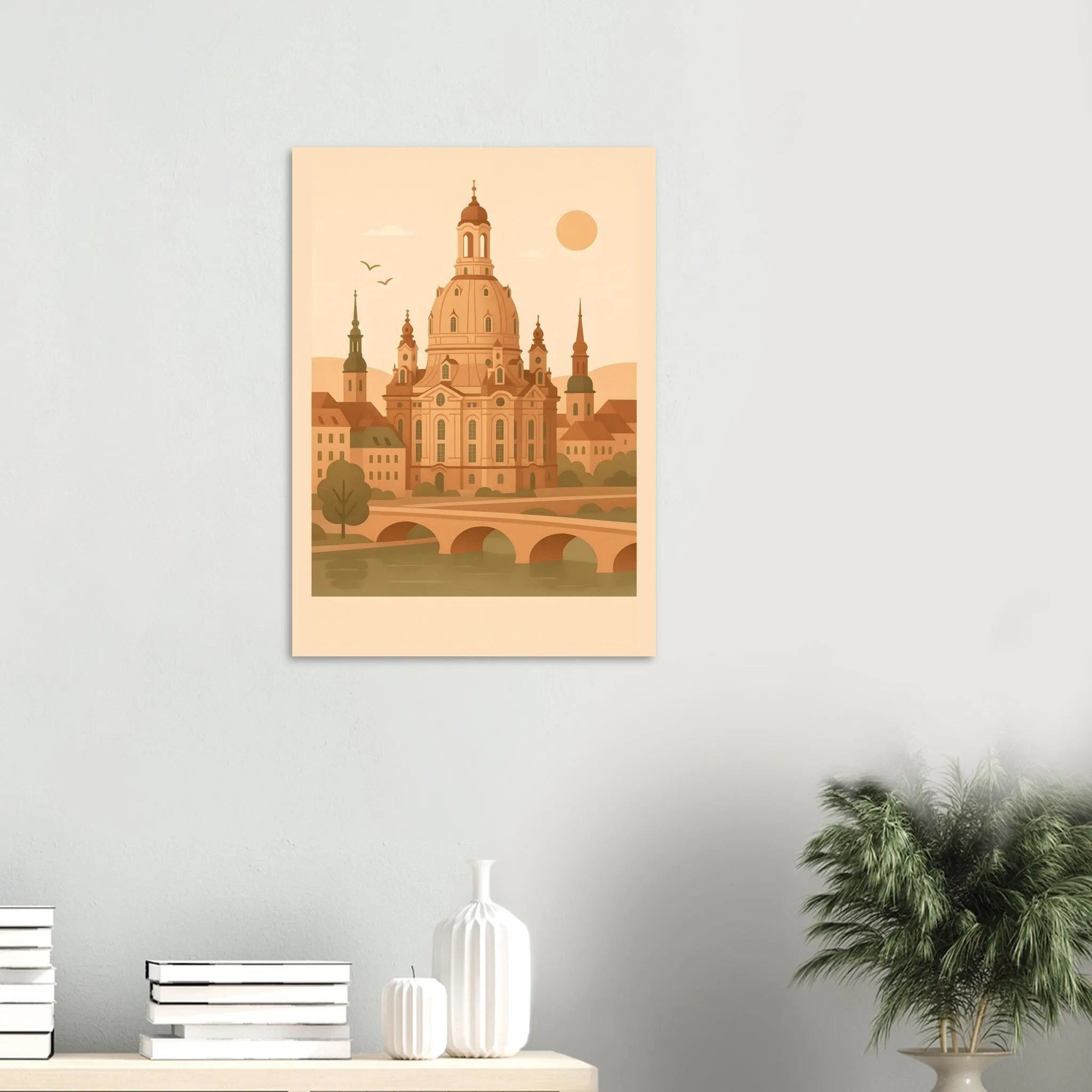
Flat vector illustration
from €19
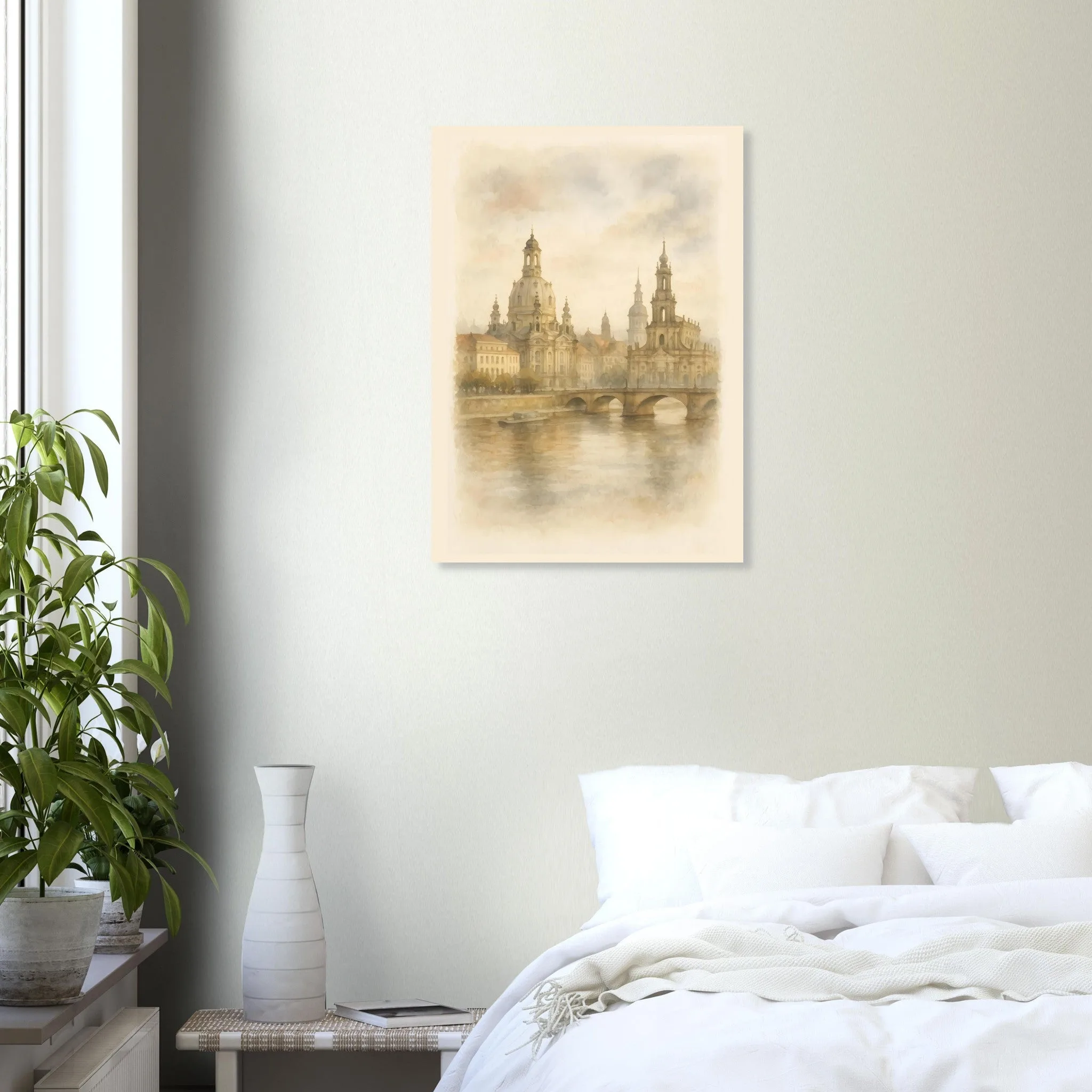
Watercolour landscape
from €19
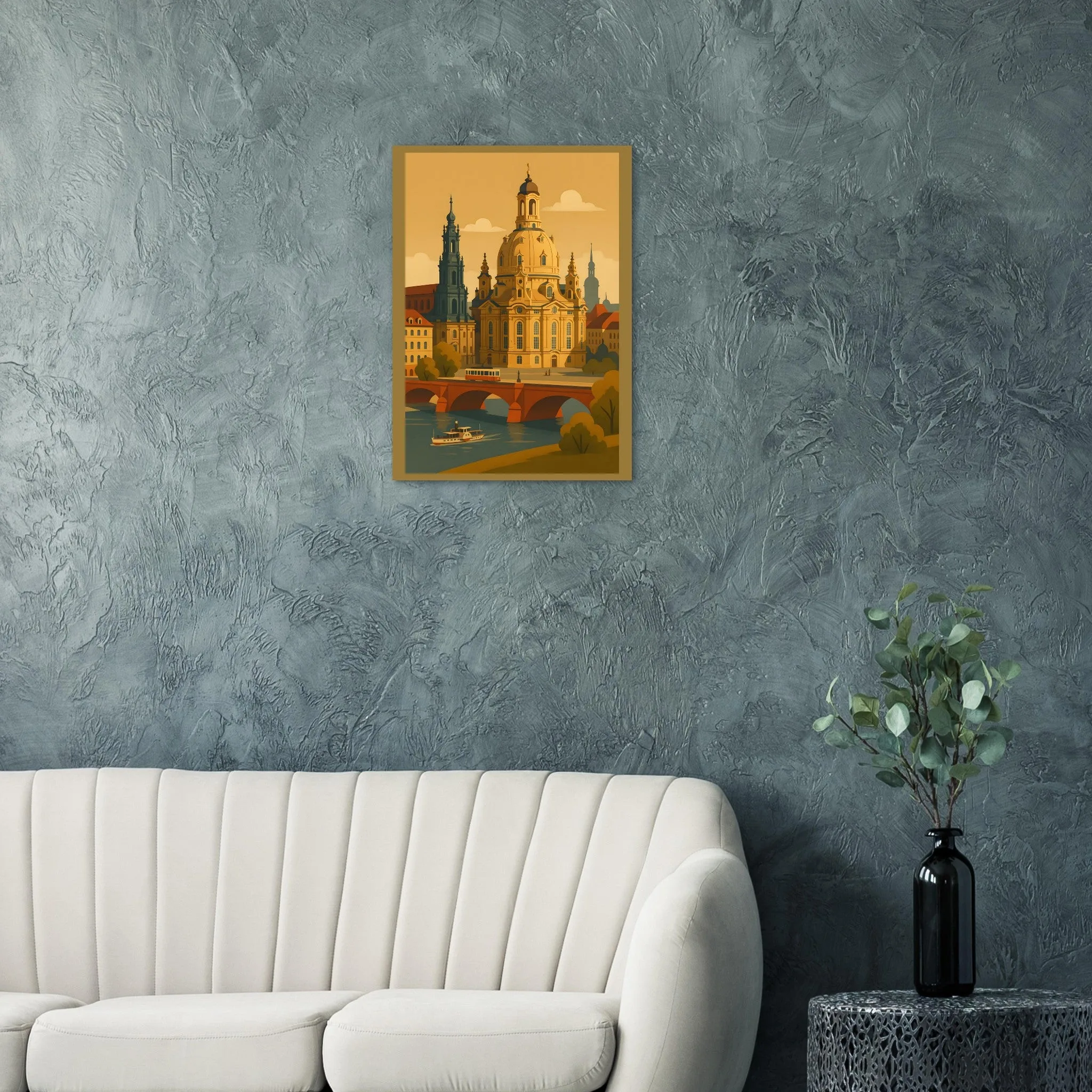
Vintage travel poster
from €19
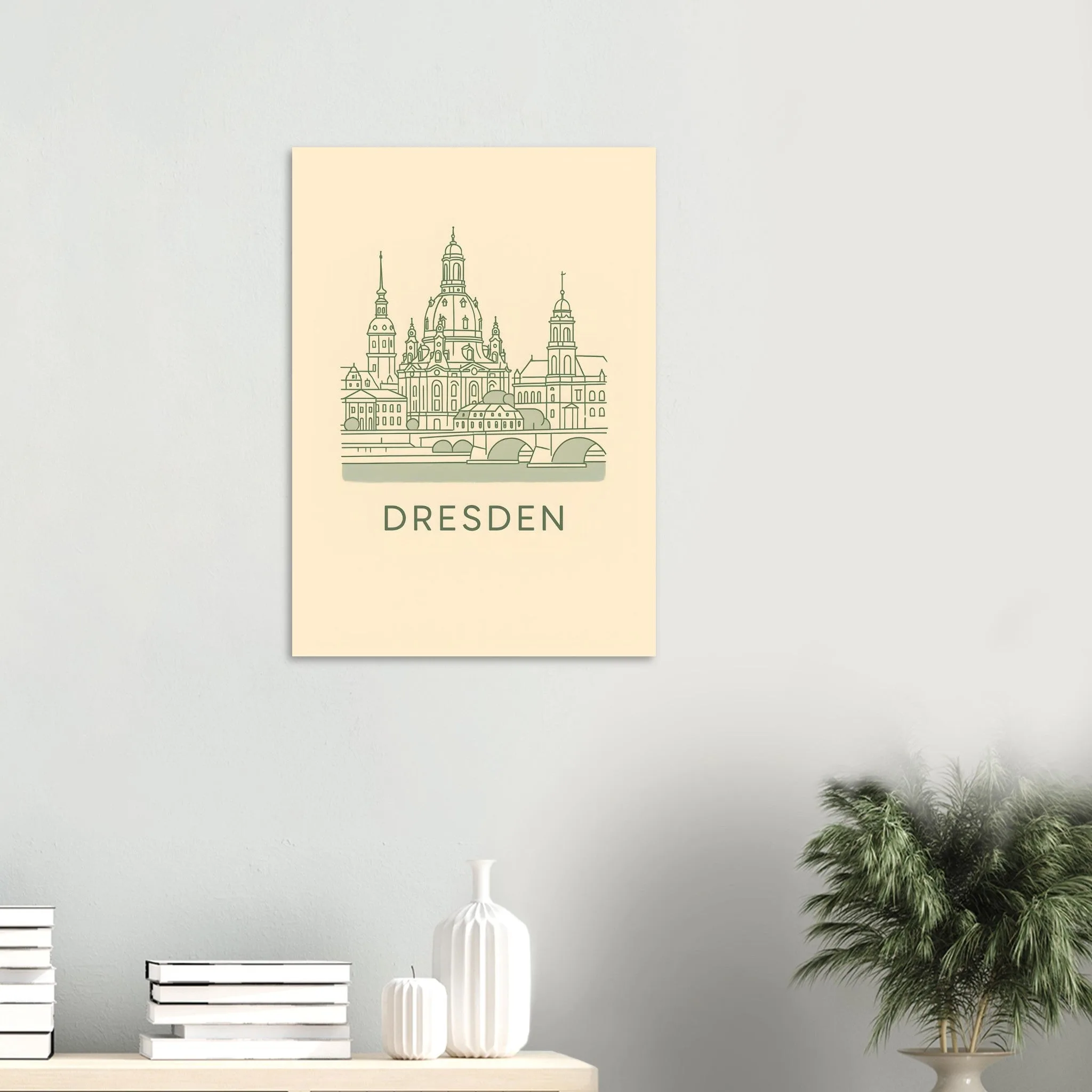
Minimalist line art
from €19
Dresden has a way of staying with you. The light on the Elbe, the soft curve of the river through the city, the stone facades that seem to catch gold at dusk — it all lingers long after you’ve left. As the capital of Saxony and one of Germany’s most distinctive cities, Dresden feels both grand and intimate at once: a place of broad squares, quiet courtyards, and views that open suddenly onto domes, bridges, and the long line of the river.
Founded in 1206, the city has grown into a place of around 649,252 people, spread across 328.48 square kilometres and sitting at an elevation of about 126 metres. Those numbers matter, but they only tell part of the story. Dresden is also a city of memory — of rebuilding, of continuity, of detail preserved in stone and in habit. You can feel that in the old centre, in the rhythm of the streets, and in the way locals speak about home with a kind of quiet pride.
For many people, Dresden is tied to a first walk along the river, a train arrival at the station, a study exchange, a family visit, or a long chapter of life lived in Saxony. It is a city that can feel ceremonial and everyday at the same time. That balance — elegant but lived-in, historic but still moving — is what gives Dresden such a lasting pull.
Dresden’s character is often described through its landmarks, but the city is just as memorable in the spaces between them. There is the sweep of the Elbe, the calm geometry of bridges, the changing light on the old town, and the sense that the city opens and closes like a series of scenes. Some places announce themselves loudly; Dresden tends to unfold. Its skyline is famous, of course, but the atmosphere is shaped just as much by quieter things: the pace of a tram passing through, the pale stone warmed by afternoon sun, the feeling of standing somewhere that has been carefully held together across centuries.
That long history begins in 1206, and it still gives the city a certain gravity. Dresden is the capital of Saxony, the largest city in the state, and one of Germany’s major urban centres, with a population of 649,252. It covers 328.48 square kilometres, rising to an elevation of about 126 metres above sea level. Those facts sit behind the experience of the city: the breadth of its streets, the openness of its views, the way it feels expansive without losing intimacy. Dresden is big enough to have many layers, yet specific enough that people remember a corner, a bridge, a façade, or a particular winter light and call it theirs.
There is also a particular Dresden mood that many visitors notice only after they’ve left: a blend of elegance and restraint. The city’s historic centre carries the weight of memory, while the wider urban area stretches outward into places like Freital, Pirna, Radebeul, Meissen, Coswig, Radeberg, and Heidenau, forming a larger lived landscape of around 790,000 people. That wider fabric matters, because Dresden is not just a postcard view. It is a region of daily routines, train lines, riverbanks, markets, and neighbourhoods where people know the seasons by the trees and the streets by the way the air feels in them.
For many, the city’s charm lies in its contrasts. It can feel ceremonial in the morning and soft-edged by evening. It can seem stately in the centre, then unexpectedly gentle a few streets away. The old squares, the river, and the city’s cultural reputation all contribute to that sense of depth, but so does the ordinary life around them. Dresden is the kind of place where memory attaches itself to small details: the sound of footsteps on stone, the winter haze over the water, the glow of windows after dark. That is why it often stays with former residents, students, travellers, and anyone who has formed a personal map of the city.
Choosing a Dresden poster for your home
When you bring Dresden into a room, you are usually choosing between two moods: a wide, architectural view that suits a larger wall, or a quieter composition that feels more intimate in a study, hallway, or bedroom. A dining room or living room often works well with a larger format, because Dresden’s broad river spaces and skyline details need a little breathing room. Smaller prints can be especially effective in narrow spaces, where a single view of the city can create a sense of depth without overwhelming the wall.
Style also changes the feeling. Warm interiors — oak, beige, terracotta, brass, natural linen — tend to pair beautifully with softer, earthier Dresden motifs, especially when the city is rendered in muted tones that echo stone and evening light. Cooler interiors, with grey, white, black, or steel accents, can suit cleaner compositions that emphasise the city’s lines, bridges, and architectural order. If your home already has a lot of texture, a calmer Dresden print can bring balance. If the room is minimal, a more detailed view can add just enough narrative to make the space feel personal.
As a rule of thumb, A4 works well for shelves, gallery walls, and small corners; A3 is a versatile choice for bedrooms and workspaces; 30×40 cm gives a slightly more substantial presence without feeling oversized; and 50×70 cm makes sense when the wall needs a clear focal point. The right choice is often less about the room’s size than about the feeling you want to create: a memory held close, or a city given room to breathe.
Dresden posters as gifts
A Dresden poster can be a deeply personal gift because it usually means more than decoration. It speaks to belonging. Former residents often recognise the feeling immediately — a gift like this can bring back the shape of a city they know by heart, from familiar streets to the wider Saxon landscape. It is also a thoughtful choice for travellers who left a piece of themselves there, students who spent a formative year in the city, expats building a home elsewhere, or locals who simply feel proud to have come from Dresden.
The occasions are easy to imagine: a housewarming, when someone is still deciding how to make a place their own; a birthday, when you want something more lasting than a passing trend; Christmas, when gifts often carry memory and warmth; or a retirement gift, especially for someone whose life has been shaped by work, family, or long years in Saxony. Because Dresden is a city associated with continuity, a print of it often feels especially fitting when life itself is changing.
What makes the gift resonate is not only the city itself, but the story behind it. A poster can recall a first apartment near the centre, a favourite walk by the river, a museum visit on a cold afternoon, or the specific pleasure of returning after years away and finding the city still recognisable. That kind of recognition is hard to wrap, which is exactly why it makes such a good present.
What makes our Dresden posters different
Our Dresden posters are designed to feel grounded in the place itself rather than in passing trends. We work with verified geographic and historical facts, so the city behind the image is treated with care: Dresden as Saxony’s capital, founded in 1206, shaped by the Elbe, and known for its distinctive urban scale and historic presence. The aim is not to over-explain the city, but to let the design carry a sense of truth and atmosphere.
We also keep the look warm and minimal, so the artwork can sit easily in both modern and more traditional interiors. The prints are produced locally, on 170 gsm FSC-certified semi-gloss silk paper with archival inks, which gives them a soft finish and a lasting colour depth without gloss. If you prefer to frame your print, that works beautifully; unframed, it keeps a lighter, more flexible feel, especially if you’re building a gallery wall or moving between homes.
In other words, the difference is not just visual. It is in the care taken to make the city feel familiar rather than generic. Dresden deserves that kind of attention.
Sizes and prices
If you are choosing by budget as much as by wall size, the range is straightforward. A4 starts at €19, A3 at €29, 30×40 cm at €34, and 50×70 cm at €49. That makes it easier to match the print to the room without overthinking it: a smaller format for a quiet spot, a larger one when you want the city to take up more visual space.
For many homes, the best choice is the one that fits naturally into the room rather than the one that tries to dominate it. A Dresden print can be a subtle nod to a place you love or a more present statement piece, depending on scale. Either way, it carries the same thing: a city of river light, historic stone, and lived memory.
Dresden is one of those places that seems to live in layers — the city you see, the city you remember, and the city that quietly returns when you look at it again.
Frequently asked questions
What sizes do Dresden posters come in?
Our Dresden posters come in four standard sizes: A4 (21×30 cm) from €19, A3 (30×42 cm) from €29, 30×40 cm from €34, and 50×70 cm from €49. All sizes are printed on 170 gsm semi-gloss FSC-certified silk paper.
How long does shipping take?
We print locally via Gelato in 32+ countries. In Europe, your order typically arrives within 3–5 business days of purchase. Free EU shipping on every order — no minimum.
What's the print quality like?
We print on 170 gsm FSC-certified semi-gloss silk paper using archival inks. Colours are warm, muted, and lightfast for years — made to stay on a wall, not fade in a season.
Can I order a framed Dresden poster?
Framed options are coming soon. For now, we ship unframed posters — our standard sizes fit common off-the-shelf frames from IKEA, HAY, Desenio, and others.
Where do the designs come from?
Each Dresden design begins with verified facts from open geographic sources — Wikipedia, OpenStreetMap, GeoNames. We only depict what's historically and culturally rooted in a place, never inventions.
Can I return my poster if I'm not happy?
Yes. We offer 30-day free returns. If your poster doesn't feel right once it's on your wall, send it back for a full refund.