Düsseldorf Poster — Germany Wall Art
Minimalist posters and wall art of Düsseldorf, Germany — premium print on 170 gsm coated silk paper, shipped to 32 countries.
Düsseldorf on the wall, with all its Rhine-side light
Our designs
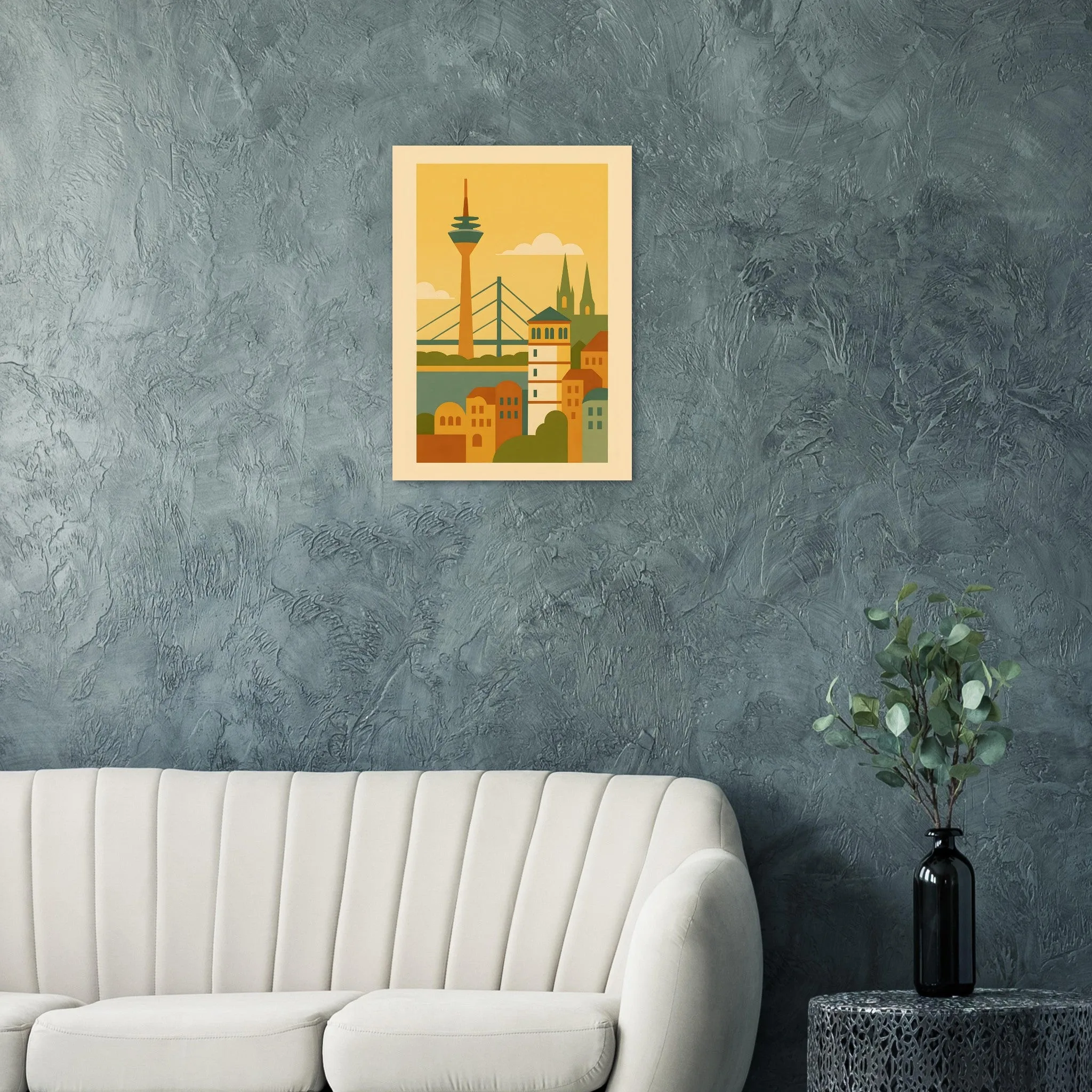
Mid-century modern
from €19
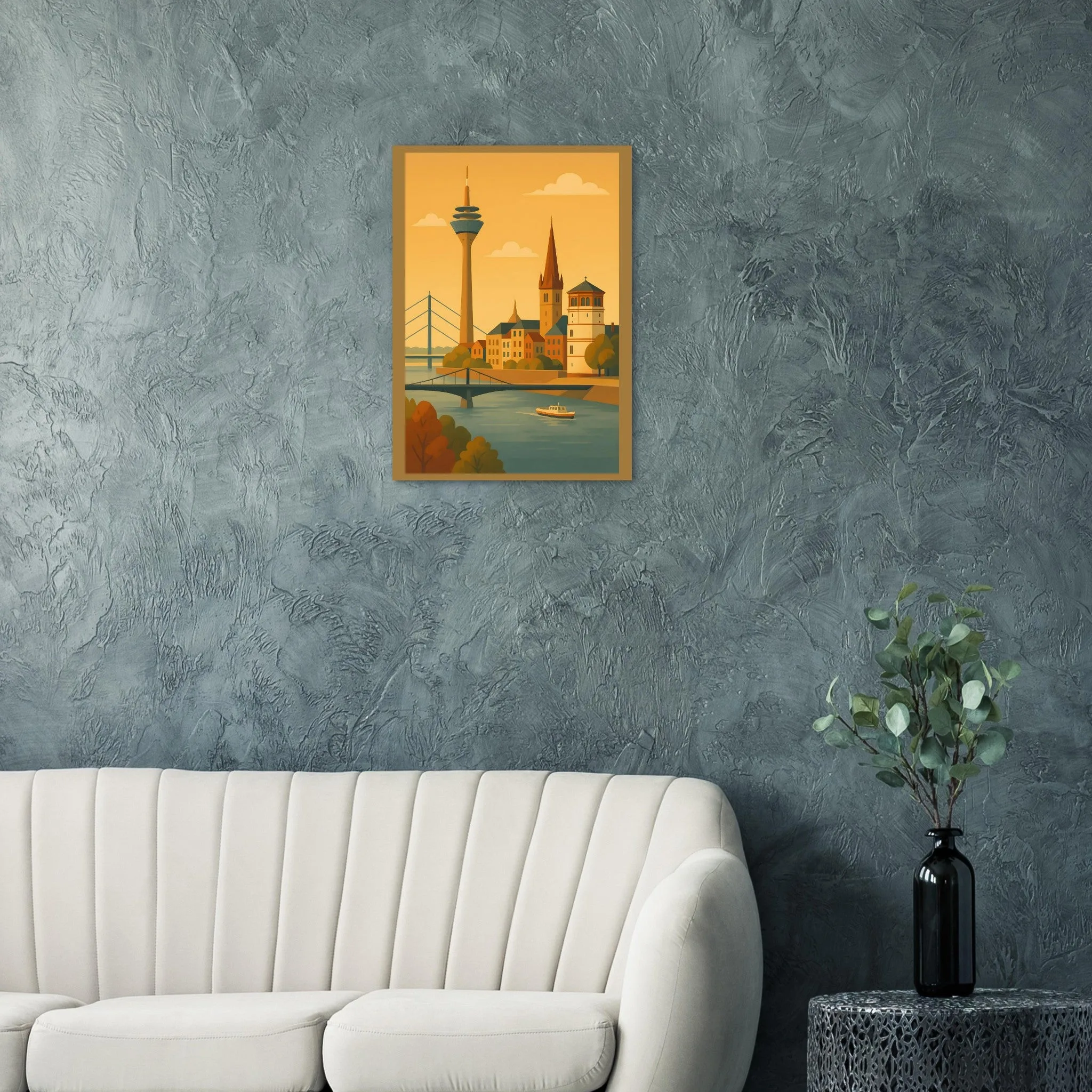
Vintage travel poster
from €19
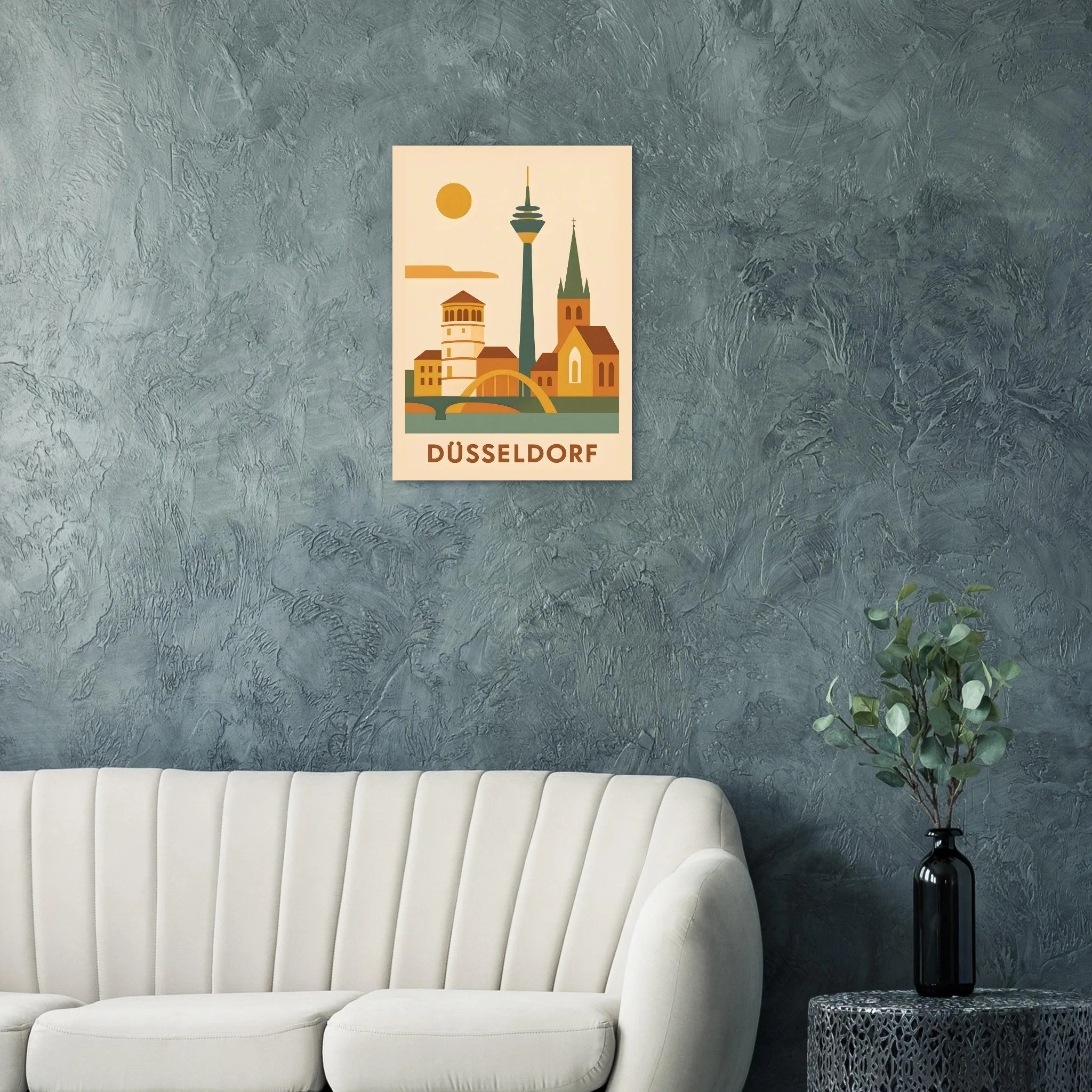
Mid-century modern
from €19
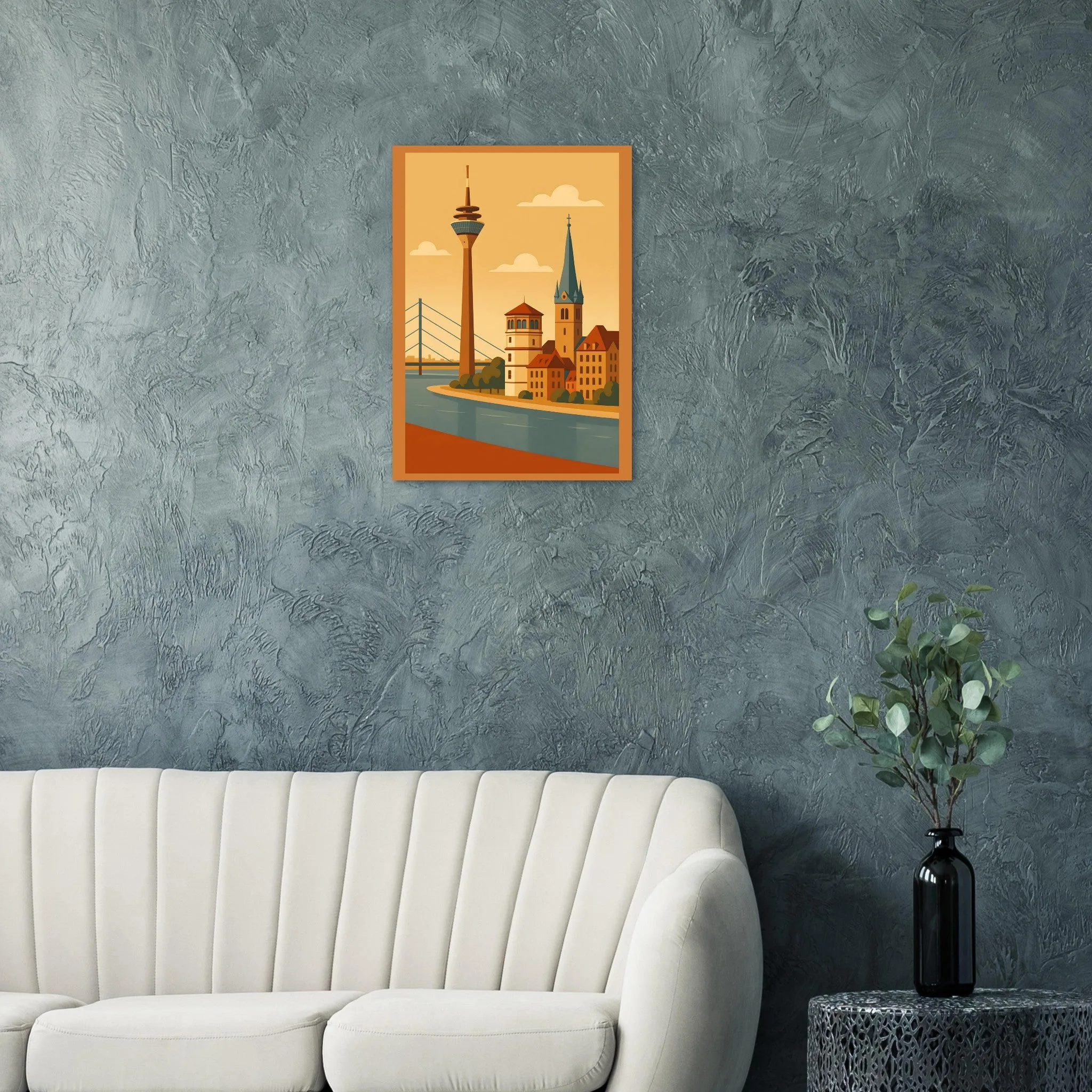
Vintage travel poster
from €19
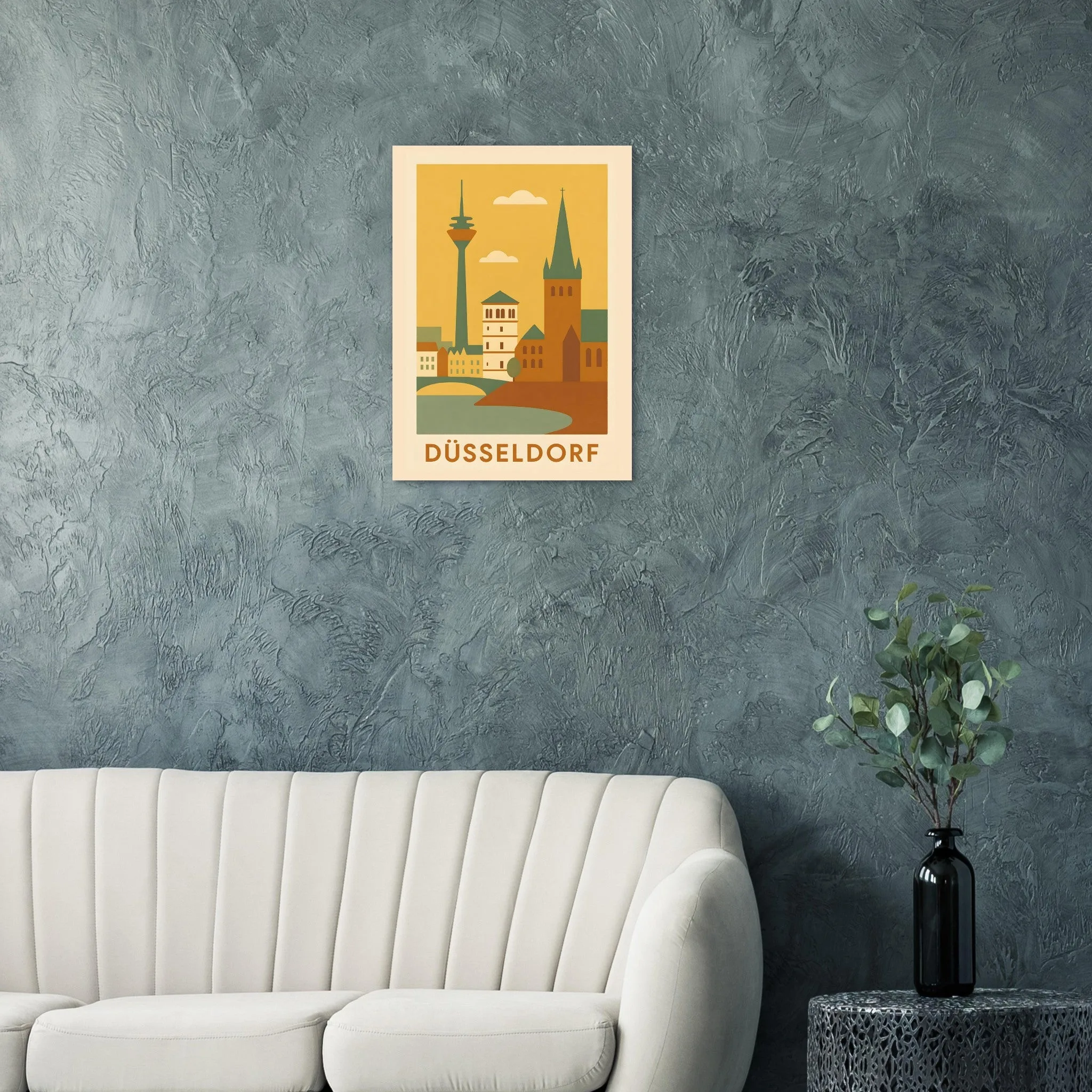
Mid-century modern
from €19
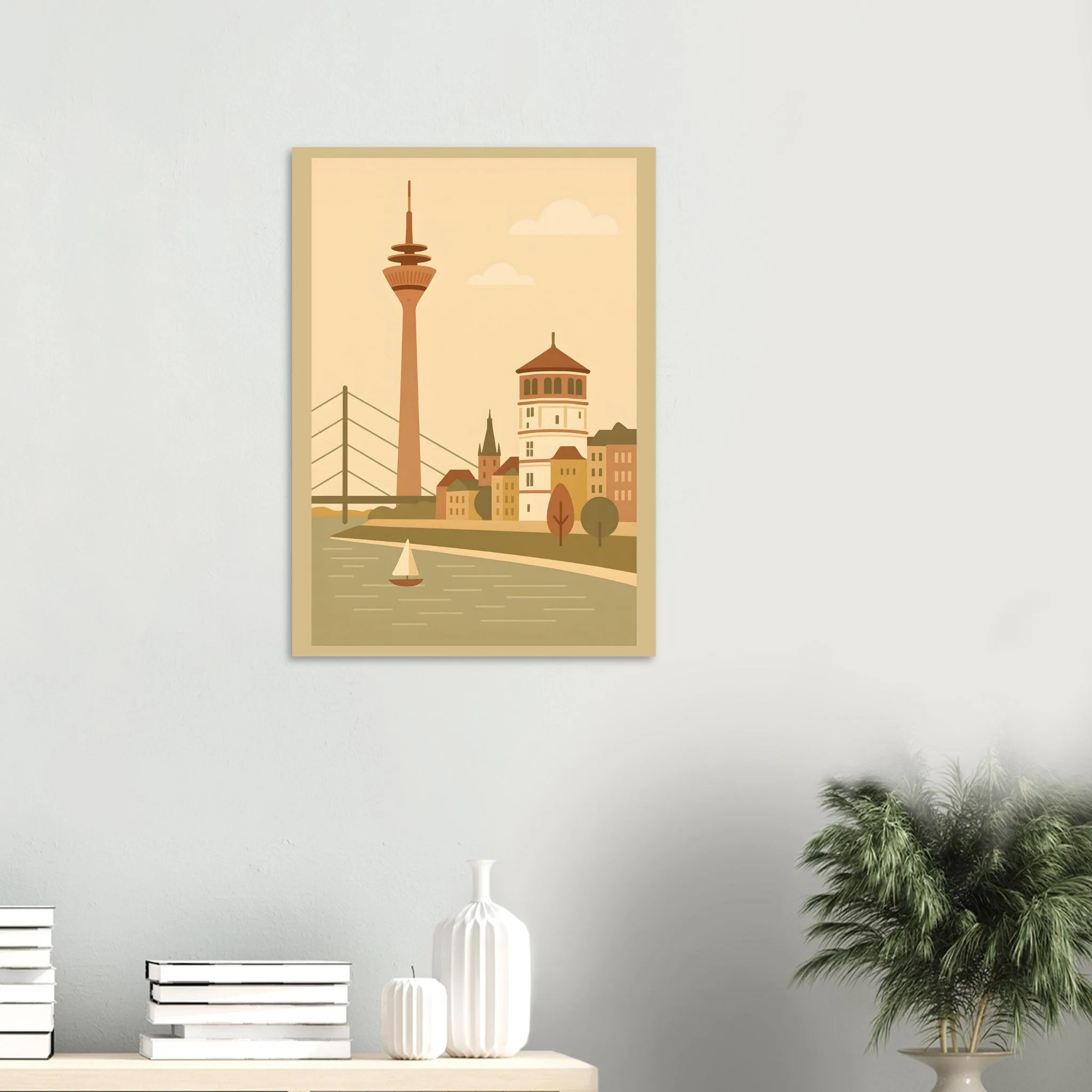
Flat vector illustration
from €19
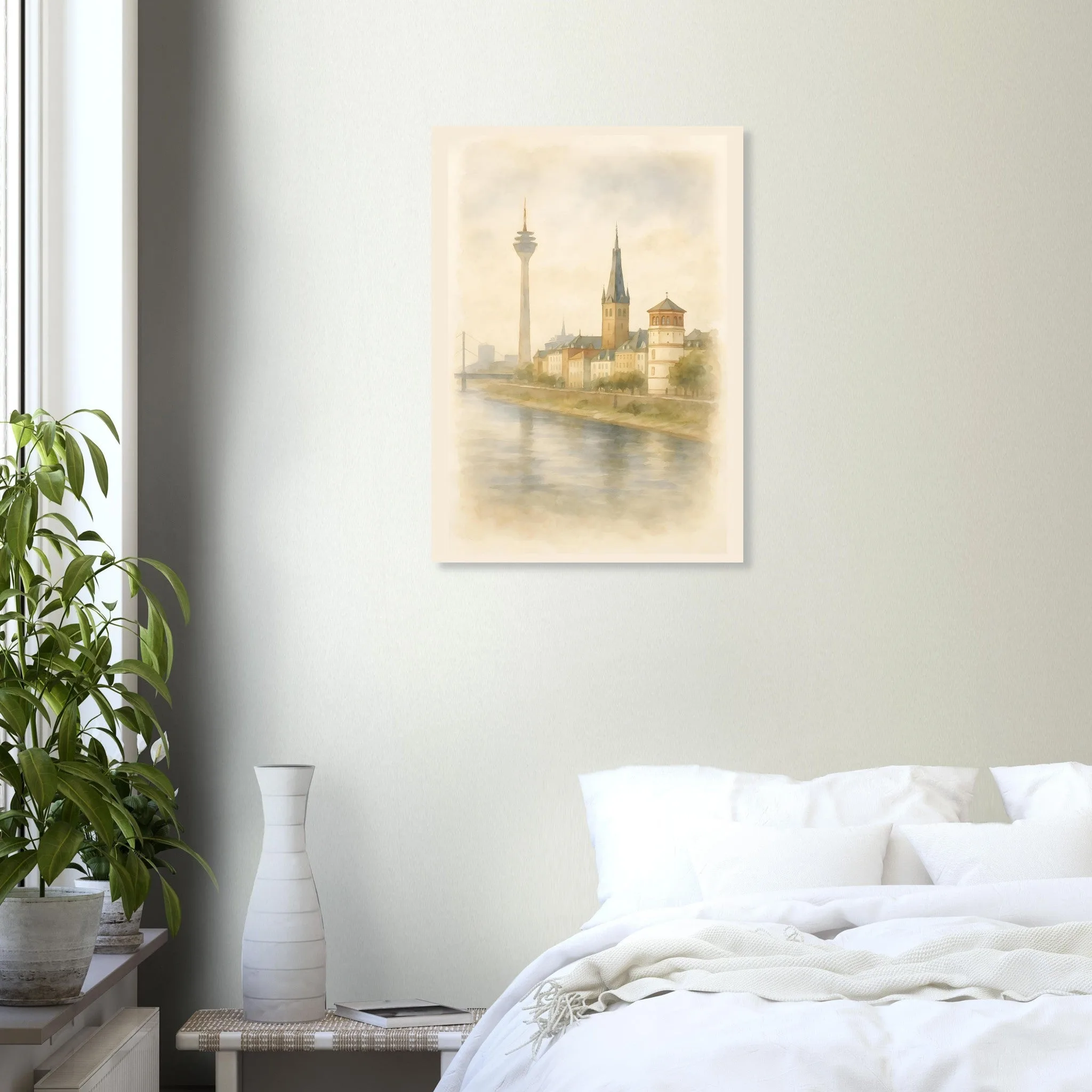
Watercolour landscape
from €19
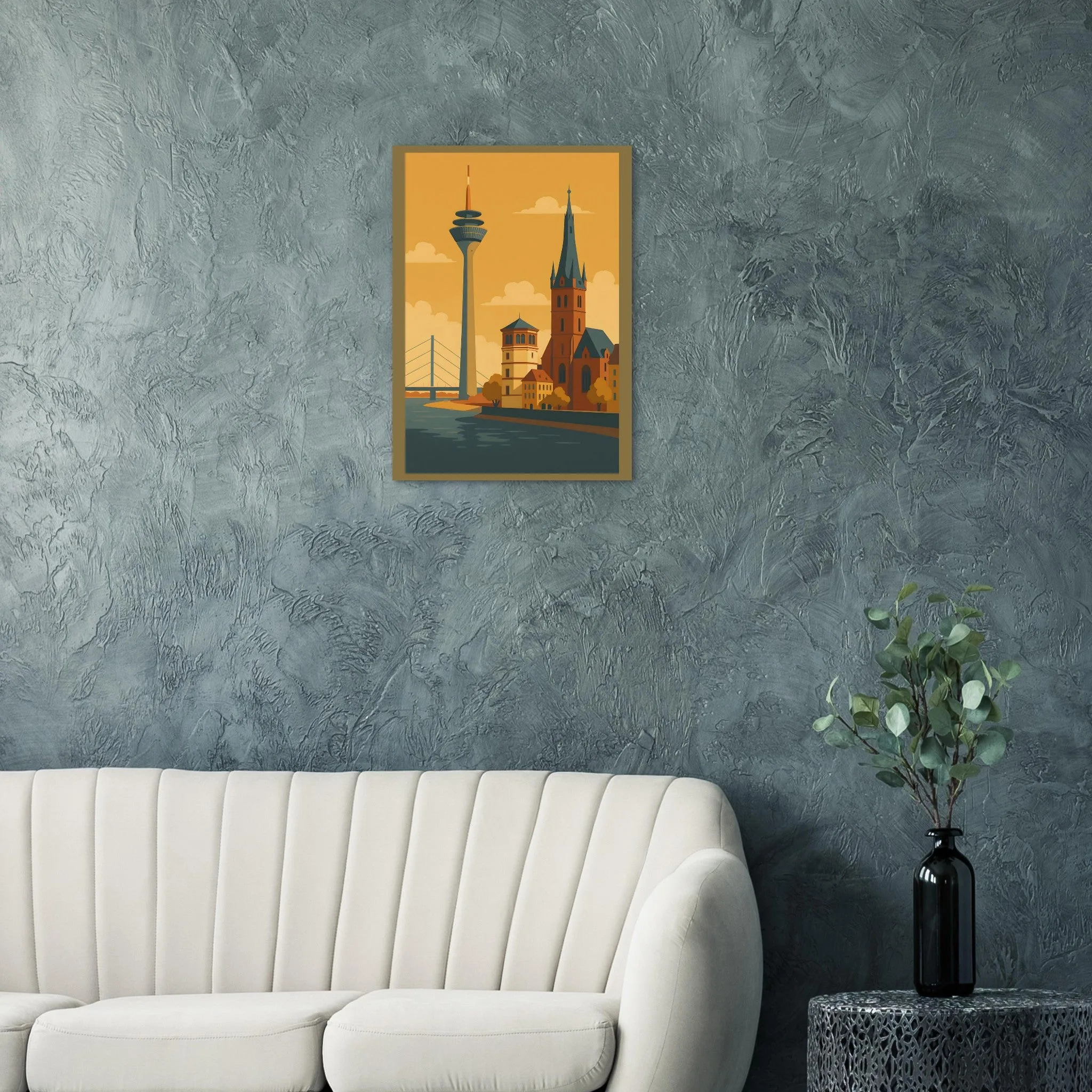
Vintage travel poster
from €19
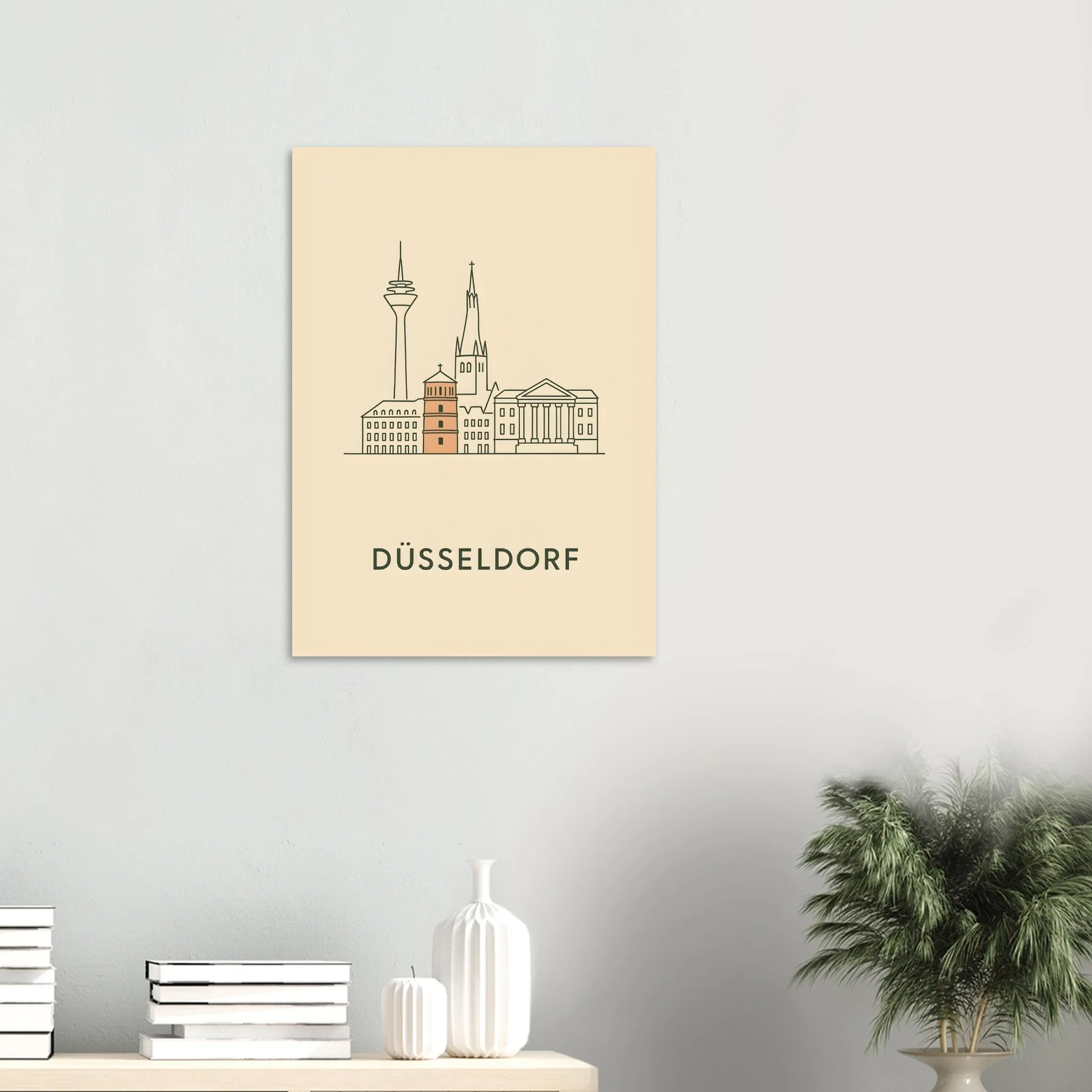
Minimalist line art
from €19
Düsseldorf has a way of feeling both polished and lived-in. On one side there is the river, broad and steady, with the Rhine carrying light through the city; on the other, the compact energy of streets that have long balanced business, culture, and everyday life. As the capital of North Rhine-Westphalia and the seat of the Düsseldorf administrative region, it is a city with official weight, but also with a distinctly human scale when you are standing in it.
Most of the city lies on the right bank of the Rhine, and that geography shapes the mood as much as any landmark. Düsseldorf spreads across about 217.41 km², sits at an elevation of around 38 metres, and is home to roughly 702,596 people. Those numbers matter less than the feeling they create: a place dense enough to be alive, open enough to breathe. You can sense it in the river promenades, in the old centre, in the mix of quiet order and easy sociability that gives the city its particular tone.
There is also a certain confidence in Düsseldorf that never has to announce itself. It is one of Germany’s largest cities, but it is remembered just as vividly for details: the rhythm of Kölsch- and Ripuarian-adjacent speech heard at the edge of the Rhine-Ruhr region, the evening glow around bridges, the calm of the city when the offices empty and the waterfront comes back to life. It is a place many people carry with them after leaving, not because it shouts, but because it settles into memory.
Düsseldorf is often described by its role: capital of North Rhine-Westphalia, central city of the Rhine-Ruhr region, part of one of Europe’s most powerful metropolitan landscapes. But the city is easier to remember through texture. The river is never far away. The right bank holds much of the city’s daily life. Streets open and close around the old centre. In the evening, the light can turn soft and metallic at once, as if the Rhine were reflecting both the present and the past.
That sense of layered identity is part of Düsseldorf’s appeal. It is a city of administration and trade, but also of walking, meeting, pausing, and looking out across water. Its population, now around 702,596, gives it a scale that feels urban without becoming anonymous. The city’s position within the Regierungsbezirk Düsseldorf and its status as the state capital make it important on the map, yet many people remember it first through smaller impressions: a bridge at dusk, a broad boulevard, the hush of a Sunday morning, the way the riverbank seems to gather people without forcing them together.
There is history here, of course, but not the kind that sits behind glass. It lives in the city’s form. Düsseldorf grew into a modern centre while keeping a recognisable core, and that contrast is part of what makes it visually compelling. The skyline is not defined by one overwhelming silhouette. Instead, it is a conversation between the river, the bridges, the urban grid, and the places where the city leans into leisure. Even the name carries a certain softness, a sound that feels more intimate than monumental.
For many, the memory of Düsseldorf is tied to return. Former residents remember the ease of getting around, the feeling of being near the Rhine, the mix of calm and movement that defines the city on ordinary days. Visitors remember the balance between elegance and approachability. Locals may think of home in terms of routines rather than landmarks: the walk to the river, the neighbourhood bakery, the way the city looks after rain. That is often how belonging works. It is not only about what is famous, but about what becomes familiar.
And Düsseldorf is familiar in the best sense: a city that reveals itself gradually. The official numbers place it clearly among Germany’s major cities, with an area of 217.41 km² and a location at roughly 51.2256° N, 6.7767° E, but the lived experience is quieter than that. It is the feeling of standing near the water and noticing how the city seems to hold itself together around the Rhine. It is the awareness that this is a place where civic life, culture, and daily routine have long shared the same streets.
Choosing a Düsseldorf poster for your home
In a home, Düsseldorf works well wherever you want a sense of calm structure. A living room wall above a sofa can carry a larger format beautifully, especially if the room already has clean lines or muted colours. In a hallway, a smaller print can feel like a quiet arrival point, something you see on the way in and out, like a brief memory of the city waiting at the door. Bedrooms often suit more restrained compositions and softer palettes, where Düsseldorf’s river light and ordered urban rhythm can bring a gentle, settled mood.
The city’s look pairs naturally with both warm and cool interiors. Warm woods, beige textiles, and brass details bring out Düsseldorf’s softer, more atmospheric side, while cooler interiors with white walls, stone tones, or black accents can echo its modern, riverfront clarity. A larger size tends to suit open walls and rooms with space to step back; smaller formats work well in shelves, narrow corridors, or gallery walls where the city is part of a wider story. If you are styling a room around memory rather than decoration, Düsseldorf has an easy way of becoming the anchor point.
Düsseldorf posters as gifts
A Düsseldorf poster is often a thoughtful gift because it speaks to more than taste. It suits former residents who still think of the Rhine as part of their everyday geography, travellers who remember the city through a weekend or a work trip, expats who want a piece of home nearby, and locals who like seeing their city treated with care. It can be a quiet, personal choice for someone who has moved away, or a simple gesture for someone who has always belonged there.
It also works well for familiar occasions: a housewarming gift for a new flat, a birthday present with a personal connection, Christmas when you want something meaningful rather than generic, or a retirement gift that carries a sense of place and continuity. Because Düsseldorf is both recognisable and personal, the gift rarely feels impersonal. It says: I know where you come from, or where you once lived, or where a part of you still returns.
What makes our Düsseldorf posters different
Our Düsseldorf posters are made to feel grounded in the real city, not in a vague idea of it. The imagery is based on verified geographic and historical facts, so the sense of place stays honest. That matters with a city like Düsseldorf, where the atmosphere comes from the actual relationship between river, streets, and civic life. We keep the look warm and minimalist, so the city can breathe on the wall rather than be overdescribed.
They are printed locally on 170 gsm FSC-certified semi-gloss silk paper with archival inks, which gives the surface a calm finish and helps the colours stay clear over time. If you choose a framed version, it arrives ready to hang; unframed prints offer more flexibility if you already have a frame or want to match existing interiors. The aim is simple: a print that feels considered, durable, and easy to live with.
Some places are remembered for a single monument. Düsseldorf is remembered for a mood — the Rhine, the light, the balance between movement and calm.
Sizes and prices
If you are choosing by wall size rather than by subject, the options are straightforward. A4 starts at €19 and works well for small spaces, desks, and layered gallery walls. A3 is €29 and suits medium walls or pairings with other prints. The 30×40 cm format is €34 and often feels like the most versatile choice for bedrooms, hallways, and compact living spaces. The largest option, 50×70 cm at €49, gives Düsseldorf enough presence to hold a room without overwhelming it.
There is no single right size for a city like this. A smaller print can feel intimate, like a remembered address. A larger one can bring the river and the urban outline into a room with more certainty. The best choice depends less on rules than on the kind of memory you want the wall to hold.
Why Düsseldorf stays with people
Düsseldorf is not only a capital city or a centre of administration. It is a city that has learned how to live with contrast: formal and relaxed, metropolitan and neighbourly, polished and quietly human. That is why it stays in memory. The bridges, the water, the right-bank geography, the scale of the city, and the easy movement between public life and private routine all come together in a way that feels distinct without needing exaggeration.
For anyone who has lived there, passed through, or simply felt drawn to it, Düsseldorf has a recognisable emotional outline. It is a place of return, of small rituals, of evenings near the river and mornings that begin with the city already in motion. On the wall, that can become something very simple and very lasting: a reminder of belonging, or of a time and place that still feels close.
Frequently asked questions
What sizes do Düsseldorf posters come in?
Our Düsseldorf posters come in four standard sizes: A4 (21×30 cm) from €19, A3 (30×42 cm) from €29, 30×40 cm from €34, and 50×70 cm from €49. All sizes are printed on 170 gsm semi-gloss FSC-certified silk paper.
How long does shipping take?
We print locally via Gelato in 32+ countries. In Europe, your order typically arrives within 3–5 business days of purchase. Free EU shipping on every order — no minimum.
What's the print quality like?
We print on 170 gsm FSC-certified semi-gloss silk paper using archival inks. Colours are warm, muted, and lightfast for years — made to stay on a wall, not fade in a season.
Can I order a framed Düsseldorf poster?
Framed options are coming soon. For now, we ship unframed posters — our standard sizes fit common off-the-shelf frames from IKEA, HAY, Desenio, and others.
Where do the designs come from?
Each Düsseldorf design begins with verified facts from open geographic sources — Wikipedia, OpenStreetMap, GeoNames. We only depict what's historically and culturally rooted in a place, never inventions.
Can I return my poster if I'm not happy?
Yes. We offer 30-day free returns. If your poster doesn't feel right once it's on your wall, send it back for a full refund.