Frankfurt am Main Poster — Germany Wall Art
Minimalist posters and wall art of Frankfurt am Main, Germany — premium print on 170 gsm coated silk paper, shipped to 32 countries.
Frankfurt on the wall, in memory and light
Our designs
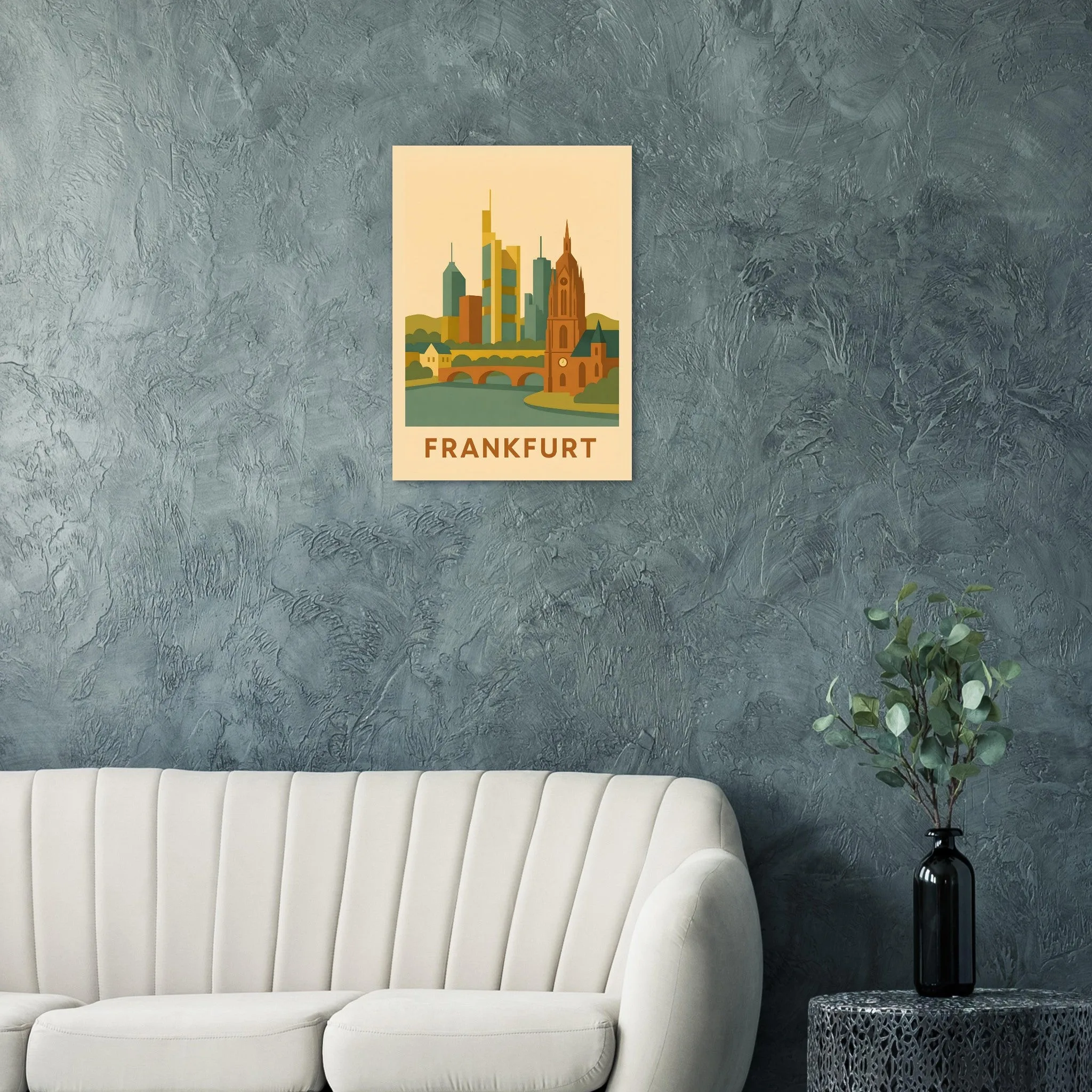
Mid-century modern
from €19
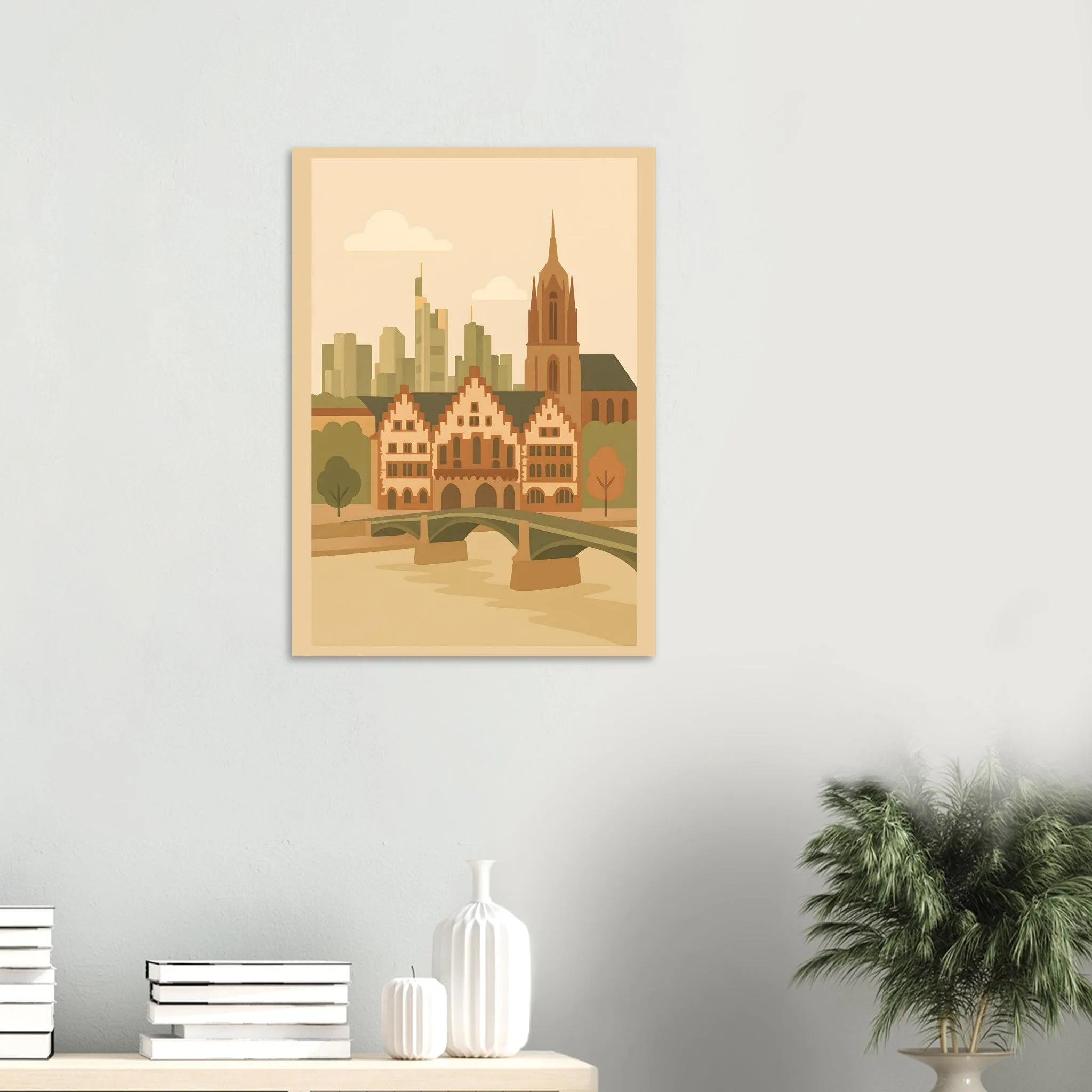
Flat vector illustration
from €19
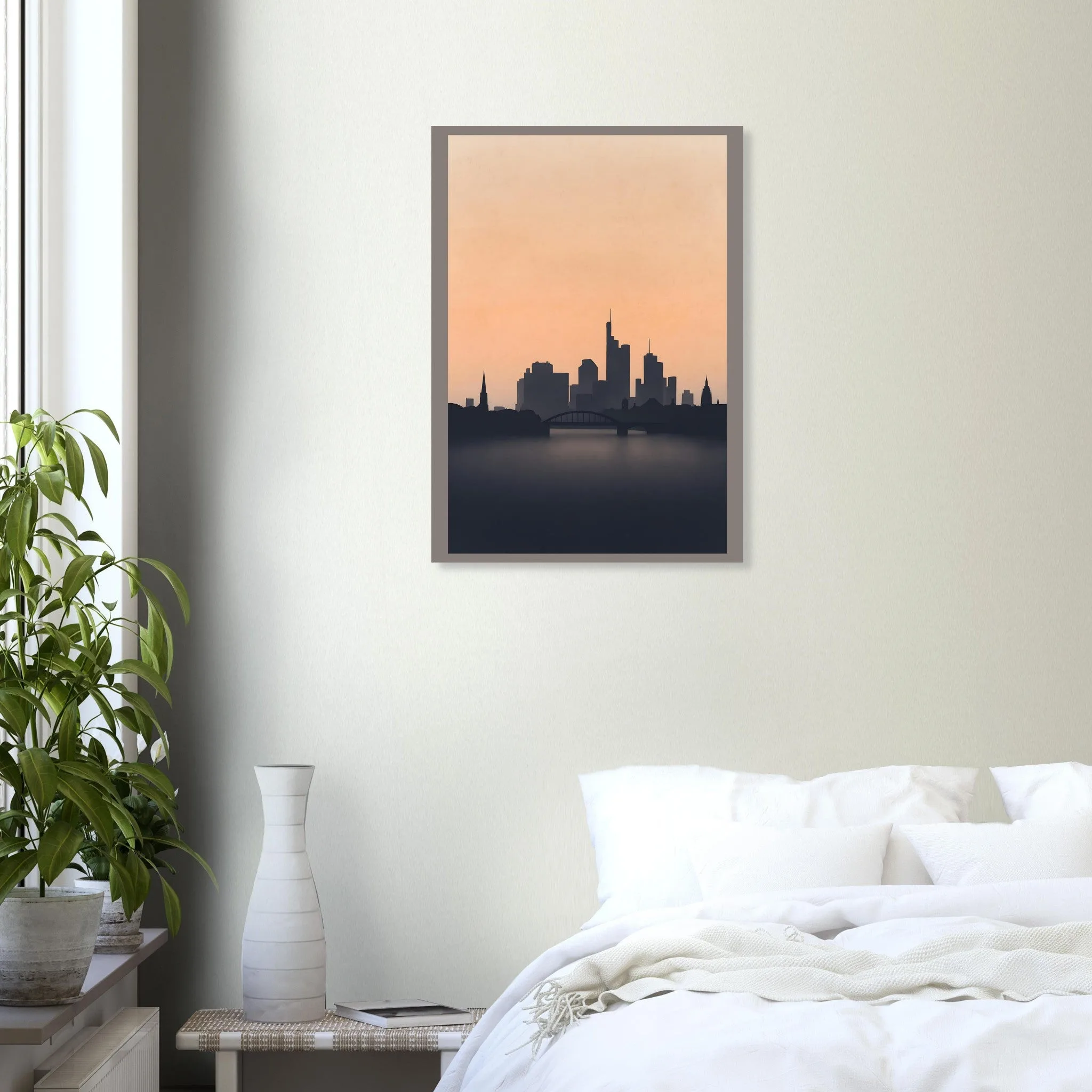
Silhouette skyline
from €19
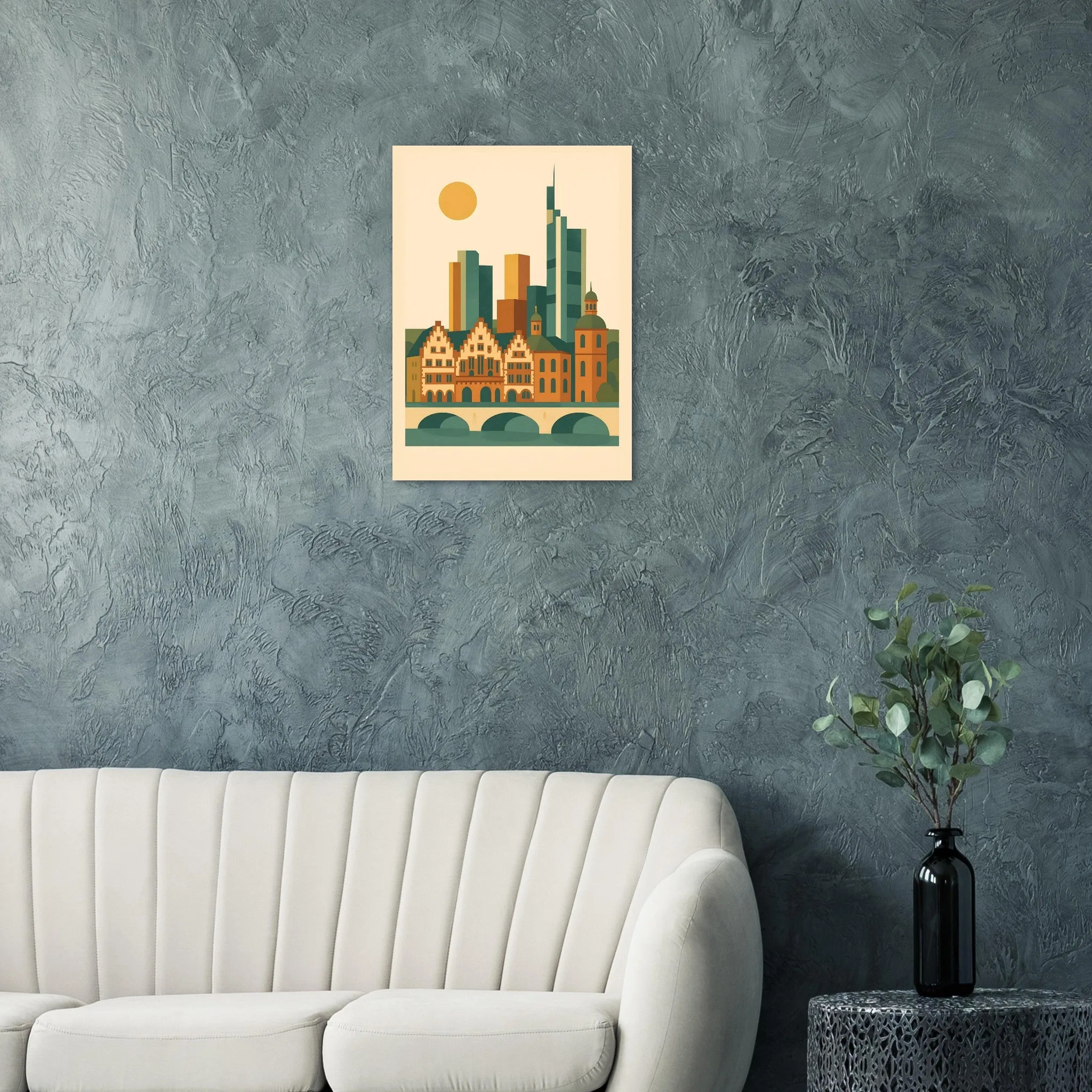
Mid-century modern
from €19
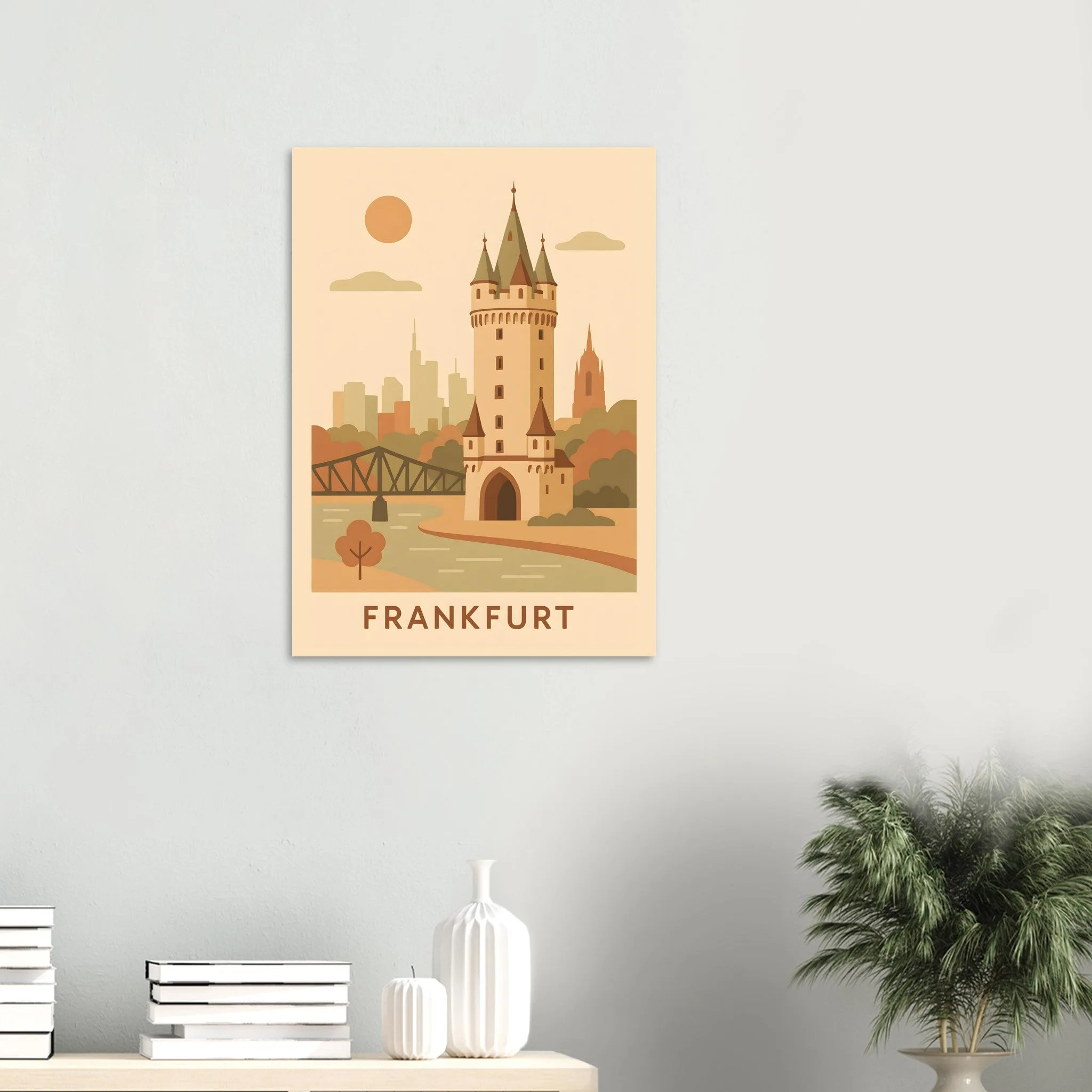
Flat vector illustration
from €19
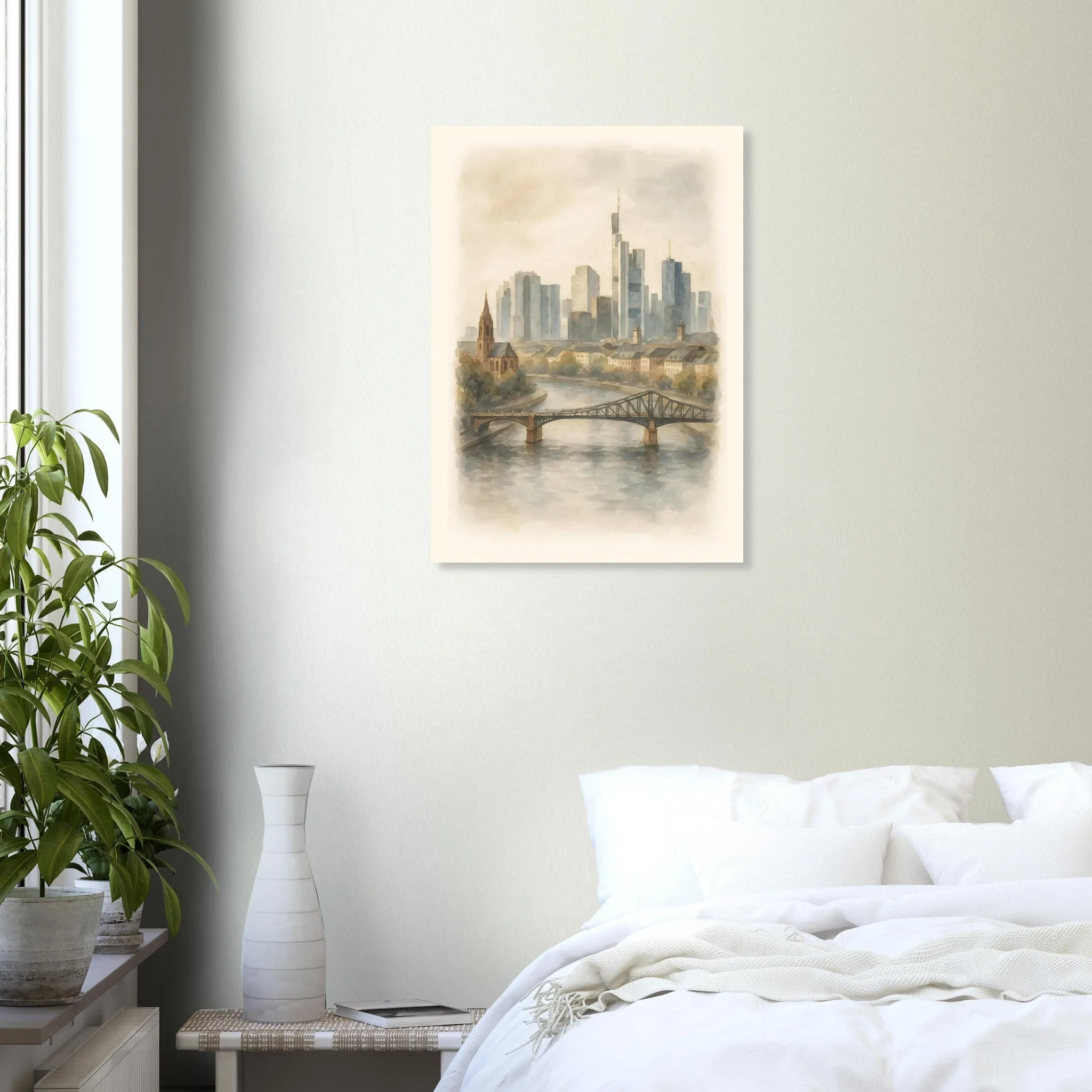
Watercolour landscape
from €19
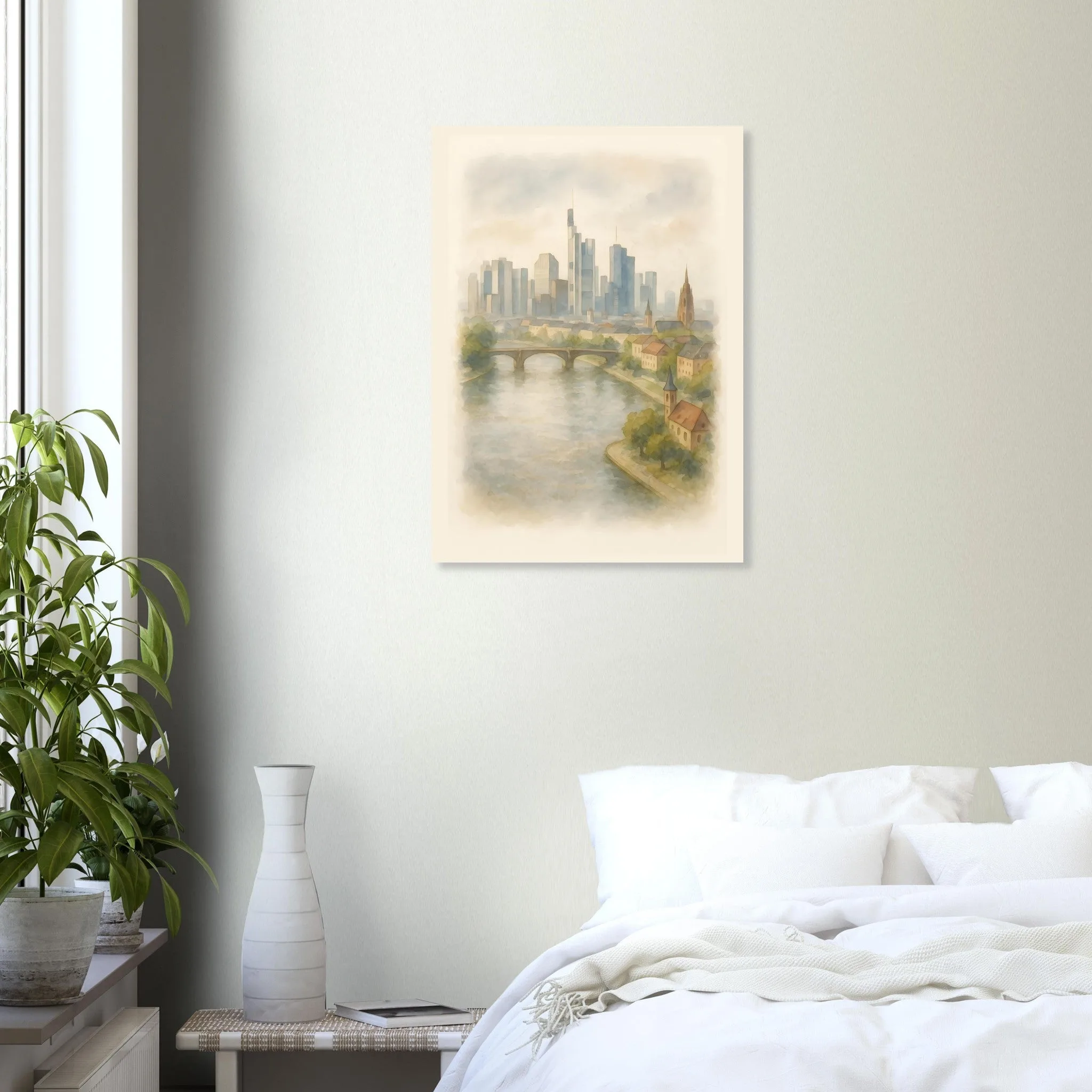
Watercolour landscape
from €19
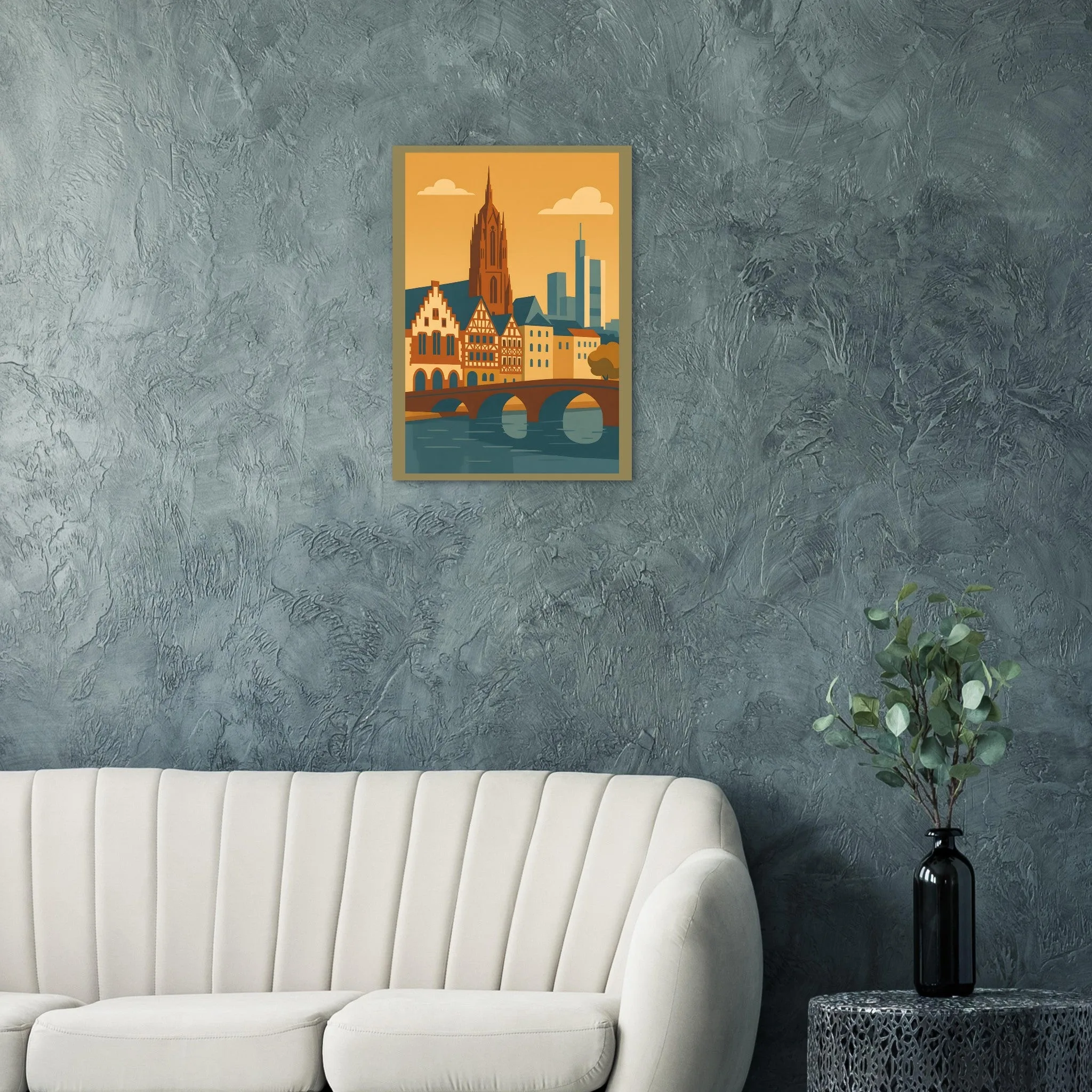
Vintage travel poster
from €19
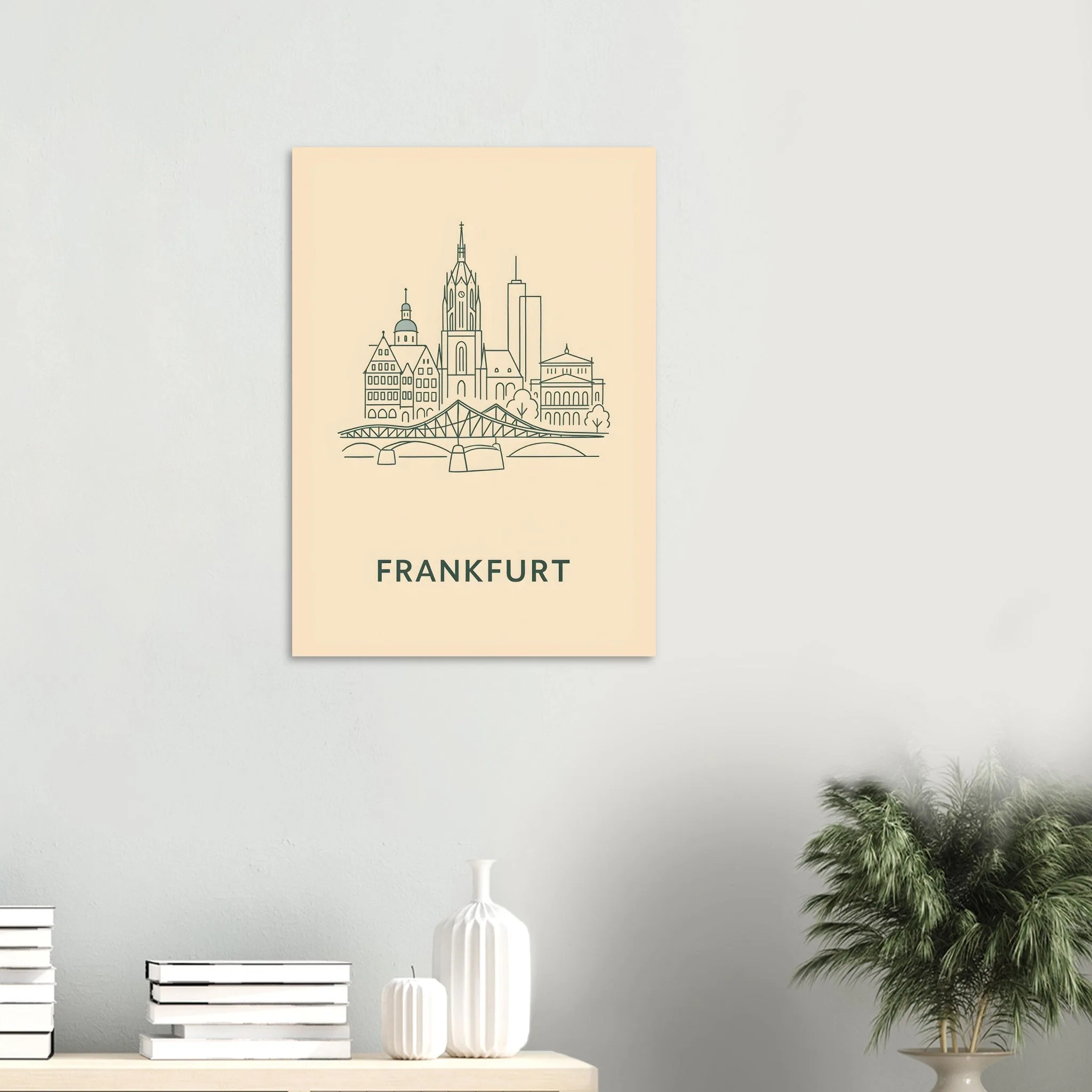
Minimalist line art
from €19
Frankfurt is a city of contrasts that somehow feel natural together: the glass and steel of the skyline, the old lanes around the Römer, the steady movement along the Main, and the hush of churches and courtyards tucked between business streets. It is Germany’s fifth-largest city, with a population of around 775,790, and yet it can still feel surprisingly intimate when you know where to look — in the early light on the river, in the tram sounds, in the way the city sits at about 112 metres above sea level in the foreland of the Taunus.
There is history here that runs deep. Frankfurt’s origins reach back to around the year 100, and the city has long been a place of crossings, meetings, and decisions. Today it is the largest city in Hesse and one of the institutional seats of the European Union, home to the European Central Bank. But beyond the official weight of the place, there is also a local rhythm: a city of departures and returns, of business suits and apple wine, of Main river walks and the familiar Frankfurt dialect that softens the edges of its urban pace.
That mix is part of what makes Frankfurt linger in memory. Some people remember it through a station platform or a skyline at dusk; others through a childhood street, a student flat, a first job, or a family table in Sachsenhausen. It is a city that can feel both international and deeply local at once, and that tension gives it a distinctive warmth on the wall.
Frankfurt sits at a crossroads in more than a geographic sense. Its coordinates — 50.110555555, 8.682222222 — place it firmly in the heart of the Rhine-Main region, where the city forms part of a wider urban fabric with Offenbach and the surrounding towns. The Main gives Frankfurt its name and a sense of direction: a river that is never merely scenery, but part of the city’s daily pulse. Walk along it and you feel how the city opens and closes at the same time, with embankments, bridges, offices, museums, and trees all sharing the same light.
The skyline is the image many people carry first. Frankfurt is often associated with financial power and global movement, and that is true enough, but the city also has a quieter face. The Römerberg, the old church towers, the narrow streets that survived and were rebuilt, the market squares and café tables — these are the places where the city’s memory becomes tactile. Frankfurt’s long history, beginning around 100 CE, sits beside its present-day role as a modern European city, and the contrast gives it a particular kind of elegance. It is not a city that asks you to choose between past and present; it lets them stand together.
There is also a certain vocabulary to Frankfurt that belongs to those who know it well. The local dialect, with its clipped, affectionate sounds, carries traces of a city that has always been practical, direct, and a little self-aware. You hear that in the way people talk about the city’s food, its neighbourhoods, its stations and bridges, its weather, and the annual rituals that return with the seasons. Even the city’s elevation — around 112 metres — seems to fit the feeling of being slightly lifted above the river plain, looking out across a place that is always in motion.
For many, Frankfurt is tied to arrival and departure. The station is one of those places where memory compresses quickly: a suitcase rolling over tiles, the smell of coffee, announcements echoing under the roof, a brief glimpse of the towers beyond. Others remember the city through the calm geometry of the banking quarter, the green spaces along the Main, or the way a winter evening can make the glass facades glow while the old town settles into shadow. It is a city of scale, but also of details — and that is often what makes a place worth bringing into a home.
It helps that Frankfurt’s setting is so legible. Its area of 248.31 km² gives it room to breathe, while the wider region around it is one of Germany’s most populous metropolitan areas. The city’s present population is around 775,790, but numbers only explain part of the atmosphere. What stays with people is the feeling of a place that is both a centre and a passage: a city that hosts institutions, travellers, commuters, students, and long-term residents, all sharing the same streets and riverbanks. That layered identity is what gives Frankfurt its character on paper and on the wall.
Choosing a Frankfurt poster for your home
A Frankfurt poster works especially well in rooms where you want a sense of place without visual noise. In a living room, it can anchor a wall above a sofa or sideboard and quietly balance softer textiles or warm wood. In a hallway, it can become a small daily reminder of a city you know well — the kind of image you see on the way out and again when you return. In a home office, Frankfurt’s clear lines and urban calm suit a more focused space, especially if the room already has clean furniture, metal details, or cooler tones.
Size matters mostly in relation to the wall, not the room itself. A4 can feel personal and intimate on a narrow shelf wall, in a reading corner, or as part of a cluster with other places. A3 is often the easiest choice if you want the city to be visible without dominating the space. 30×40 cm works well above a desk, in a bedroom, or in a smaller apartment where proportion matters. 50×70 cm has more presence and suits a larger wall, a sofa wall, or a dining area where you want the city to become part of the room’s atmosphere. Warm interiors with oak, beige, terracotta, or linen tend to suit softer Frankfurt imagery; cooler interiors with grey, white, black, or brushed metal often pair well with sharper city views and stronger contrast.
Frankfurt posters as gifts
A Frankfurt poster is often most meaningful as a gift when the city already belongs to someone’s story. Former residents tend to recognise the feeling immediately: the Main on a rainy day, a skyline seen from a train, the memory of a first flat or a favourite neighbourhood. Travellers who stayed only briefly may still carry one unforgettable image — a river walk at sunset, a view from a bridge, the sense of being in a city that felt larger and more intimate than expected. Expats and students often like city wall art because it gives a new home a thread back to the old one. And locals, of course, may simply appreciate a thoughtful nod to the place they know best.
That makes Frankfurt wall art a natural choice for housewarmings, birthdays, Christmas, or a retirement gift. It can also work for someone moving away, starting a new job, or setting up their first place after university. Because the city carries both everyday life and international significance, the gift can feel personal without needing much explanation. It says: you have a place here, and you can take a piece of it with you.
What makes our Frankfurt posters different
Our Frankfurt posters are made to feel grounded in the city rather than generic to the category of “urban art.” We work with verified geographic and historical facts, so the sense of place is accurate and respectful. The result is a design language that can hold the city’s real identity — its position on the Main, its long history, its role in Hesse, its international character — without overstatement.
They are printed locally on 170 gsm FSC-certified semi-gloss silk paper with archival inks, so the finish stays clean and calm rather than glossy or overly bright. The palette is intentionally warm and minimal, which helps the work sit naturally in contemporary interiors while still leaving room for memory and mood. If you prefer framed prints, they can arrive ready to hang; if you prefer unframed, that can feel more flexible, especially when you are matching an existing frame or building a wall gradually.
Sizes and prices
For practical planning, the format range is straightforward. A4 starts from €19, A3 from €29, 30×40 cm from €34, and 50×70 cm from €49. Smaller sizes are good for compact spaces, gifts, or layered gallery walls; larger ones give the city more presence and work well when you want one strong focal point rather than several smaller pieces.
In the end, a Frankfurt poster is less about decoration than recognition. It can bring back the feeling of standing by the river after work, the shape of the skyline at dusk, the quiet confidence of a city that has been here for centuries and still feels current. For some people, that is exactly what a wall should do.
Frequently asked questions
What sizes do Frankfurt am Main posters come in?
Our Frankfurt am Main posters come in four standard sizes: A4 (21×30 cm) from €19, A3 (30×42 cm) from €29, 30×40 cm from €34, and 50×70 cm from €49. All sizes are printed on 170 gsm semi-gloss FSC-certified silk paper.
How long does shipping take?
We print locally via Gelato in 32+ countries. In Europe, your order typically arrives within 3–5 business days of purchase. Free EU shipping on every order — no minimum.
What's the print quality like?
We print on 170 gsm FSC-certified semi-gloss silk paper using archival inks. Colours are warm, muted, and lightfast for years — made to stay on a wall, not fade in a season.
Can I order a framed Frankfurt am Main poster?
Framed options are coming soon. For now, we ship unframed posters — our standard sizes fit common off-the-shelf frames from IKEA, HAY, Desenio, and others.
Where do the designs come from?
Each Frankfurt am Main design begins with verified facts from open geographic sources — Wikipedia, OpenStreetMap, GeoNames. We only depict what's historically and culturally rooted in a place, never inventions.
Can I return my poster if I'm not happy?
Yes. We offer 30-day free returns. If your poster doesn't feel right once it's on your wall, send it back for a full refund.