München Poster — Germany Wall Art
Minimalist posters and wall art of München, Germany — premium print on 170 gsm coated silk paper, shipped to 32 countries.
Munich wall art with a sense of place
Our designs
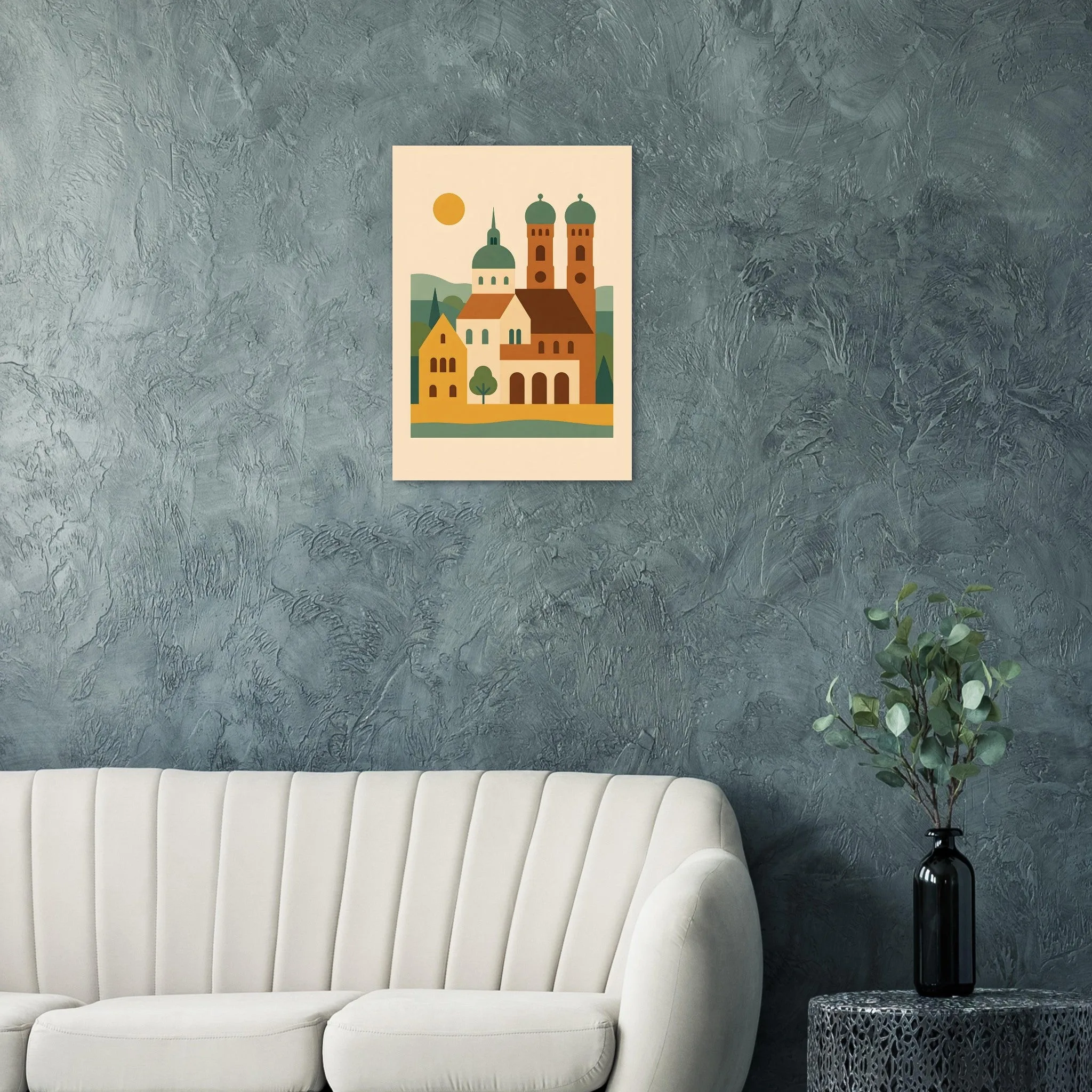
Mid-century modern
from €19
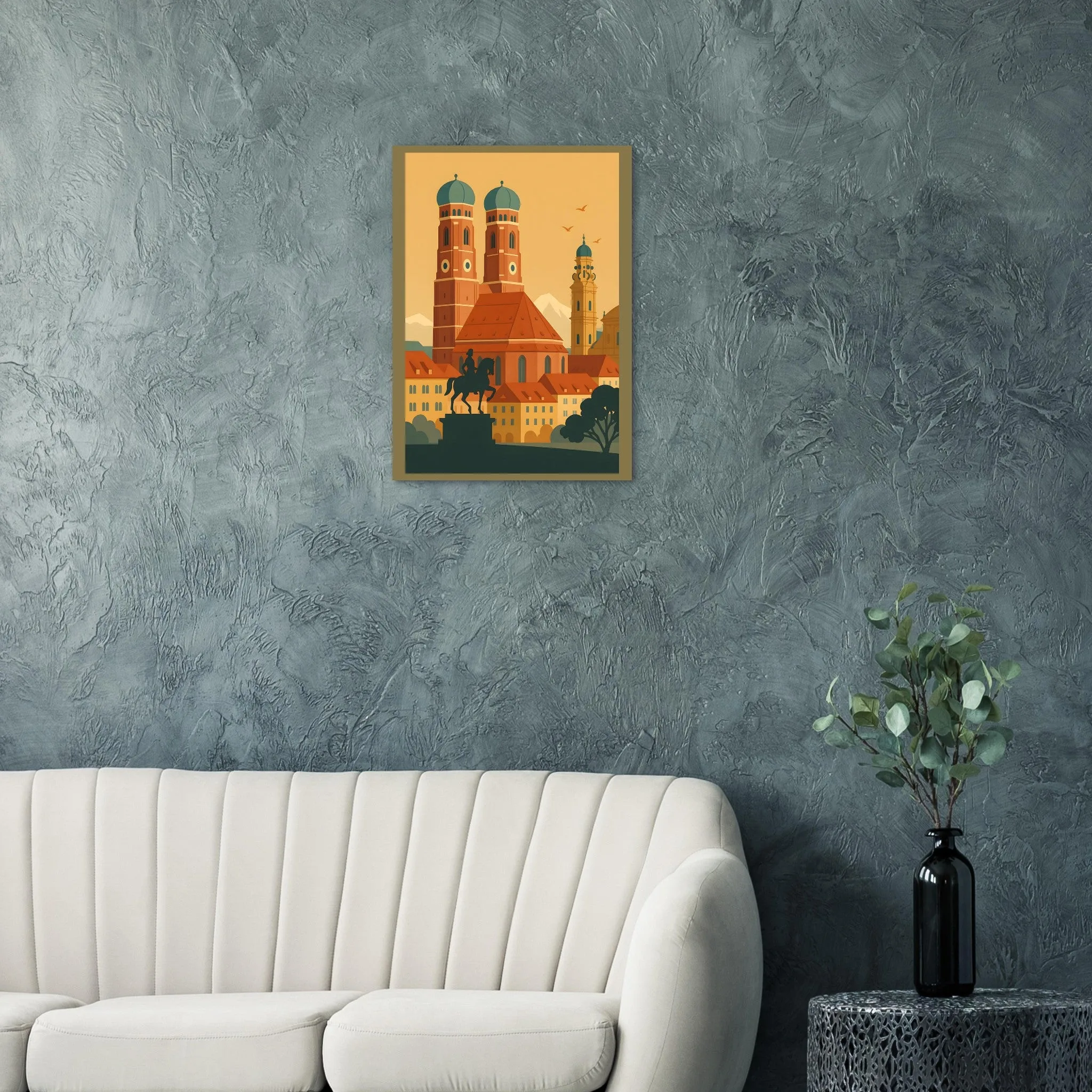
Vintage travel poster
from €19
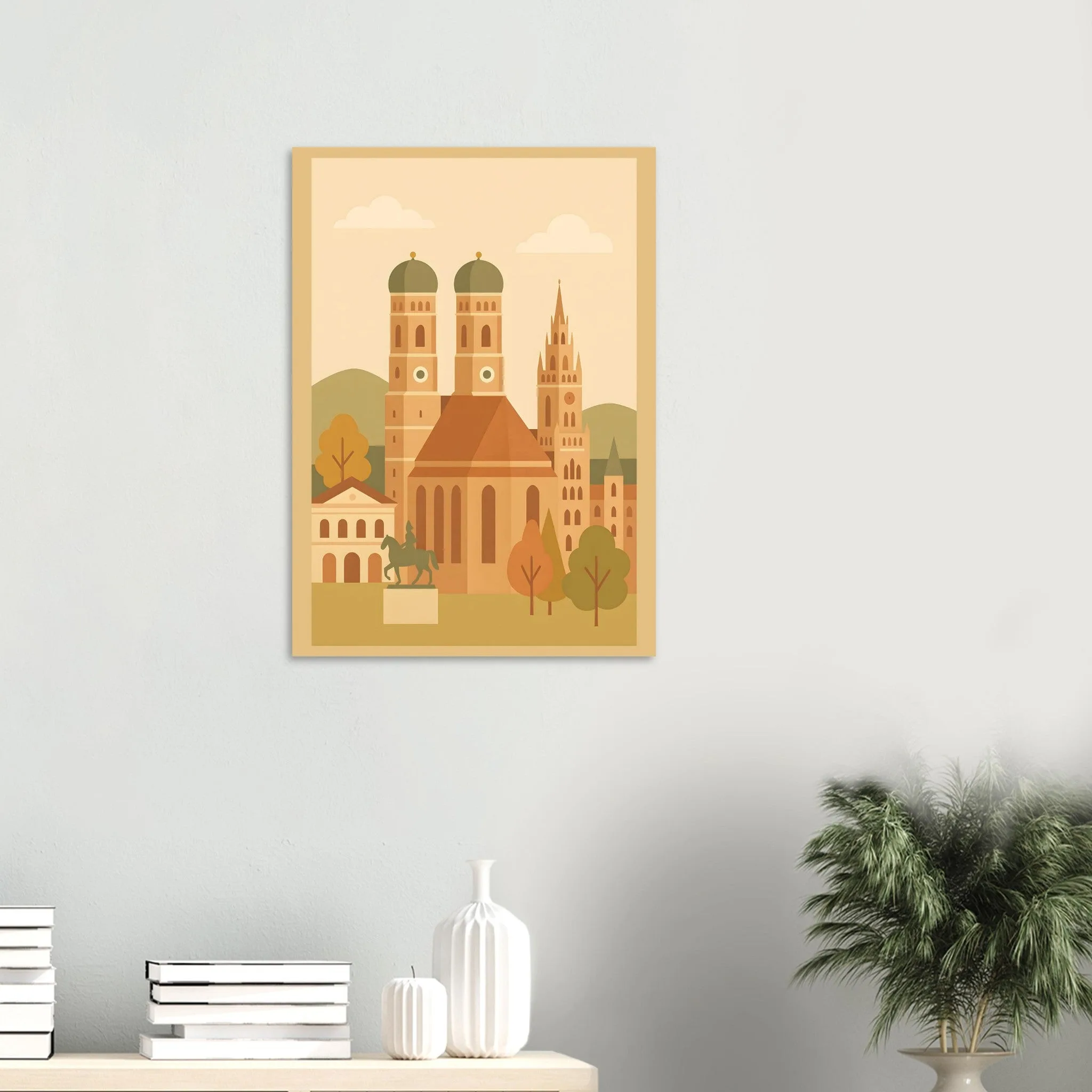
Flat vector illustration
from €19
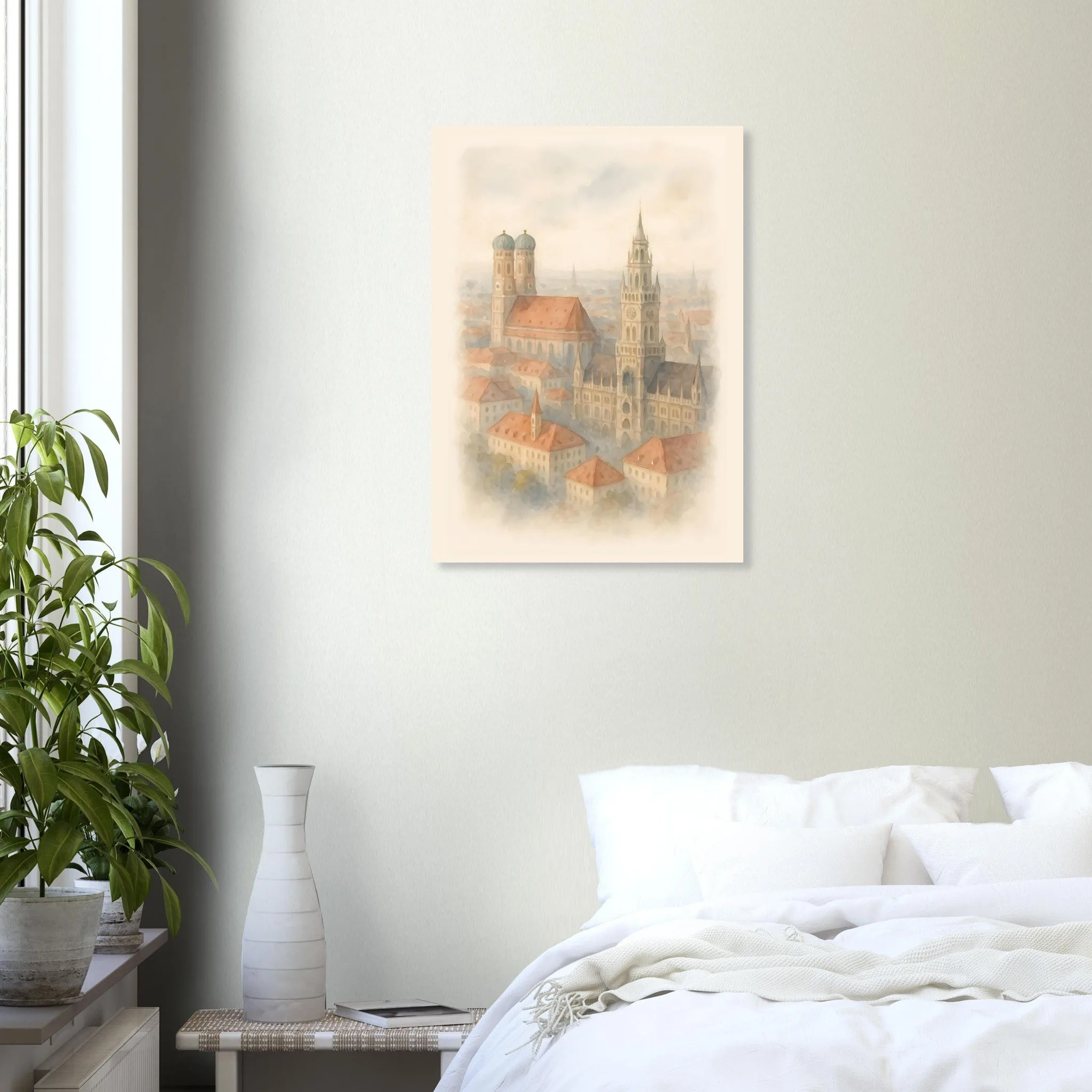
Watercolour landscape
from €19
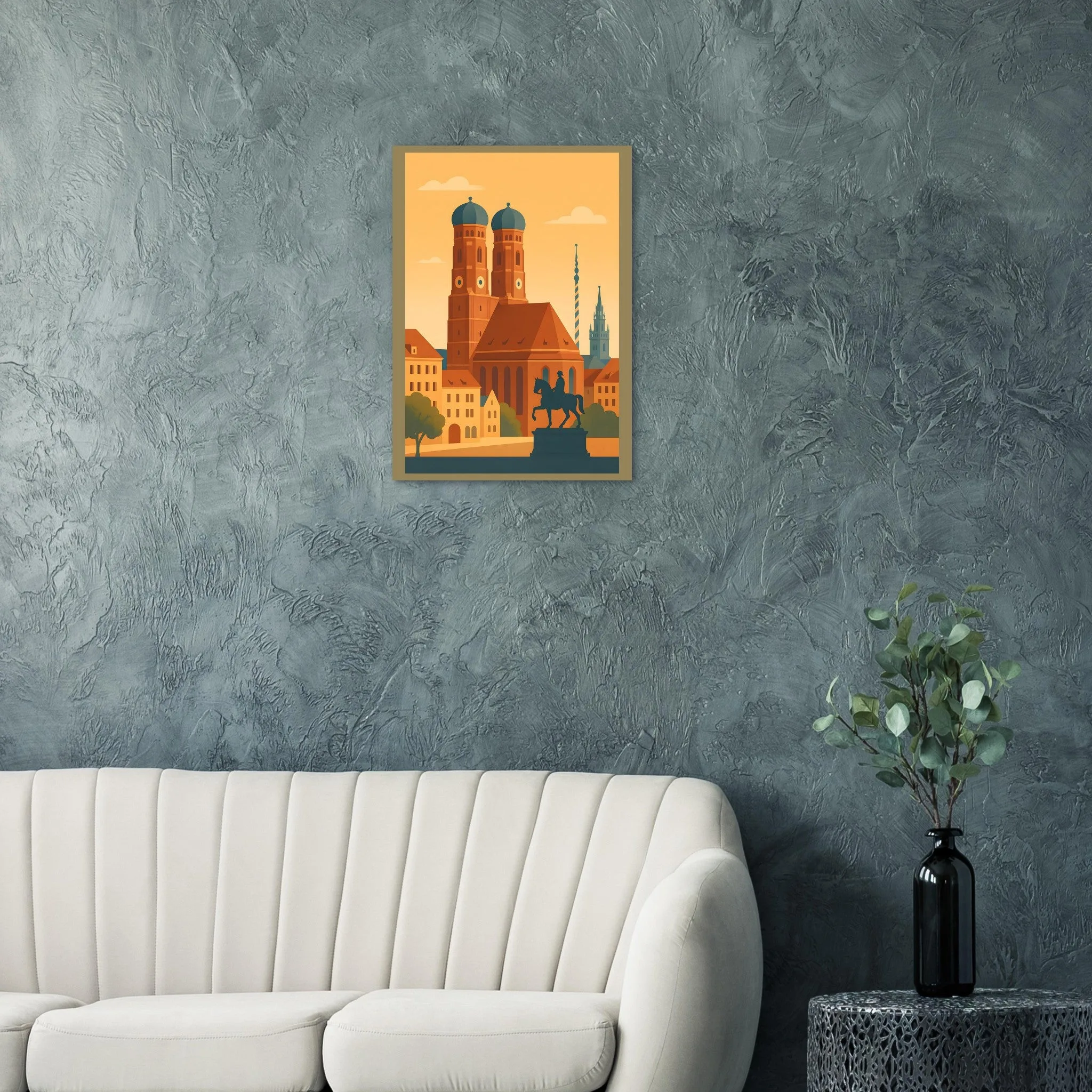
Vintage travel poster
from €19
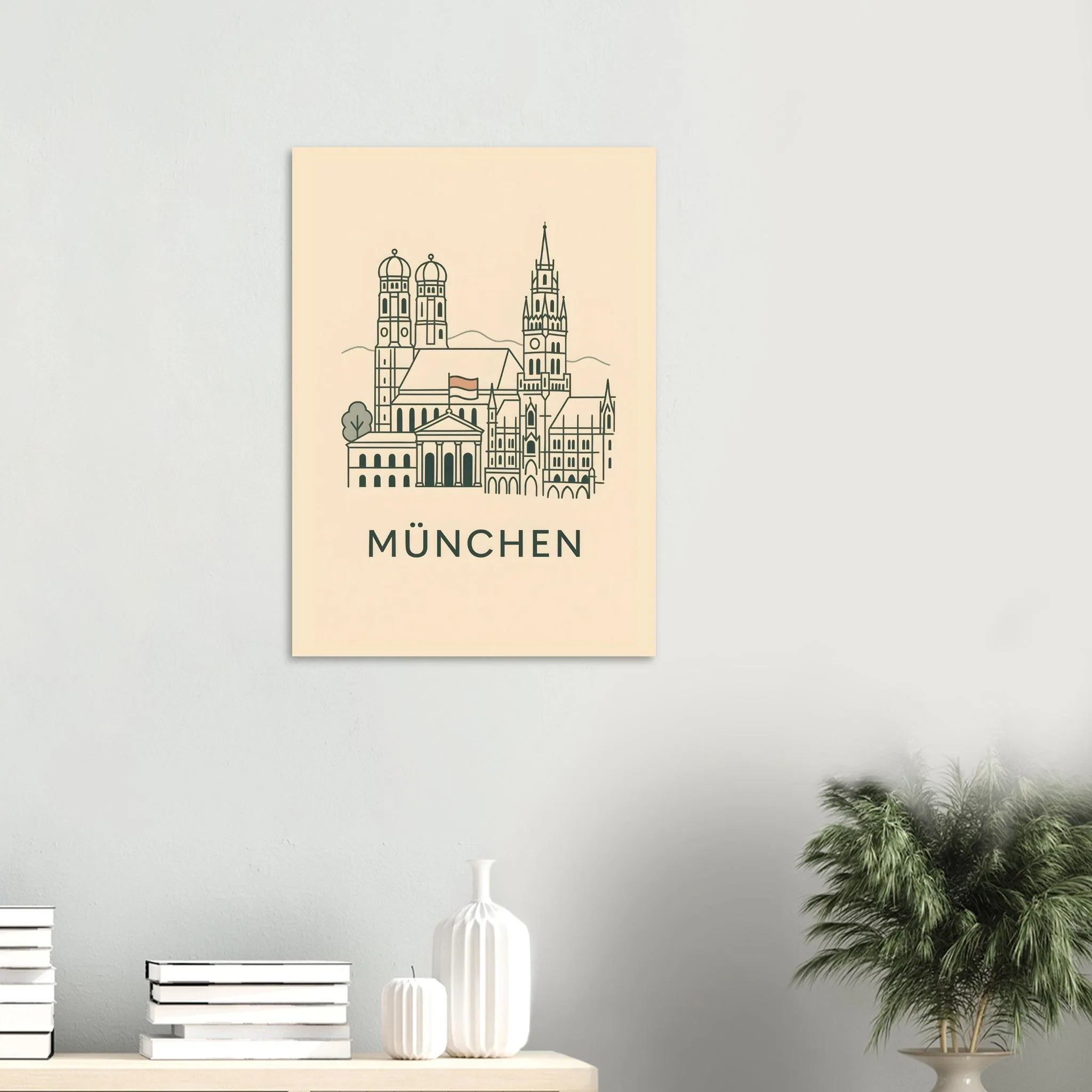
Minimalist line art
from €19
Munich has a way of feeling both grand and intimate. It is Bavaria’s capital, yet it still carries the ease of a city where everyday life and old history sit side by side: the river Isar moving through town, the Alps close enough to shape the horizon, and streets that have been lived in since the city’s inception in 1158. That long memory gives Munich its particular calm. Even in a city of more than 1.6 million people, there are corners that still feel measured, local, and unmistakably Bavarian.
It is also a city of clear contrasts. Munich is Germany’s third-largest city, the seat of Upper Bavaria, and one of the country’s most densely populated municipalities, yet it often feels composed rather than hurried. The centre of the city has the polish of a capital and the warmth of a place people return to again and again. For many, Munich is tied to tram rides, café tables, church towers, beer gardens, and the soft resonance of Bavarian speech. For others it is a place of study, work, family, or a memorable season that stayed with them longer than expected.
That is part of what makes Munich such a strong subject for wall art. A city founded in 1158 and built over centuries into a metropolis of culture, politics, science, and media carries more than a skyline. It carries atmosphere: the steadiness of stone, the openness of the river, the feeling of a city that knows its own centre. A Munich poster can bring back that mix of pride and familiarity in a way that feels quietly personal.
Munich is often described through numbers, and some of them are striking: an area of 310.71 km², an elevation of 519 metres, and a population that now stands at more than 1.6 million. But the city is more than a measure of density or scale. It sits north of the Alps, on the Isar, with Upper Bavaria around it, and that geography shapes the mood as much as the architecture does. There is a clarity to the light here, a sense of distance in the air, and then the sudden closeness of a square, a façade, a church tower, or a tree-lined street that brings everything back to human scale.
Munich’s history is visible in layers rather than in one single image. Founded in 1158, it grew from a medieval centre into the capital of Bavaria and, over time, into a city that is now associated with culture, politics, science, and media. Yet the city never loses its local character. The Bavarian dialect still gives it a specific rhythm, and Munich remains the second-largest city in the Bavarian dialect area after Vienna. Even if you do not speak the dialect, you can hear the difference in the cadence of everyday life: in greetings, in the market, in the way people linger over conversation.
That local tone matters. Munich is a city that people often carry with them after they leave. Former residents remember the light across the Isar, the early-morning quiet before the streets fill, the sound of bicycles, and the feeling of moving between a historic centre and a city that is always changing. Visitors remember the same city in fragments: a station arrival, a long afternoon, a museum visit, a winter market, a summer evening when the air stays soft after dusk. A wall piece rooted in Munich can hold those fragments without needing to explain them.
There is also a dignity to Munich that suits interior spaces well. It is a city with a strong civic identity, but it is not only about monuments. It is about the lived texture between them. The official city website may belong to a modern administration, but the city itself still feels shaped by older habits: walking, meeting, observing, returning. That is why Munich works so well as a subject for wall art in homes that value memory over spectacle. It can be understated, graphic, atmospheric, or architectural, but it always carries the same quiet assurance.
If you know Munich, you know how easily it can be missed in small ways and remembered in larger ones. The outline of the city, the relation to the river, the sense of being in a capital that is also deeply local: these are not loud details, but they stay with you. And for anyone connected to the place, that is often enough. A Munich poster can be a way of keeping the city present without turning it into nostalgia. It becomes part of the room the way a familiar view becomes part of memory: not dominant, just welcome.
Choosing a Munich poster for your home
The right Munich print depends less on rules than on the room it is meant to live in. In a living room, a larger format can hold its own above a sofa or sideboard, especially if the rest of the space is calm and you want the city to become a focal point. In a hallway, smaller sizes often work beautifully because they create a pause without asking for too much attention. A4 is an easy choice for a narrow wall or shelf arrangement, while A3 and 30×40 cm suit bedrooms, studies, and gallery walls. If you have a larger wall in a dining area or open-plan room, 50×70 cm gives the image more room to breathe.
Style also matters, though not in a rigid way. Warm interiors with oak, brass, linen, or terracotta usually suit Munich motifs with softer tones and a quiet, architectural feel. Cooler rooms with white walls, steel, or pale stone can take a more graphic treatment well, especially when the image has clear lines and a restrained palette. If your home already contains a lot of colour, a Munich poster can work as a visual rest. If your space is minimal, it can add place and character without cluttering the room.
Framed or unframed is often simply a matter of how finished you want the piece to feel. Unframed prints are easy if you like to change things around. Framed versions make the image feel settled, especially in a room where you want one strong, calm anchor. Either way, a Munich wall art piece tends to work best when it is allowed a little space around it, so the city’s lines and atmosphere can be read at a glance.
Munich posters as gifts
A Munich poster makes sense as a gift because the city is rarely just a destination. For some people it is home, for others it is the place where they studied, worked, fell in love, or built a daily life for a few important years. That gives it a particular gift value. A former resident may see it as a reminder of streets they knew by heart. An expat may want a visual link back to a city that still shapes their sense of belonging. Travellers often appreciate a Munich print because it recalls a specific trip rather than a generic idea of Germany. And locals sometimes enjoy having a version of home on the wall that feels thoughtful rather than obvious.
It is an easy choice for housewarming gifts, birthdays, Christmas, and retirement gifts, especially when the person receiving it has a personal connection to the city. A Munich print can also be a good present for someone moving into a first flat, setting up a new office, or returning home after time away. The city’s identity is strong enough to be recognised immediately, but subtle enough to suit many different interiors and personalities.
What makes it feel meaningful is that Munich is not only famous; it is familiar. It is the kind of place people remember in sensory detail: the sound of a station announcement, the coolness of stone in the morning, the river path, the long summer light, the winter air. That kind of memory is often the best reason to give wall art in the first place.
What makes our Munich posters different
Our Munich posters are designed to feel rooted in the place rather than merely decorated with it. We use verified geographic and historical facts, so the city’s identity is represented with care. That means Munich is treated not as a generic skyline, but as the capital of Bavaria, the city on the Isar, the place founded in 1158, and the dense, lived-in urban centre it is today. The result is wall art that feels grounded in something real.
We also keep the visual language warm and minimal, so the city can sit comfortably in modern interiors without losing its character. The aim is not to overwhelm a room with information, but to leave space for recognition. A Munich print should feel like a memory you can live with every day.
Print quality matters too. Our posters are printed locally on 170 gsm FSC-certified semi-gloss silk paper with archival inks, so the finish stays clean and the surface avoids glare. That silk texture suits Munich particularly well: it lets the image feel calm, architectural, and easy to place in a home. Whether you choose framed or unframed, the print is made to hold its detail and tone over time.
Sizes and prices
For practical planning, the available formats are straightforward. A4 starts at €19, A3 at €29, 30×40 cm at €34, and 50×70 cm at €49. Smaller formats are ideal for shelves, narrow walls, and gift-giving, while the larger size works well when you want the city to have more presence in a room. If you are building a gallery wall, mixing two or three sizes can create a more relaxed, collected feeling.
There is no single right choice. The best size is usually the one that matches the wall you already have and the memory you want to keep close. A Munich poster can be a quiet accent or a central piece, depending on how you place it. What stays constant is the sense of place: a city with history, density, and a distinctly Bavarian pulse, made present in a way that feels at home.
Munich works so well on a wall because it is both a capital and a memory: precise in its geography, warm in its atmosphere, and deeply personal to the people who know it.
Frequently asked questions
What sizes do München posters come in?
Our München posters come in four standard sizes: A4 (21×30 cm) from €19, A3 (30×42 cm) from €29, 30×40 cm from €34, and 50×70 cm from €49. All sizes are printed on 170 gsm semi-gloss FSC-certified silk paper.
How long does shipping take?
We print locally via Gelato in 32+ countries. In Europe, your order typically arrives within 3–5 business days of purchase. Free EU shipping on every order — no minimum.
What's the print quality like?
We print on 170 gsm FSC-certified semi-gloss silk paper using archival inks. Colours are warm, muted, and lightfast for years — made to stay on a wall, not fade in a season.
Can I order a framed München poster?
Framed options are coming soon. For now, we ship unframed posters — our standard sizes fit common off-the-shelf frames from IKEA, HAY, Desenio, and others.
Where do the designs come from?
Each München design begins with verified facts from open geographic sources — Wikipedia, OpenStreetMap, GeoNames. We only depict what's historically and culturally rooted in a place, never inventions.
Can I return my poster if I'm not happy?
Yes. We offer 30-day free returns. If your poster doesn't feel right once it's on your wall, send it back for a full refund.