Eisenstadt Poster — Austria Wall Art
Minimalist posters and wall art of Eisenstadt, Austria — premium print on 170 gsm coated silk paper, shipped to 32 countries.
Eisenstadt on the wall
Our designs
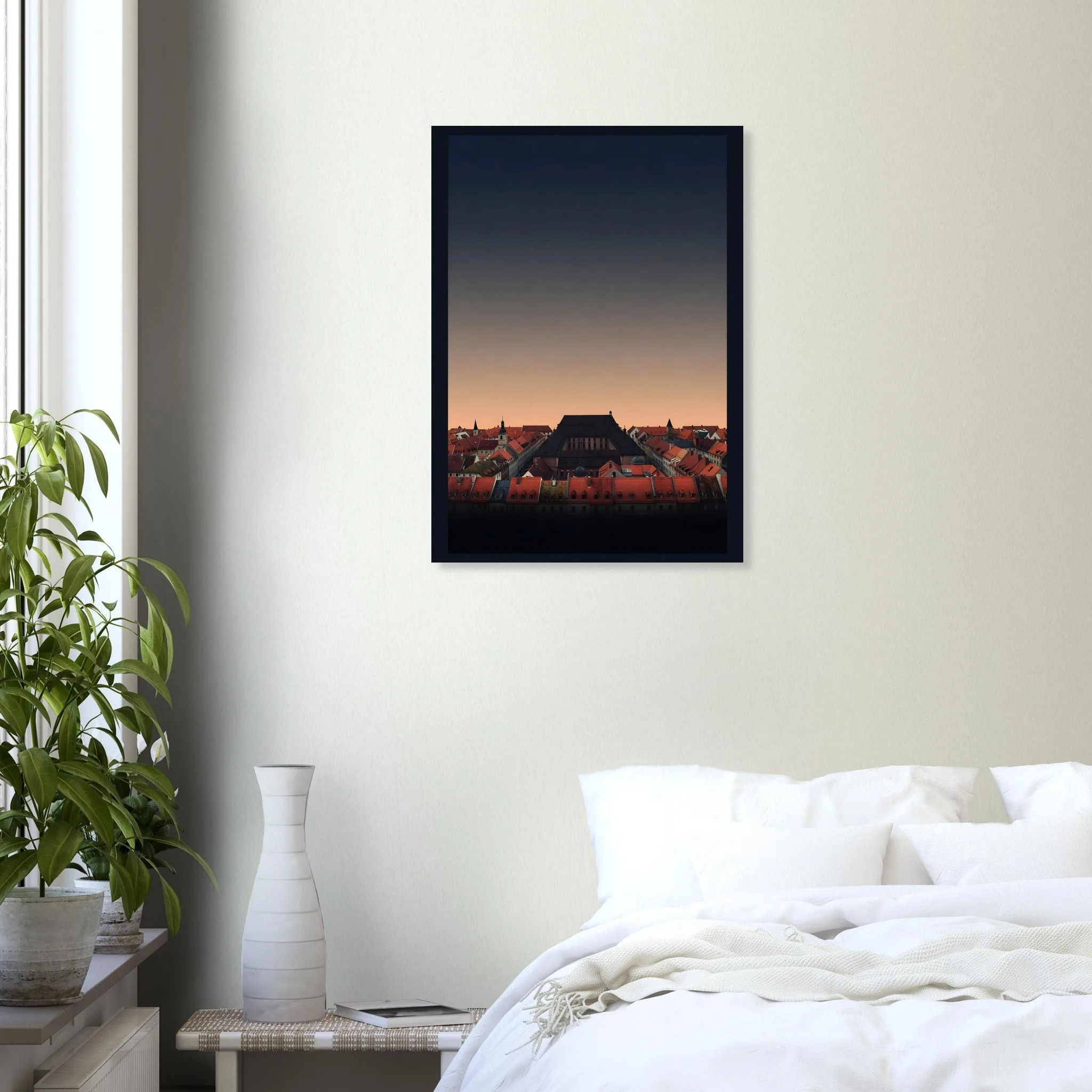
Silhouette skyline
from €19
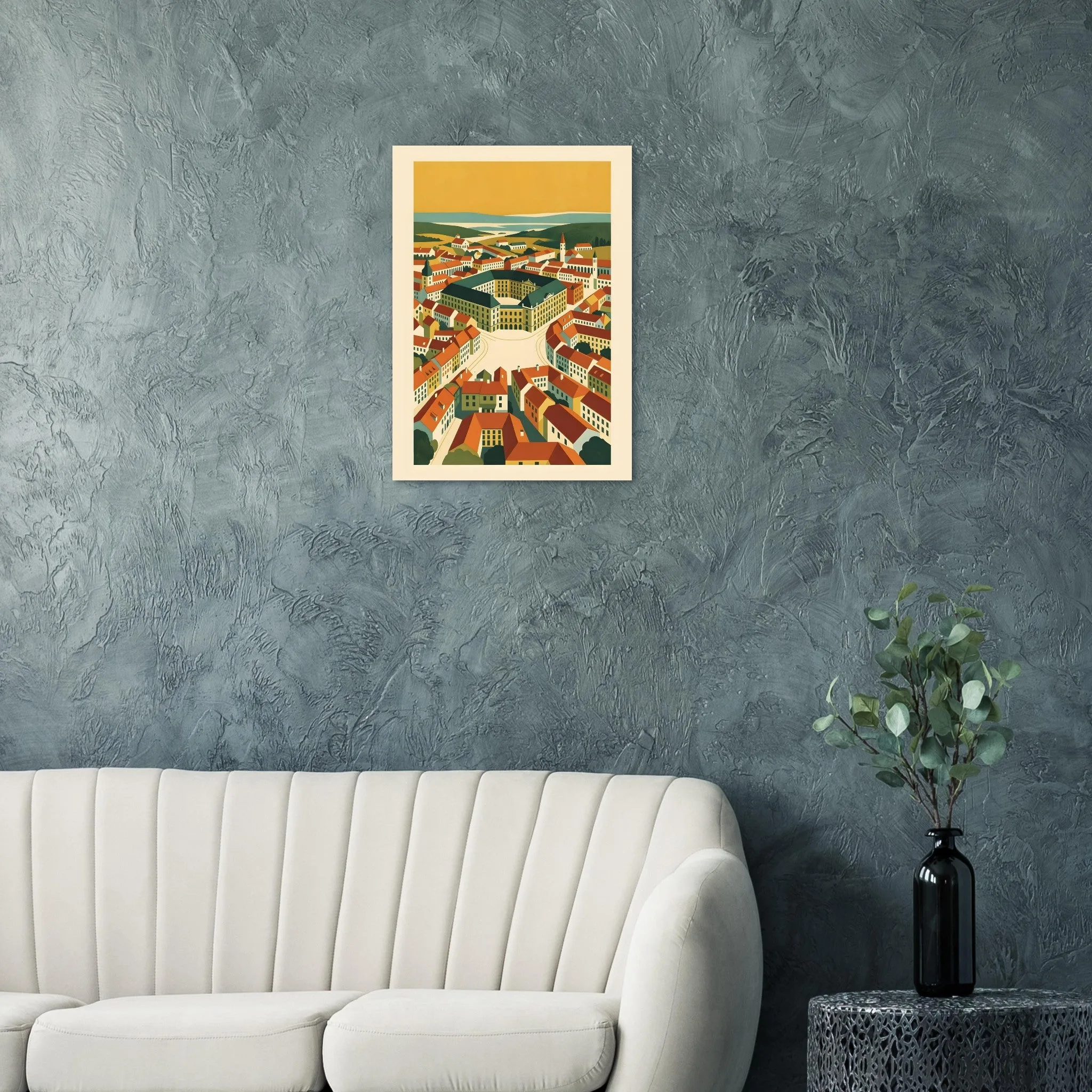
Mid-century modern
from €19
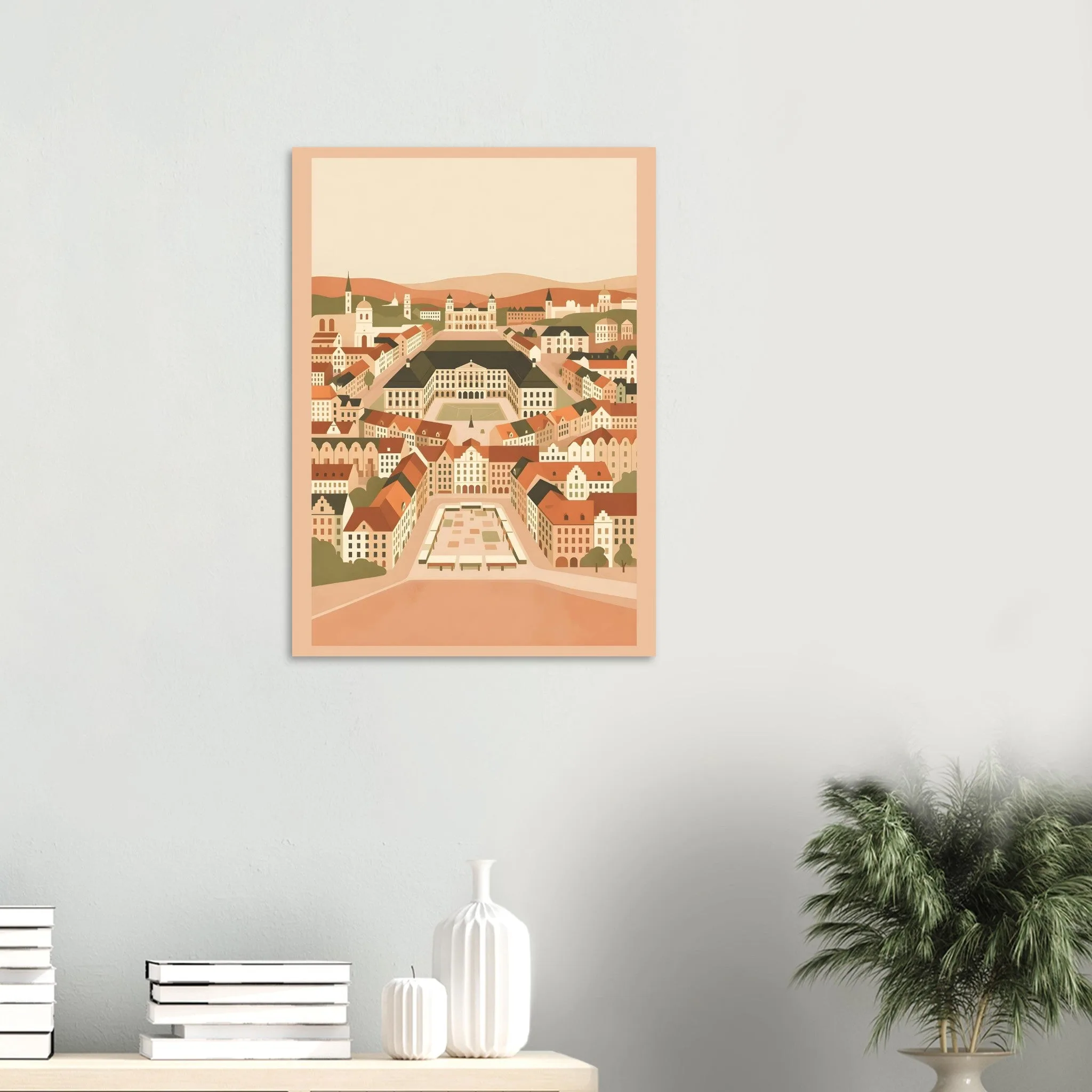
Flat vector illustration
from €19
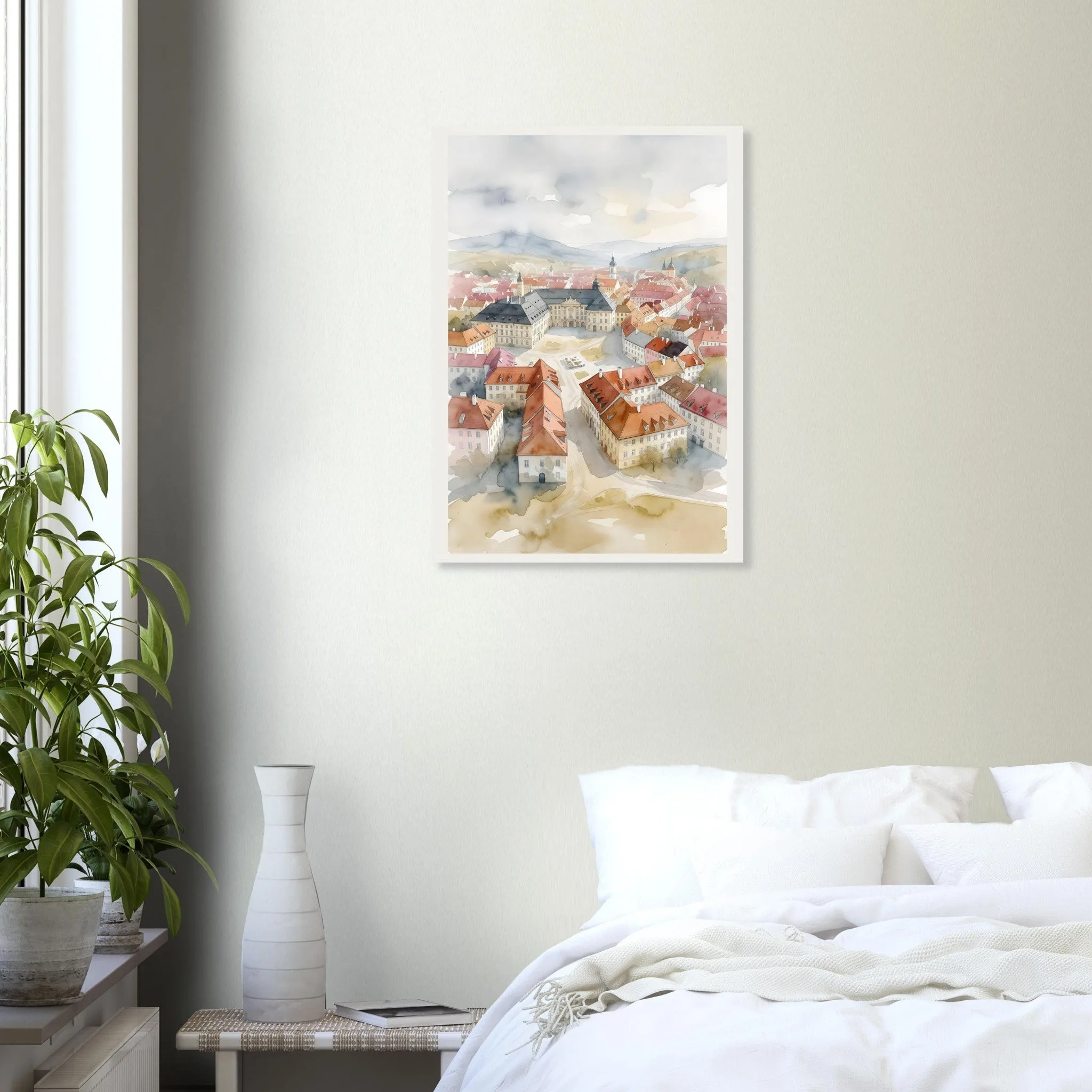
Watercolour landscape
from €19
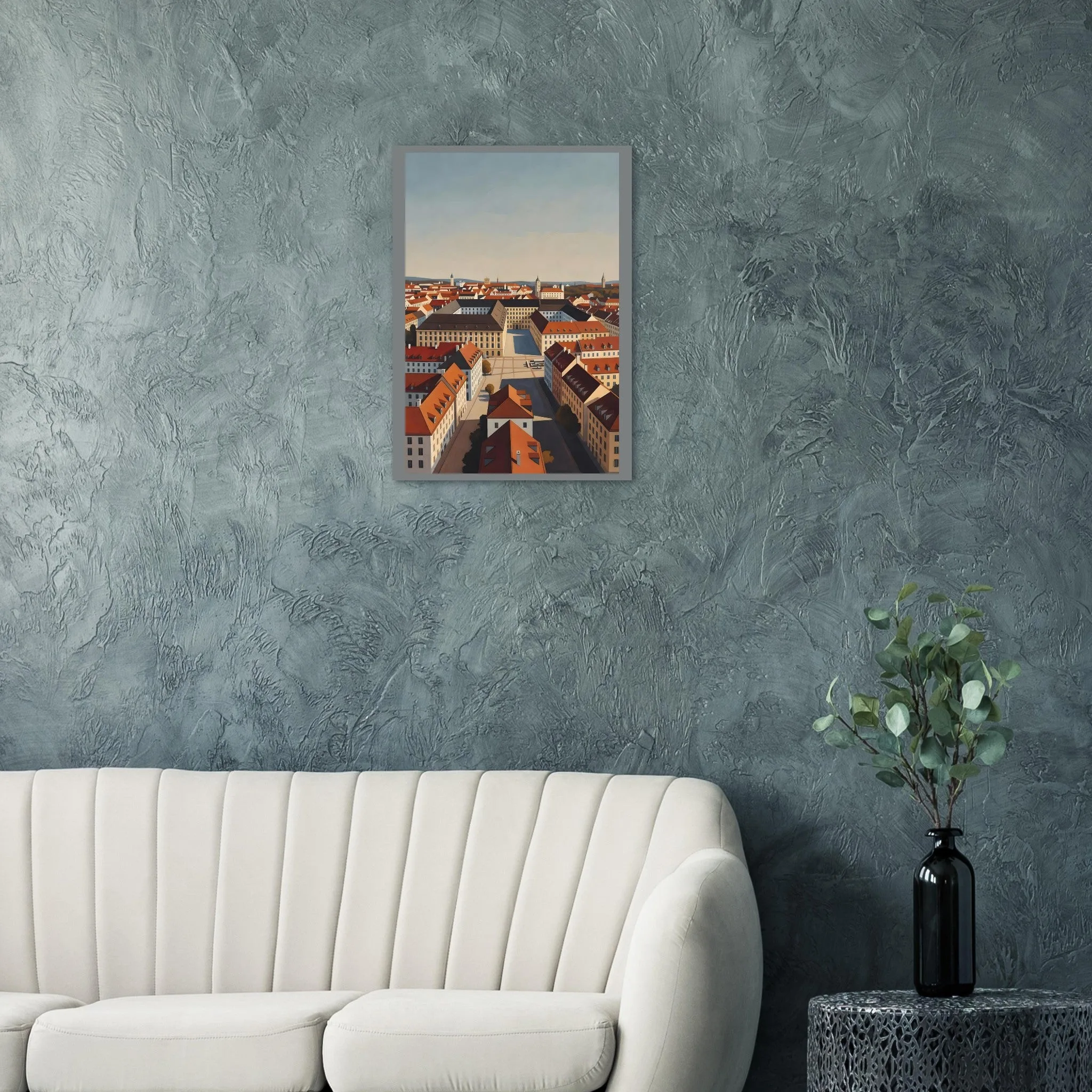
Vintage travel poster
from €19
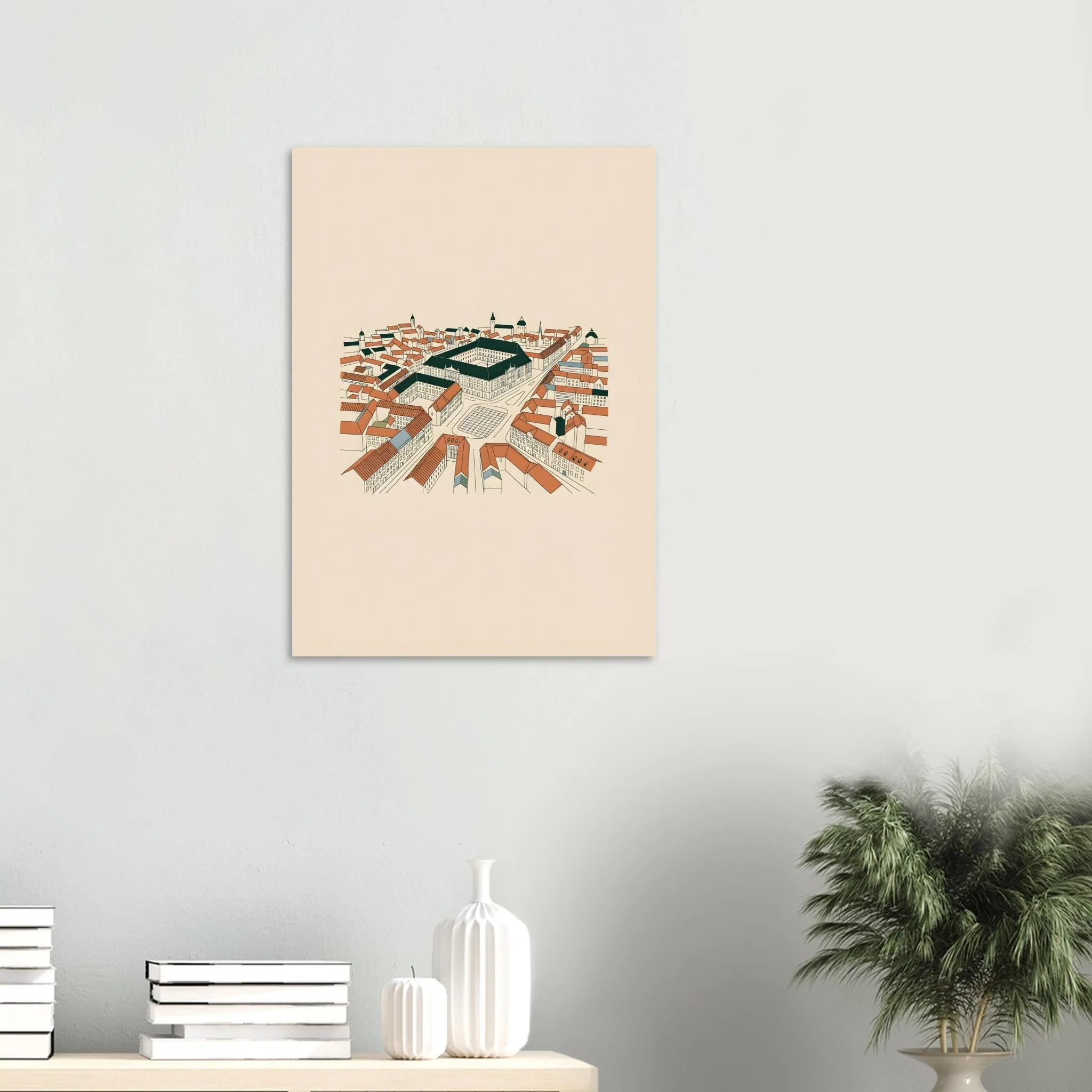
Minimalist line art
from €19
Eisenstadt feels close at hand even before you arrive there: a compact city in Burgenland, set at about 182 metres above sea level and spread across 42.88 km², with the easy scale of a place you can learn by walking. Its streets carry a quiet confidence rather than a rush, and that suits a city of 14,476 people well — not anonymous, not oversized, but distinct enough to leave a mark.
There is a particular calm in the way Eisenstadt holds its history. It is the capital of Burgenland, yet it keeps a more intimate rhythm than many administrative centres. That contrast is part of its charm: a small statutory city with a strong sense of place, where memory can attach itself to façades, courtyards, and the soft edges of everyday life.
For some, Eisenstadt is a homecoming in Burgenland; for others, it is a day spent moving between streets, palace grounds, and the slower air of the city centre. Either way, it is the kind of place that stays in the mind as a mood as much as a map.
Eisenstadt has the measured feel of a city that does not need to announce itself. Its scale is modest, its elevation gentle, and its character built from layers that reveal themselves slowly. The streets feel made for lingering: a glance upward, a pause at a corner, the sense that the city is speaking in a quieter register. In Burgenland, where the landscape opens out and light seems to travel far, Eisenstadt keeps a focused centre — compact, readable, and full of small visual cues that linger after the visit.
Part of that memory is tied to its role as the capital of Burgenland. Administrative weight can sometimes make a place feel formal, but here it is balanced by an inviting human scale. The city’s 14,476 residents give it a lived-in rhythm rather than a monumental one. You notice the difference in the atmosphere: less rush, more familiarity; less spectacle, more texture. That is often what makes a city beloved in retrospect. It is not only what you saw, but how it felt to move through it.
The landscape around Eisenstadt matters too. At 182 metres above sea level, it sits in a gentle position that seems to soften the light. The result is a city that can feel bright without being harsh, grounded without becoming heavy. Even when you think of it from afar, it is easy to imagine the clean lines of streets, the calm edges of buildings, and the steady Burgenland air that gives everything a little more breathing room.
What makes Eisenstadt especially memorable is the way the everyday and the historical sit side by side. The city is not a grand stage in the theatrical sense, yet it has enough presence to anchor a strong sense of identity. That is often where belonging lives: in the places that do not overwhelm, but settle into you. A city of 42.88 km² can still contain a whole emotional geography — routes taken often, seasons remembered, and views that return uninvited years later.
For anyone who has lived in Eisenstadt, passed through it, or carries a family story attached to Burgenland, the city tends to reappear in fragments: a street seen in winter light, a square after rain, the hush of a Sunday morning, the feeling of being in a capital that still knows how to be local. That combination is rare, and it is exactly why Eisenstadt works so well as wall art. It is not only about place recognition. It is about the particular kind of calm that a place can leave behind.
Bringing Eisenstadt into a room
Choosing an Eisenstadt poster for home is often less about decoration than about atmosphere. In a living room, a larger format can give the wall a steady centre, especially if the rest of the space is open and uncluttered. In a hallway, a smaller piece can work like a memory held at the edge of daily movement — something you see in passing and recognise instantly. A bedroom tends to suit softer, quieter compositions, while a home office may benefit from a cleaner, more grounded presence that does not compete with the room’s function.
Warm interiors usually welcome Eisenstadt’s calmer side: wood, linen, muted earth tones, and light that falls late in the day. In cooler spaces, the city’s restrained character can bring balance, adding a human note without crowding the room. The best choice often depends on the wall itself. A narrow wall beside a doorway asks for something vertical and discreet; a broad wall above a sofa can carry a larger format with ease. What matters most is not filling space, but giving it a sense of place.
If you are styling a room around memory, Eisenstadt works well with other personal objects — a travel photograph, a ceramic piece, a book collected on a trip through Burgenland. The poster does not need to dominate. It can simply hold the room together with the same quiet confidence the city itself seems to have.
A thoughtful gift for people tied to the city
An Eisenstadt poster often lands as a gift because it speaks to belonging without needing explanation. Former residents tend to read it as a return: a way to keep a city close after moving elsewhere. Travellers may see it as a reminder of a day that felt more meaningful than expected. For expats, it can be a small but steady link to home, especially when the connection is to Burgenland more broadly. And for locals, it can feel surprisingly personal — a familiar place reframed with care.
That makes it a fitting present for a housewarming, when someone is shaping a new interior and wants the walls to feel less temporary. It also works for birthdays, when the right gift is something with a little emotional accuracy rather than novelty. At Christmas, it can be a quiet, lasting alternative to something seasonal and disposable. For retirement, it can mark a shift in pace: a city remembered with gratitude, or a place that has become part of a life story.
Gifts tied to place are often appreciated because they do more than decorate. They acknowledge a shared map. Eisenstadt has that rare quality of being specific enough to feel intimate, yet broad enough to matter to different kinds of people for different reasons.
What sets our Eisenstadt prints apart
Our Eisenstadt posters are built around verified geographic and historical facts, so the result stays faithful to the city rather than leaning on generic imagery. The aim is a warm, minimalist palette that leaves room for memory while still feeling contemporary on the wall. Instead of overwhelming detail, the design language keeps the city readable and calm — much like Eisenstadt itself.
Each print is produced locally and made with care for the materials as well as the image. We use 170 gsm FSC semi-gloss silk paper and archival inks, which helps preserve colour depth while keeping the surface refined. The paper choice matters: it gives the print a substantial feel without making it look glossy or overly polished. Framed or unframed, the piece is meant to sit naturally in a home, not shout for attention.
That balance between accuracy and atmosphere is what makes the poster feel more lasting. It is not just a city image. It is a careful rendering of a place with a defined scale, a Burgenland identity, and a quiet presence that many people recognise immediately.
Sizes, prices, and what fits best
For smaller walls or tighter budgets, A4 at €19 is an easy entry point, especially if you are building a gallery wall or placing the print on a shelf. A3 at €29 offers a bit more presence without asking for much space, which makes it a versatile choice for bedrooms, studies, and narrow hallways. If you want the image to read from across a room, 30×40 cm at €34 is a balanced middle ground. And for a more statement-making format, 50×70 cm at €49 gives Eisenstadt the breathing room it deserves.
The right size depends on distance and proportion as much as taste. A small format can feel intimate when viewed close up; a larger one can steady a wide wall or sit comfortably above furniture. If you are unsure, it often helps to think about the room’s mood first. Quiet room, quiet print. Open room, larger scale. The city’s own character does much of the work.
Whether you choose framed or unframed, the intent stays the same: to let Eisenstadt appear with clarity, warmth, and a sense of belonging that can settle into daily life rather than sit apart from it.
Eisenstadt is the kind of place that returns to you in fragments — a street, a light, a feeling of Burgenland air — and that is often exactly what a good wall print should hold.
Frequently asked questions
What sizes do Eisenstadt posters come in?
Our Eisenstadt posters come in four standard sizes: A4 (21×30 cm) from €19, A3 (30×42 cm) from €29, 30×40 cm from €34, and 50×70 cm from €49. All sizes are printed on 170 gsm semi-gloss FSC-certified silk paper.
How long does shipping take?
We print locally via Gelato in 32+ countries. In Europe, your order typically arrives within 3–5 business days of purchase. Free EU shipping on every order — no minimum.
What's the print quality like?
We print on 170 gsm FSC-certified semi-gloss silk paper using archival inks. Colours are warm, muted, and lightfast for years — made to stay on a wall, not fade in a season.
Can I order a framed Eisenstadt poster?
Framed options are coming soon. For now, we ship unframed posters — our standard sizes fit common off-the-shelf frames from IKEA, HAY, Desenio, and others.
Where do the designs come from?
Each Eisenstadt design begins with verified facts from open geographic sources — Wikipedia, OpenStreetMap, GeoNames. We only depict what's historically and culturally rooted in a place, never inventions.
Can I return my poster if I'm not happy?
Yes. We offer 30-day free returns. If your poster doesn't feel right once it's on your wall, send it back for a full refund.