Roosendaal Poster — Netherlands Wall Art
Minimalist posters and wall art of Roosendaal, Netherlands — premium print on 170 gsm coated silk paper, shipped to 32 countries.
Roosendaal in a calmer light
Our designs
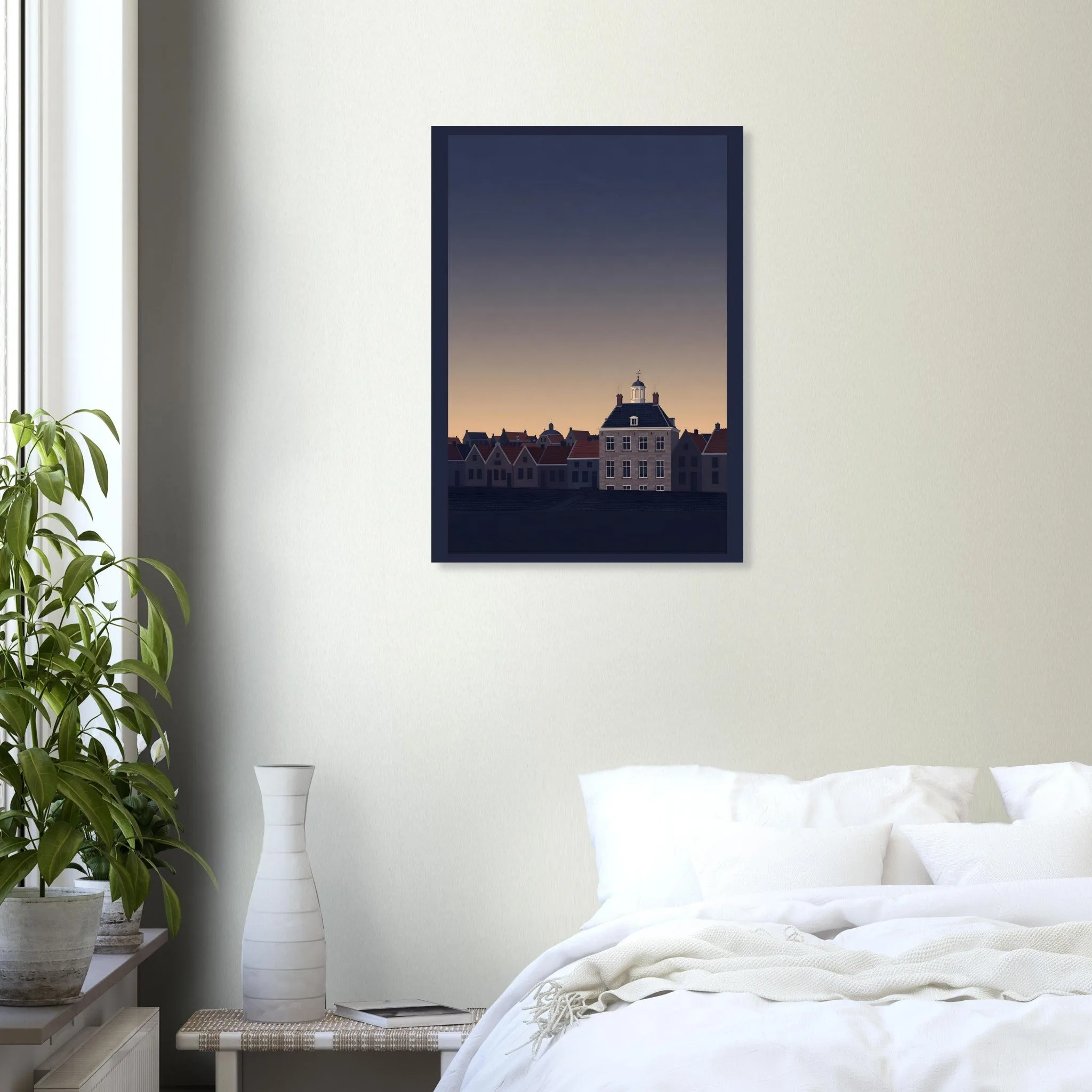
Silhouette skyline
from €19
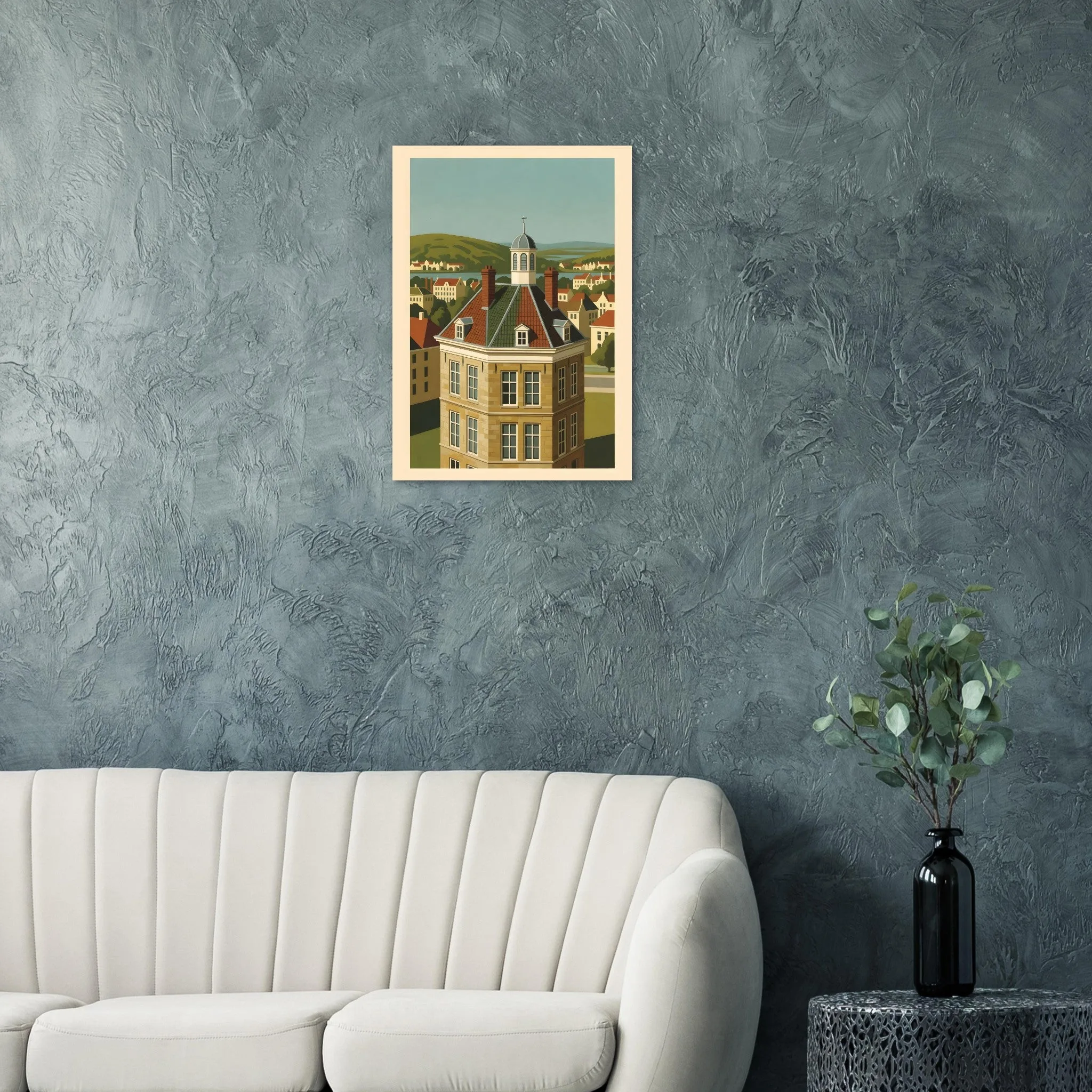
Mid-century modern
from €19
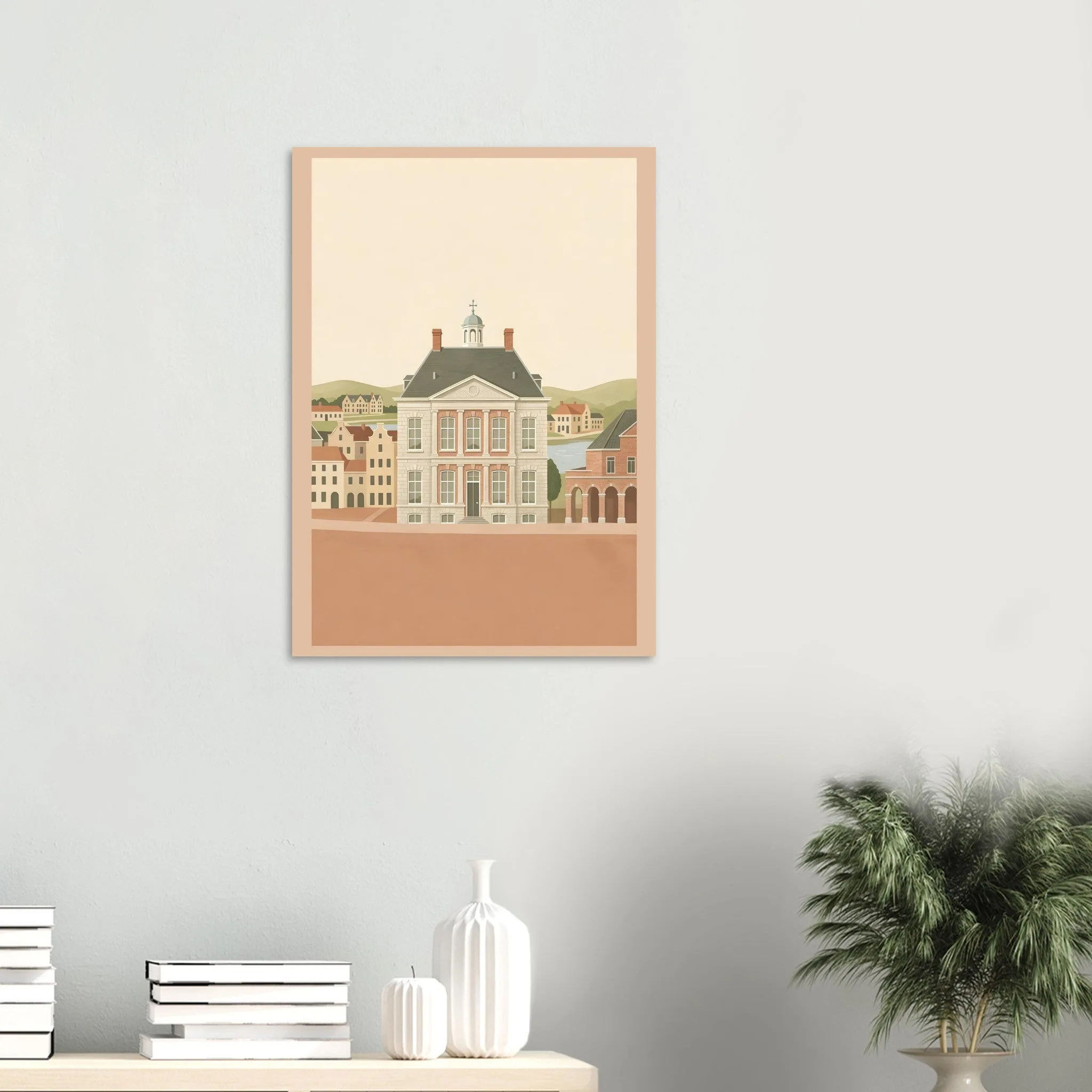
Flat vector illustration
from €19
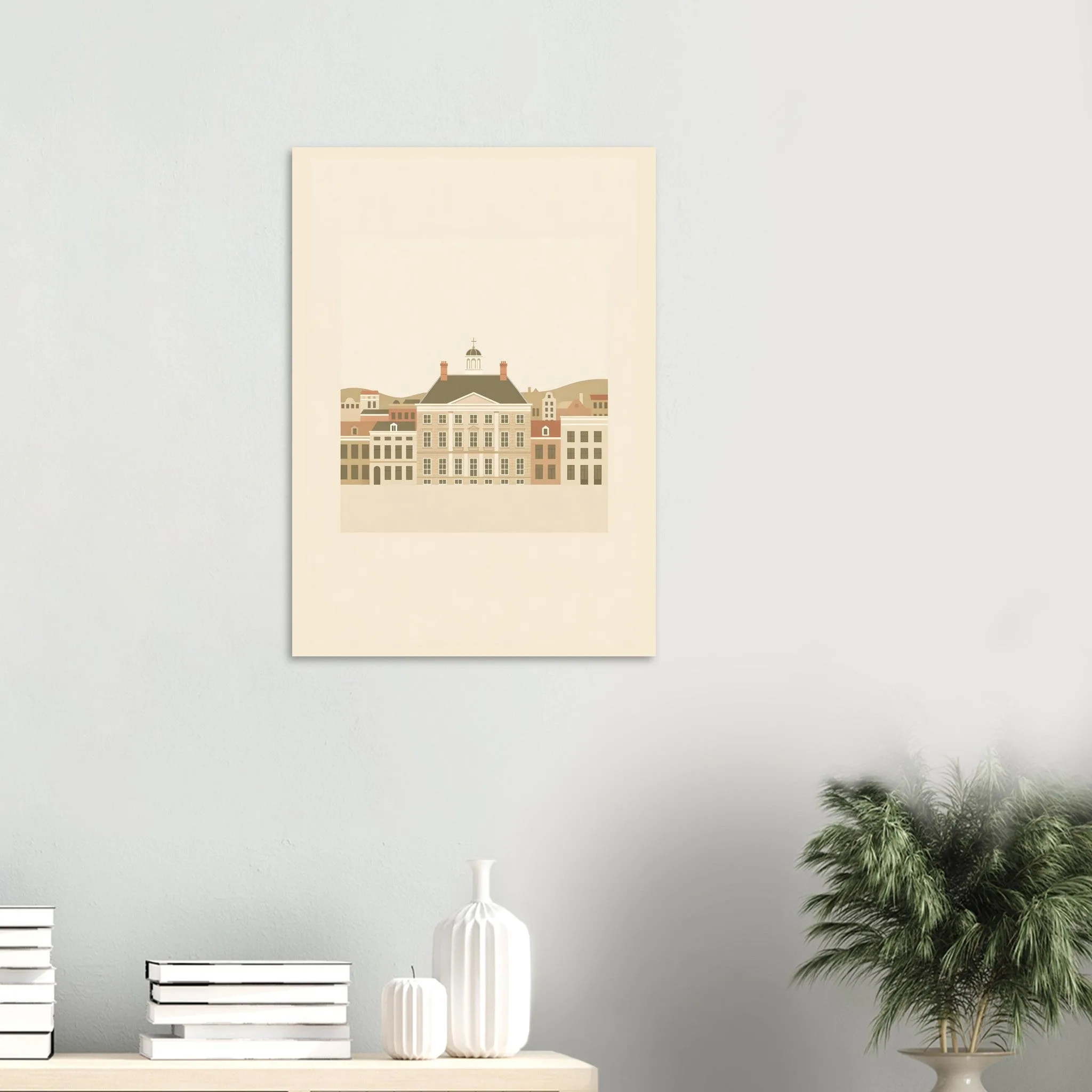
Flat vector illustration
from €19
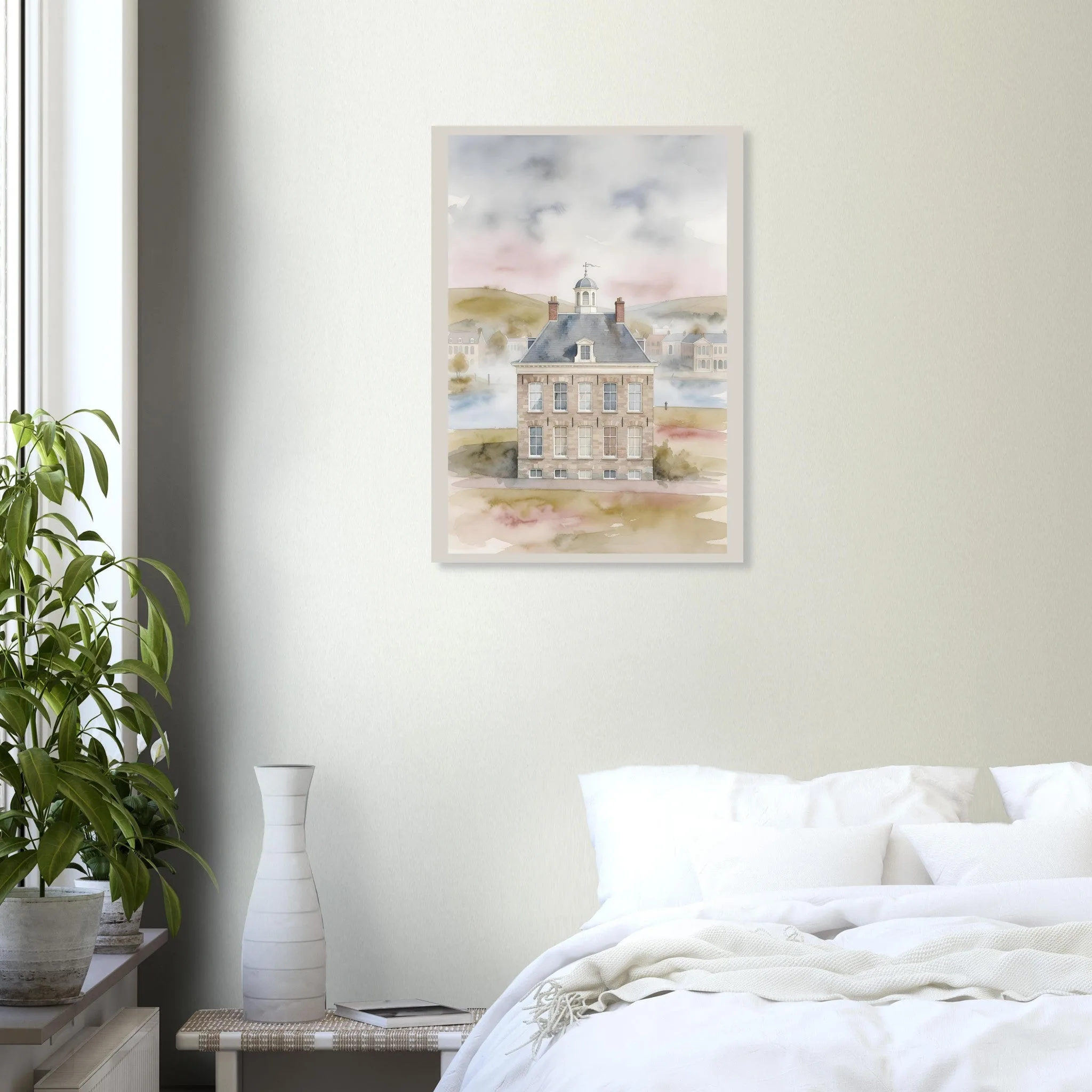
Watercolour landscape
from €19
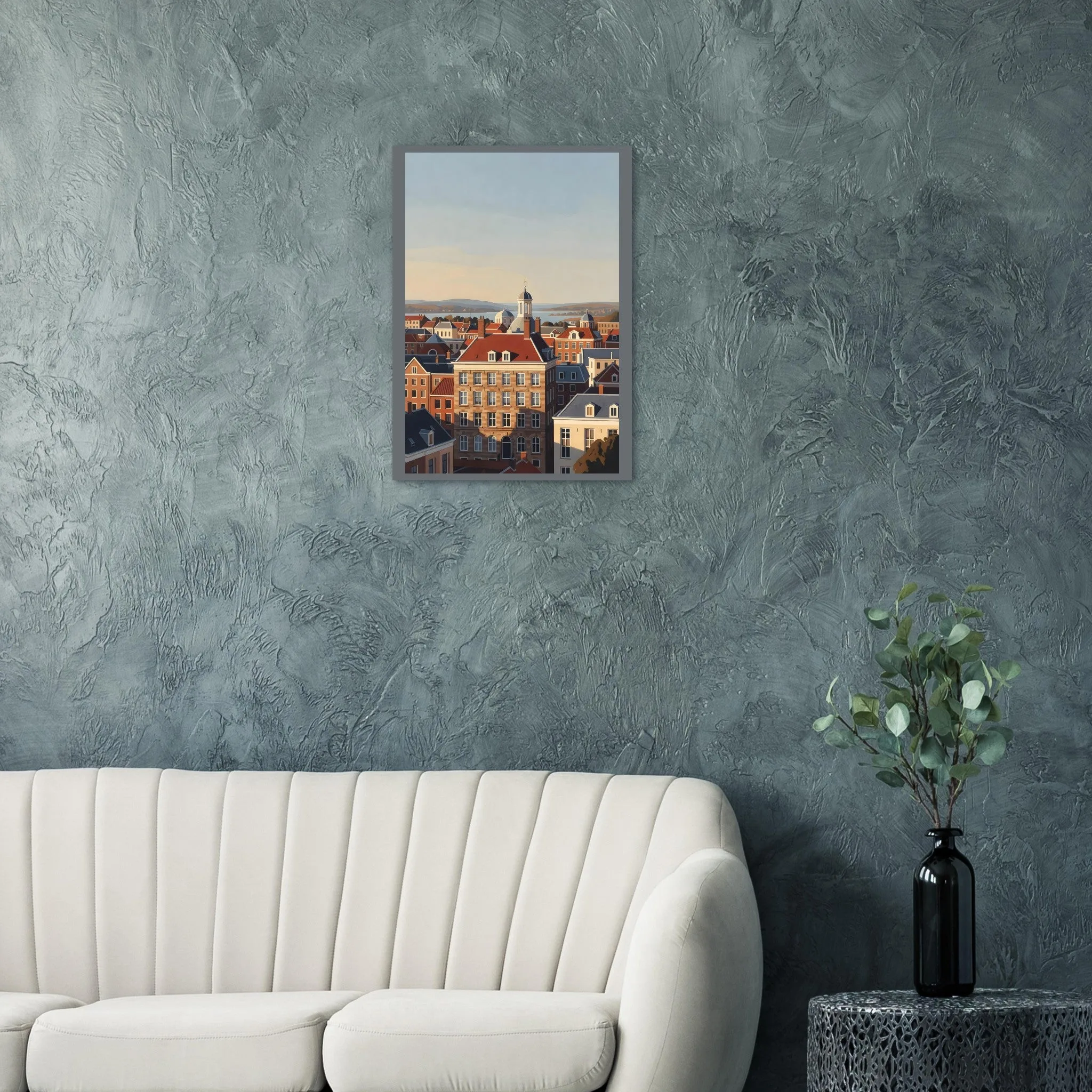
Vintage travel poster
from €19
Roosendaal does not need to raise its voice. At just 3 metres above sea level, it sits low and close to the Dutch landscape, with that easy sense of flat distance that makes light feel wider and skies feel more present. The city covers 107.16 km², yet what stays with you is often smaller than that: a station platform at dusk, a street after rain, the soft rhythm of a place where daily life moves with its own unhurried confidence.
For many people, Roosendaal is tied to movement as much as to home. It is a city of 76,959 residents, but also of arrivals, departures, errands, reunions, and the ordinary moments that collect into memory. Some remember it through work or family, others through the feeling of passing through and noticing how the town opens and settles again around you. That is part of its appeal: Roosendaal feels lived-in without ever trying to perform itself.
There is a practical honesty to the city that suits the Dutch west well. It is not a place that needs grand gestures to be recognisable. Its character comes from proportion, from the way streets, neighbourhoods, and open stretches sit together, and from the quiet familiarity that locals carry with them long after they have moved away.
Roosendaal has the kind of presence that reveals itself gradually. The city is low, broad, and steady, spread across 107.16 km² and resting only 3 metres above sea level, so the horizon always seems close enough to measure. That low-lying geography gives the place its particular mood: open air, long sightlines, and a light that can make even an ordinary afternoon feel carefully arranged.
It is also a city of real everyday scale. With 76,959 inhabitants, Roosendaal feels substantial without becoming anonymous. You sense that balance in the rhythm of the streets, in the way people move between errands and meetings, and in the practical, no-fuss character that often defines Dutch towns that have grown with work, travel, and family life rather than spectacle. The atmosphere is less about a single headline landmark and more about the texture of the whole place.
For many, the strongest memory of Roosendaal may be linked to transit and return. Stations, roads, and the small pauses between them often shape how a city is remembered, and Roosendaal carries that feeling well: a place where you may have waited for someone, watched the weather change, or recognised a familiar corner on the way back after time away. Those are modest memories, but they are the ones that tend to stay.
The city’s scale helps that feeling. In a place of this size, you can build a private map quickly: the route you took as a teenager, the bakery you always passed on the way to the train, the square where an ordinary afternoon somehow became a marker in your own life. Roosendaal is the sort of city that gathers meaning through repetition, through use, through the quiet habit of belonging.
And because it sits so low in the landscape, the surroundings seem to matter as much as the built fabric. The sky is part of the experience. Weather arrives visibly. Morning and evening carry a clear Dutch softness, sometimes bright, sometimes silver, sometimes almost colourless in a way that makes the city feel clean-edged and calm. That visual restraint is one reason Roosendaal translates so naturally into wall art: it already understands the power of simple shapes and open space.
For people who know the city well, Roosendaal can mean home in the most practical sense, but also in the emotional one. It may be where life was ordinary in the best possible way: school days, family routines, a familiar route through town, a sense of place that did not need explanation. For former residents, too, the memory often comes back in fragments rather than in grand scenes — the feel of the air, the tone of the streets, the way the city seemed to sit quietly in the background of life until distance made it vivid again.
That is what makes Roosendaal such a compelling subject for a room. It is not loud, and it does not need to be. Its strength lies in recognition: a city that feels specific the moment you know it, and quietly beautiful even if you only know it by name.
How Roosendaal fits into a room
Choosing a Roosendaal poster for the home is often about matching mood rather than making a grand statement. In a living room, a larger format can hold its own above a sofa or sideboard, especially if the rest of the interior leans clean and airy. The city’s understated character works especially well in spaces where natural materials, pale walls, and calm tones already do some of the visual work. In a warmer room with wood, brass, or deeper textiles, Roosendaal can bring a cool counterpoint without feeling stark.
Smaller sizes tend to suit more intimate places: a hallway, a reading corner, a home office, or that narrow wall that never seems to know what to do with itself. Because the city’s atmosphere is restrained rather than busy, it can sit comfortably in both minimal interiors and more layered rooms. If your home already has a lot of colour, Roosendaal can act like a visual pause. If your space is neutral, it can deepen the sense of order without flattening the room.
Many people also think about scale in relation to memory. A compact print can feel personal, almost like a note to self; a larger one can turn a place into a presence. If Roosendaal matters to you because you lived there, studied there, or kept returning there, the choice often comes down to how quietly or how clearly you want that connection to show.
A thoughtful gift for people with Roosendaal in their story
Roosendaal posters make sense as gifts because they speak to recognition before explanation. They suit former residents who still remember the city in fragments, travellers who passed through and kept the feeling, expats who want a link back to home, and locals who simply like seeing their place treated with care. A city print can be deeply personal without being overly sentimental, which is why it often lands well.
That makes it an easy choice for housewarmings, birthdays, Christmas, and retirement gifts, especially when the person receiving it has a clear connection to the place. It can be a gentle way to mark a move, a new home, or a life stage where familiar places start to matter in a different way. For someone who has left Roosendaal behind, it can bring back a sense of belonging without needing a long explanation.
It also works well for people who collect places rather than things. Some gifts are about function; others are about memory. A Roosendaal poster sits closer to the second category, and that is often what makes it feel meaningful when unwrapped.
What sets our Roosendaal prints apart
What makes our Roosendaal posters different is that they begin with the place itself, not with decoration. The design language stays close to the city’s verified character: its low elevation, its broad area, and the sense of a Dutch city shaped by everyday movement rather than theatrical landmarks. The result is a calm, balanced image that respects what Roosendaal is instead of trying to embellish it.
Each print is produced locally, with attention to paper quality and colour accuracy. We use 170 gsm FSC semi-gloss silk paper and archival inks, which helps the surface hold detail while keeping the finish soft and refined. The palette is warm and minimalist, chosen to feel at home in interiors that favour quiet tones, natural textures, and long-lasting pieces rather than trend-driven accents.
Framed or unframed, the effect stays clean and considered. The point is not to overwhelm a wall, but to give the room a sense of place. For buyers who care about sustainability as much as aesthetics, the FSC paper adds another layer of reassurance without changing the calm visual character of the print.
Sizes, framing, and what each option costs
If you are comparing sizes, it helps to think about where the poster will live. A4 works well for shelves, gallery walls, and smaller rooms where a subtle note is enough. A3 has a little more presence and suits bedrooms, studies, and narrow walls that need something clear but not oversized. The 30×40 cm format is a versatile middle ground for most homes. At 50×70 cm, Roosendaal becomes a stronger focal point, especially above furniture or in open-plan spaces where a larger image can breathe.
The pricing stays straightforward: A4 from €19, A3 €29, 30×40 cm €34, and 50×70 cm €49. That makes it easier to choose according to wall size and budget rather than trying to decode a complicated range. For many buyers, the decision is less about finding the “right” size in the abstract and more about matching the print to the room’s rhythm.
If you are unsure between framed and unframed, the answer often depends on how finished you want the wall to feel. Unframed prints keep things light and flexible, while a frame can give the piece more structure and make it feel ready to hang. Either way, the image remains the same: a restrained, place-led portrait of Roosendaal, made to sit naturally in a home rather than dominate it.
Some places are remembered in bright flashes. Roosendaal is remembered more like weather: familiar, low, and quietly persistent.
Frequently asked questions
What sizes do Roosendaal posters come in?
Our Roosendaal posters come in four standard sizes: A4 (21×30 cm) from €19, A3 (30×42 cm) from €29, 30×40 cm from €34, and 50×70 cm from €49. All sizes are printed on 170 gsm semi-gloss FSC-certified silk paper.
How long does shipping take?
We print locally via Gelato in 32+ countries. In Europe, your order typically arrives within 3–5 business days of purchase. Free EU shipping on every order — no minimum.
What's the print quality like?
We print on 170 gsm FSC-certified semi-gloss silk paper using archival inks. Colours are warm, muted, and lightfast for years — made to stay on a wall, not fade in a season.
Can I order a framed Roosendaal poster?
Framed options are coming soon. For now, we ship unframed posters — our standard sizes fit common off-the-shelf frames from IKEA, HAY, Desenio, and others.
Where do the designs come from?
Each Roosendaal design begins with verified facts from open geographic sources — Wikipedia, OpenStreetMap, GeoNames. We only depict what's historically and culturally rooted in a place, never inventions.
Can I return my poster if I'm not happy?
Yes. We offer 30-day free returns. If your poster doesn't feel right once it's on your wall, send it back for a full refund.