Basel Poster — Switzerland Wall Art
Minimalist posters and wall art of Basel, Switzerland — premium print on 170 gsm coated silk paper, shipped to 32 countries.
Basel on the wall, as memory and place
Our designs
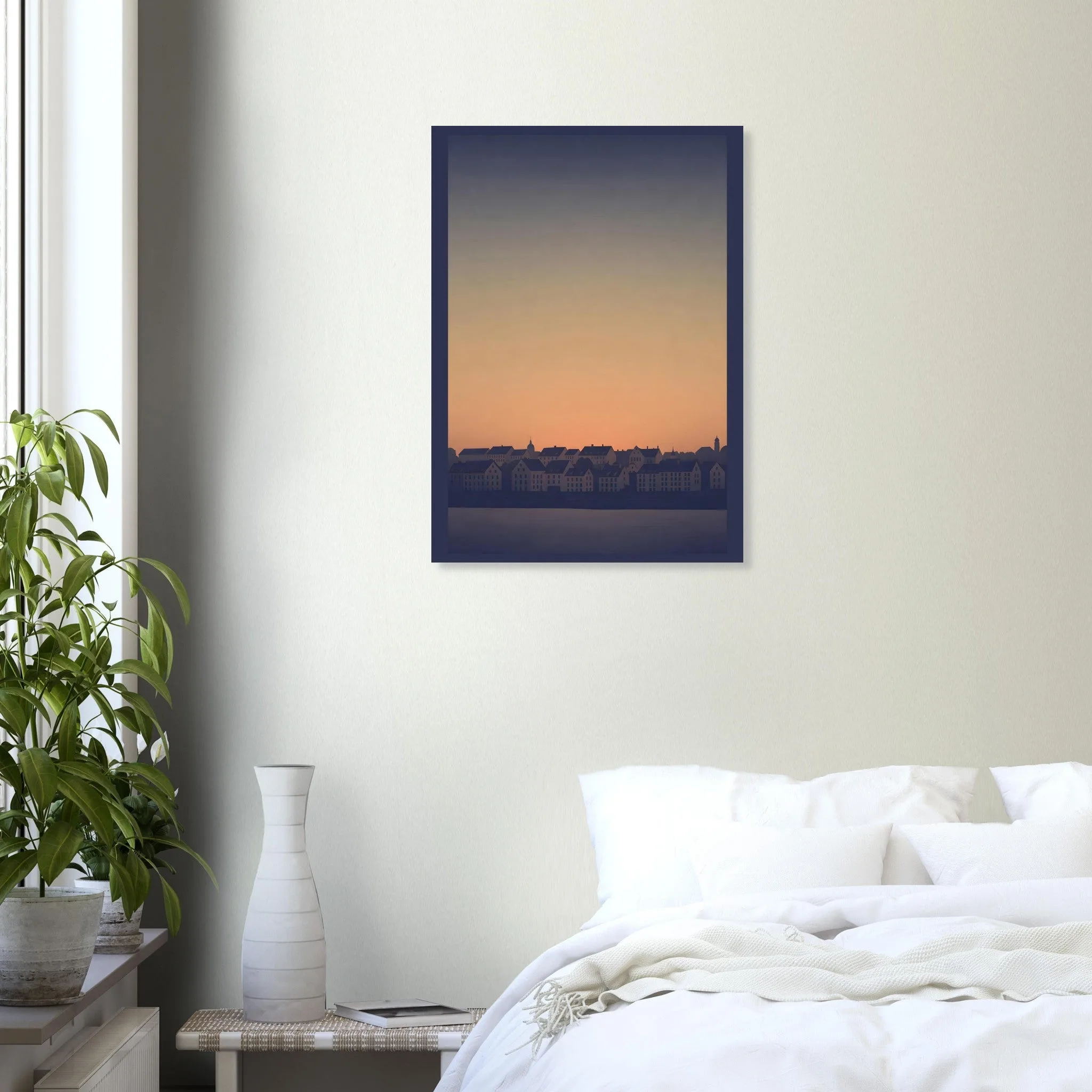
Silhouette skyline
from €19
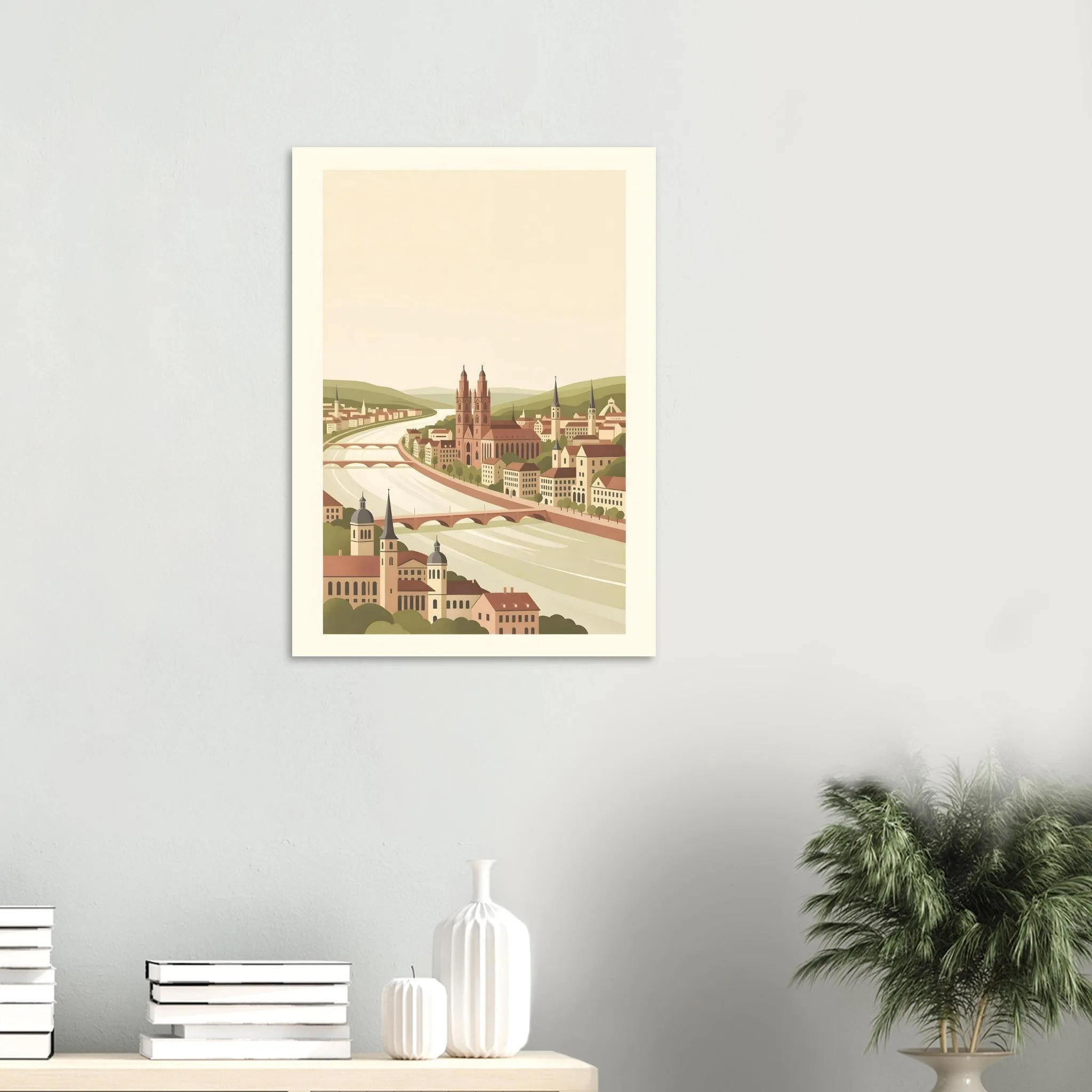
Flat vector illustration
from €19
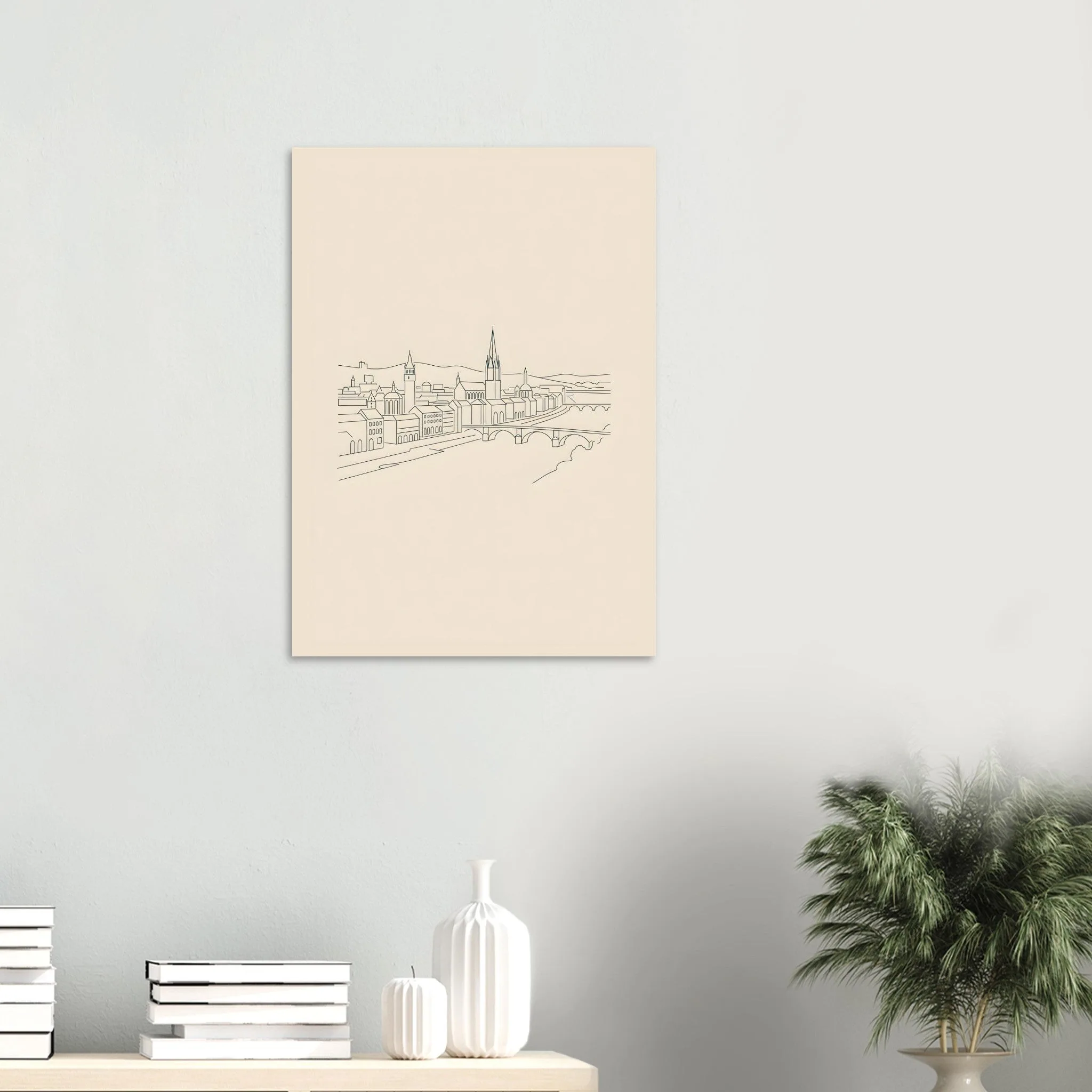
Minimalist line art
from €19
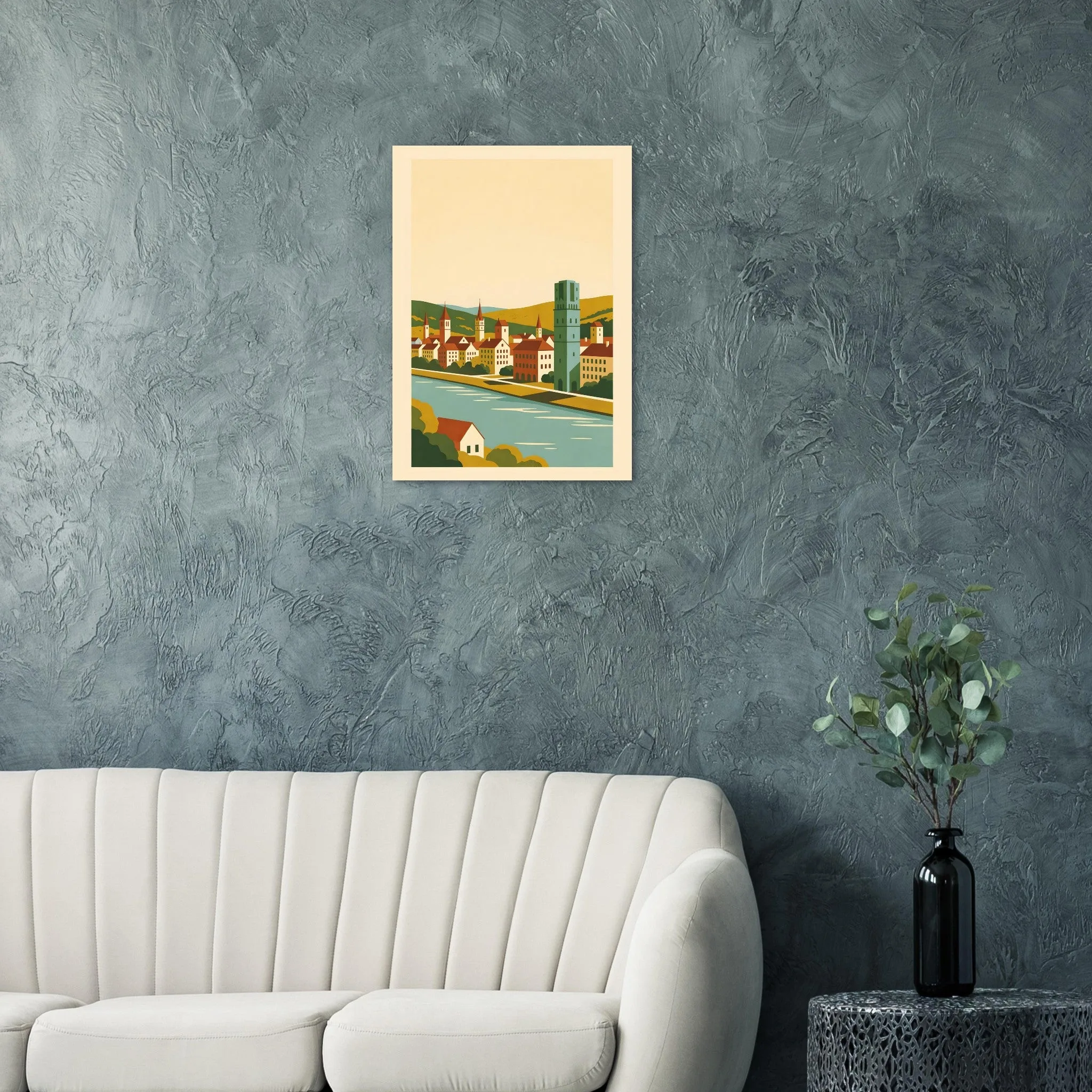
Mid-century modern
from €19
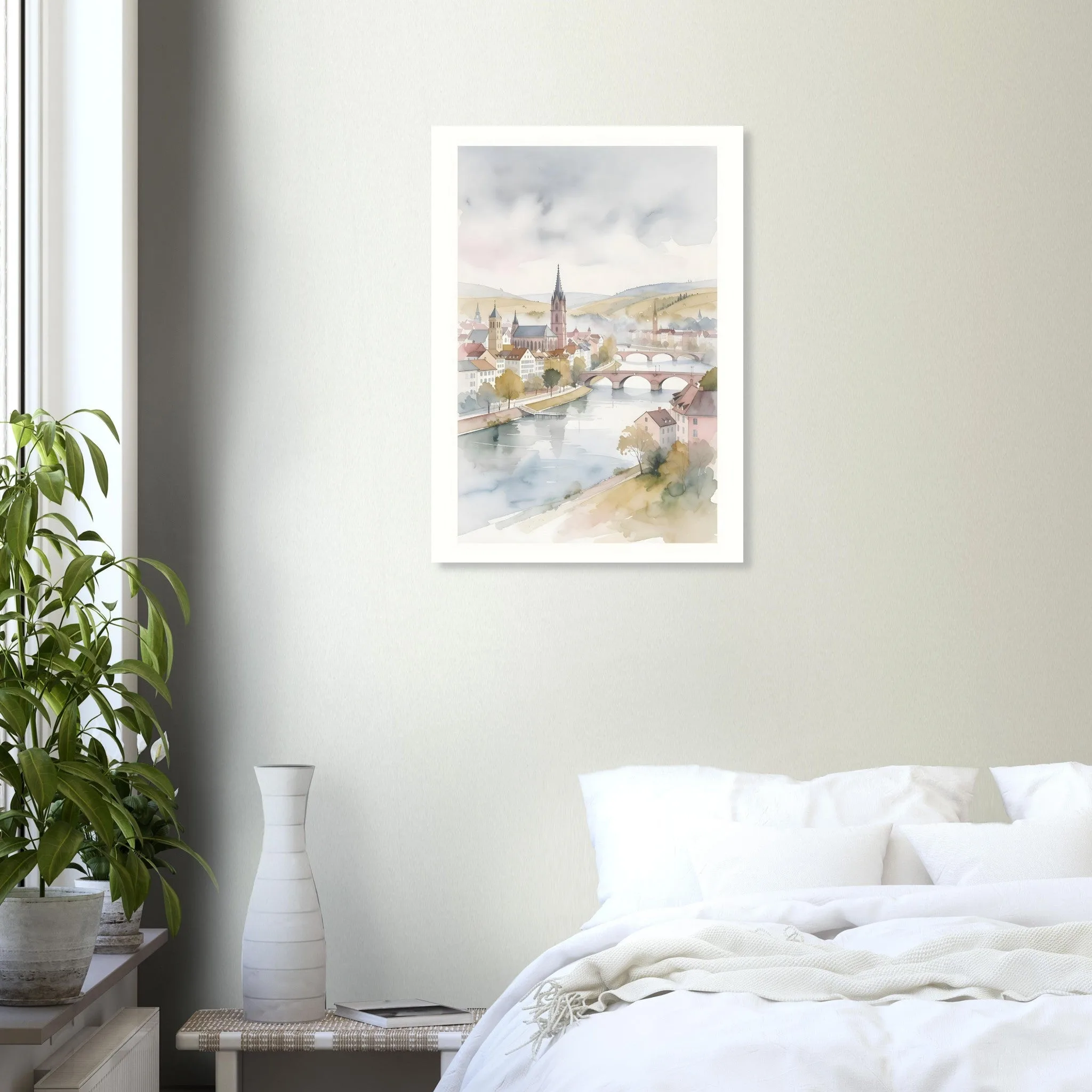
Watercolour landscape
from €19
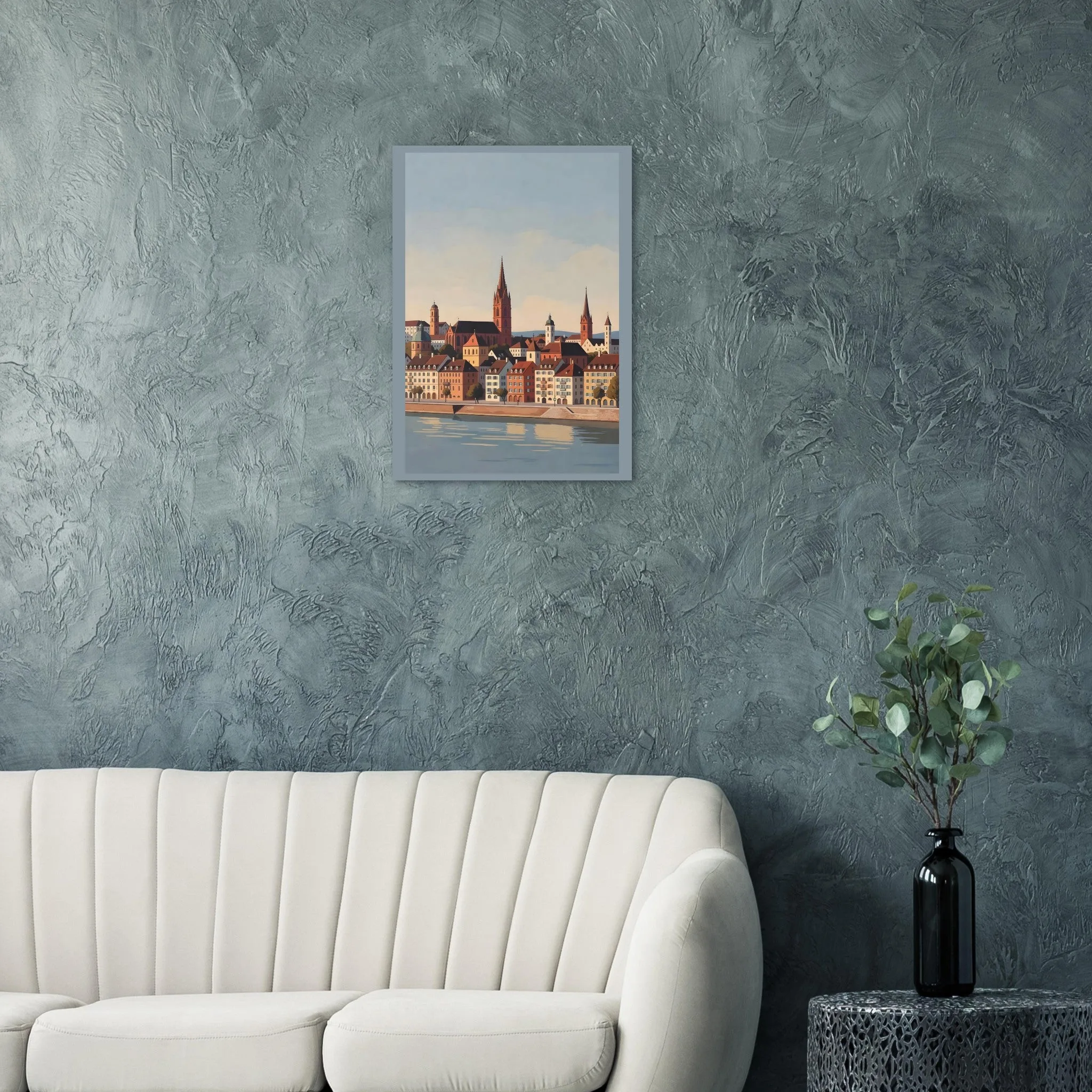
Vintage travel poster
from €19
Basel has a way of staying with you. It is a city in northwestern Switzerland, set on the Rhine, where the river gives the streets a quiet pull and the light seems to shift with the water. At around 260 metres above sea level, and spread across 23.85 km², it feels compact enough to know by heart, yet layered enough to keep surprising you.
It is Switzerland’s third most populous city, with 178,999 people, and the capital of Kanton Basel-Stadt. That matters in the small, everyday ways too: the city carries the confidence of a place that has long been central, but never loud about it. Basel feels lived-in rather than performed, with an old city texture that settles into memory—stone facades, river crossings, the rhythm of trams, and the sense that the Rhine is always nearby.
For many, Basel is a place of return. For others, it is a city remembered from a visit, a study year, a first job, a family story. However it enters your life, it tends to arrive with atmosphere: cool water, clear air, and the feeling of a border city that looks outward while remaining unmistakably itself.
Basel is often described by where it sits, but that never quite explains why it feels the way it does. The Rhine gives the city its calm and its movement at once. You notice it in the pauses between bridges, in the way the river opens the city to the world, and in the quiet confidence of a place that has been a meeting point for centuries. Basel is not large by global standards, yet within its 23.85 km² it carries a density of memory that makes it feel much bigger than the map suggests.
The city’s character is tied to its position in the far northwest of Switzerland, where languages, trade routes, and everyday life have always crossed paths. Basel belongs to Kanton Basel-Stadt, and that administrative name still reflects something true about the city itself: it is both a city and a canton, a compact urban world with its own cadence. At 260 metres above sea level, it sits low and open, with a kind of clarity that suits the river light. The old centre, the bridges, the museum quarter, the residential streets that fan out from the core—all of it feels shaped by use rather than display.
There is also a particular Basel way of speaking and belonging, one that locals often recognise before they can explain it. The Basel dialect has its own musicality, and even if you only catch fragments, you hear a city that sounds distinct from the rest of Switzerland. That sense of distinctness is part of why Basel lingers. It is a place of precise edges and soft impressions: the scent of the river in warm weather, the sound of trams turning, the winter light on stone, the feeling of crossing from one bank to another and noticing how the city changes with you.
Basel’s history is present without needing to announce itself. The city has long been a centre of exchange, learning, and culture, and that legacy still shapes its atmosphere. Rather than overwhelming you with monuments, Basel tends to reveal itself in layers. A street corner may feel understated until you look again; a square may seem ordinary until the afternoon light catches it; a view across the Rhine can suddenly feel like a memory you have always had. That is part of the appeal of Basel wall art too: it does not need to shout. It only needs to bring back the city’s particular balance of river, architecture, and calm urban life.
If you lived in Basel, you may remember the everyday geography as much as the famous one: the route from tram stop to doorstep, the way the city changes with the seasons, the familiar crossing points, the sense of being close to both the water and the centre. If you visited, perhaps it was the neatness of the streets and the openness of the river that stayed with you. And if Basel is part of your family story, then the city may live in you as a set of images and feelings rather than facts alone. That is often how place becomes personal: not through a single landmark, but through repeated impressions that settle into the mind.
Basel also has a quiet internationalism that suits its borderland position. It is a city where the local and the outward-looking sit naturally together. That combination gives it a mood that is both grounded and cosmopolitan, practical and elegant. It is the kind of place that can look restrained at first glance, then reveal warmth in the details: a riverbank at dusk, a tram gliding past, a familiar skyline seen from a new window. For anyone who has a connection to the city, those details are often enough to bring it back.
Choosing a Basel print for the room it will live in
The right Basel wall art depends less on rules than on atmosphere. In a living room, a larger format can hold its own above a sofa or sideboard, especially if the space already has a calm, architectural feel. In a hallway or study, a smaller print can work beautifully as a quiet pause, something you notice on the way through rather than at first glance. Basel suits rooms where clarity matters: places with natural light, simple furniture, and a palette that leaves room for the city’s river tones to breathe.
If your interior is warm, with oak, brass, terracotta, or soft textiles, Basel can bring a cooler counterpoint without feeling stark. If your home leans cool and minimal—white walls, steel, pale stone, restrained colours—the city’s urban structure and river setting can deepen that sense of composure. A bedroom often benefits from a gentler presence, while a dining area can take a slightly more expansive view. The point is not to match the room perfectly, but to let the place feel at home in it.
For walls that need a focal point, a larger size tends to work best. For tighter spaces, or for layering into a gallery wall, smaller formats can carry the memory of the city without demanding too much space. Basel is versatile in that way: it can be the main note or a quieter one, depending on how you live with it.
When Basel becomes a gift
A Basel print is often chosen for people who do not need an explanation. Former residents know the feeling immediately. So do students who spent a chapter of life there, expats who miss the river and the rhythm of the city, and travellers who carried home more than photographs. It is also a thoughtful gift for locals, because sometimes the places closest to us are the ones we most want to see clearly again.
It works well for housewarmings, when someone is still shaping a new home and wants one object that already carries a sense of belonging. It suits birthdays, especially when the recipient has a personal tie to Switzerland or to the city itself. At Christmas, a Basel print can feel quietly intimate rather than generic. And for retirement, it can mark a return to slower days, or honour a life that has moved through more than one place. The strength of a city gift like this is that it feels specific without being exclusive. It says: I know this city mattered to you.
What makes our Basel posters feel different
Our Basel posters are made to keep the city legible in mood as well as in form. The details are drawn from verified geographic and historical facts, so the sense of place stays anchored: Basel on the Rhine, in Kanton Basel-Stadt, with its city scale, its elevation of 260 metres, and its unmistakable position in northwestern Switzerland. That accuracy matters because memory is strongest when it has something true to rest on.
We print locally in Europe on 170 gsm FSC semi-gloss silk paper with archival inks, which gives the image a clean finish and a durable presence on the wall. The palette is kept warm and minimal, so the work feels contemporary without losing the softness that makes a place feel lived-in. Framed or unframed, the print is meant to sit easily in a home rather than dominate it. The result is a piece that feels considered: not loud, not overworked, just clear and steady, like a good recollection.
Sizes and prices that fit real walls
Basel works in different scales, and the size you choose can change the mood entirely. A4 at €19 is ideal for a smaller corner, a shelf, or a wall that already carries other objects. A3 at €29 adds a little more presence without asking for much space. The 30×40 cm format at €34 is a natural middle ground for bedrooms, studies, and narrow walls. And 50×70 cm at €49 gives the city room to breathe, especially in living areas or above furniture where the composition can settle into the room.
If you are choosing between sizes, think first about distance. A print seen up close can be smaller; a print meant to be read from across the room usually benefits from scale. Basel’s lines and river atmosphere hold up well at any of these formats, but each one creates a different kind of intimacy. The smallest feels personal, almost like a note to self. The largest turns the city into a quiet presence in the room.
However you bring Basel home, it tends to work best when it is allowed to be itself: a city of water, crossings, dialect, and memory, with a character that is clear without ever becoming rigid. That is what makes it such a lasting subject for the wall. It belongs to the people who know it, and it still invites those who do not to look a little longer.
Frequently asked questions
What sizes do Basel posters come in?
Our Basel posters come in four standard sizes: A4 (21×30 cm) from €19, A3 (30×42 cm) from €29, 30×40 cm from €34, and 50×70 cm from €49. All sizes are printed on 170 gsm semi-gloss FSC-certified silk paper.
How long does shipping take?
We print locally via Gelato in 32+ countries. In Europe, your order typically arrives within 3–5 business days of purchase. Free EU shipping on every order — no minimum.
What's the print quality like?
We print on 170 gsm FSC-certified semi-gloss silk paper using archival inks. Colours are warm, muted, and lightfast for years — made to stay on a wall, not fade in a season.
Can I order a framed Basel poster?
Framed options are coming soon. For now, we ship unframed posters — our standard sizes fit common off-the-shelf frames from IKEA, HAY, Desenio, and others.
Where do the designs come from?
Each Basel design begins with verified facts from open geographic sources — Wikipedia, OpenStreetMap, GeoNames. We only depict what's historically and culturally rooted in a place, never inventions.
Can I return my poster if I'm not happy?
Yes. We offer 30-day free returns. If your poster doesn't feel right once it's on your wall, send it back for a full refund.