Zürich Poster — Switzerland Wall Art
Minimalist posters and wall art of Zürich, Switzerland — premium print on 170 gsm coated silk paper, shipped to 32 countries.
Zurich, in quiet light and lake air
Our designs
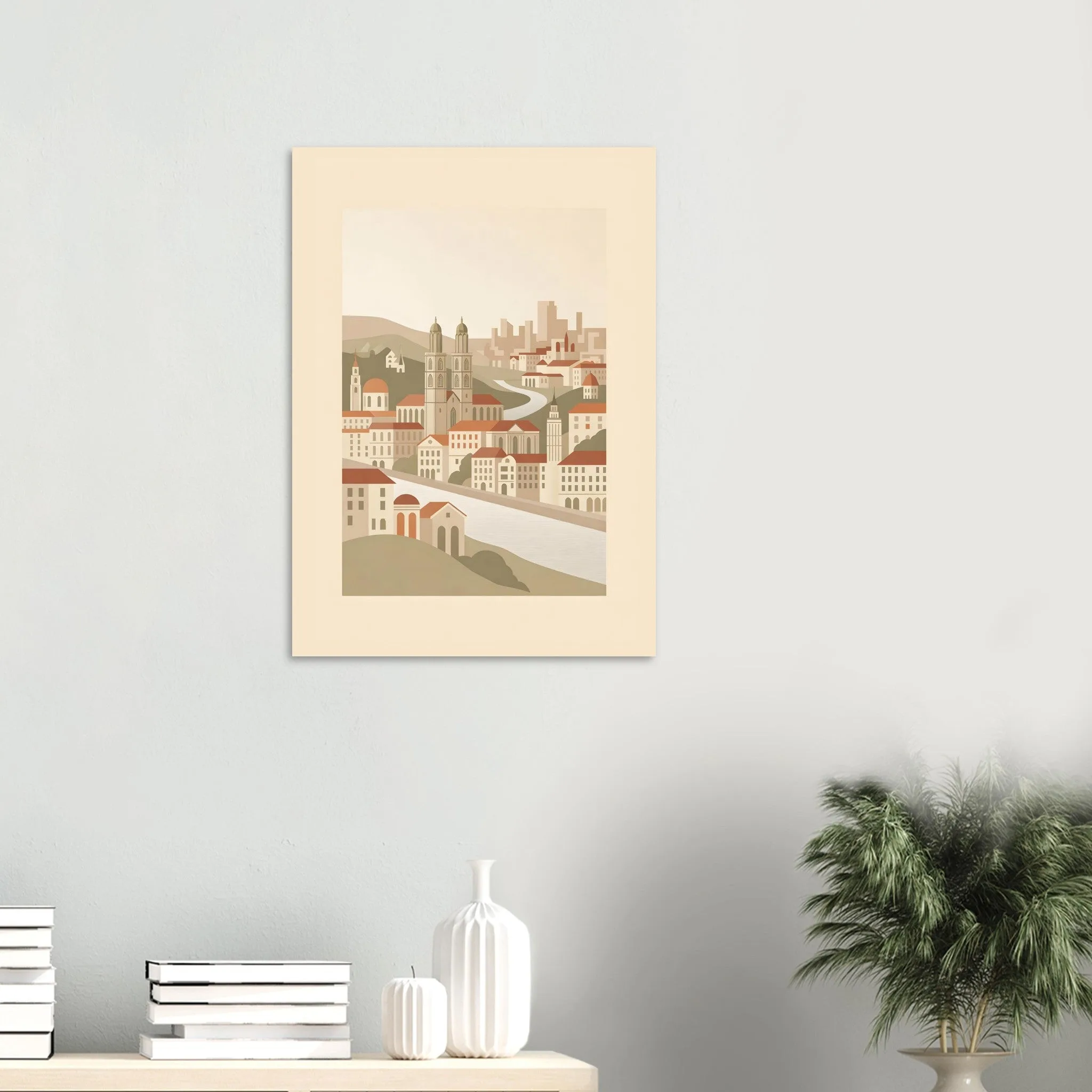
Flat vector illustration
from €19
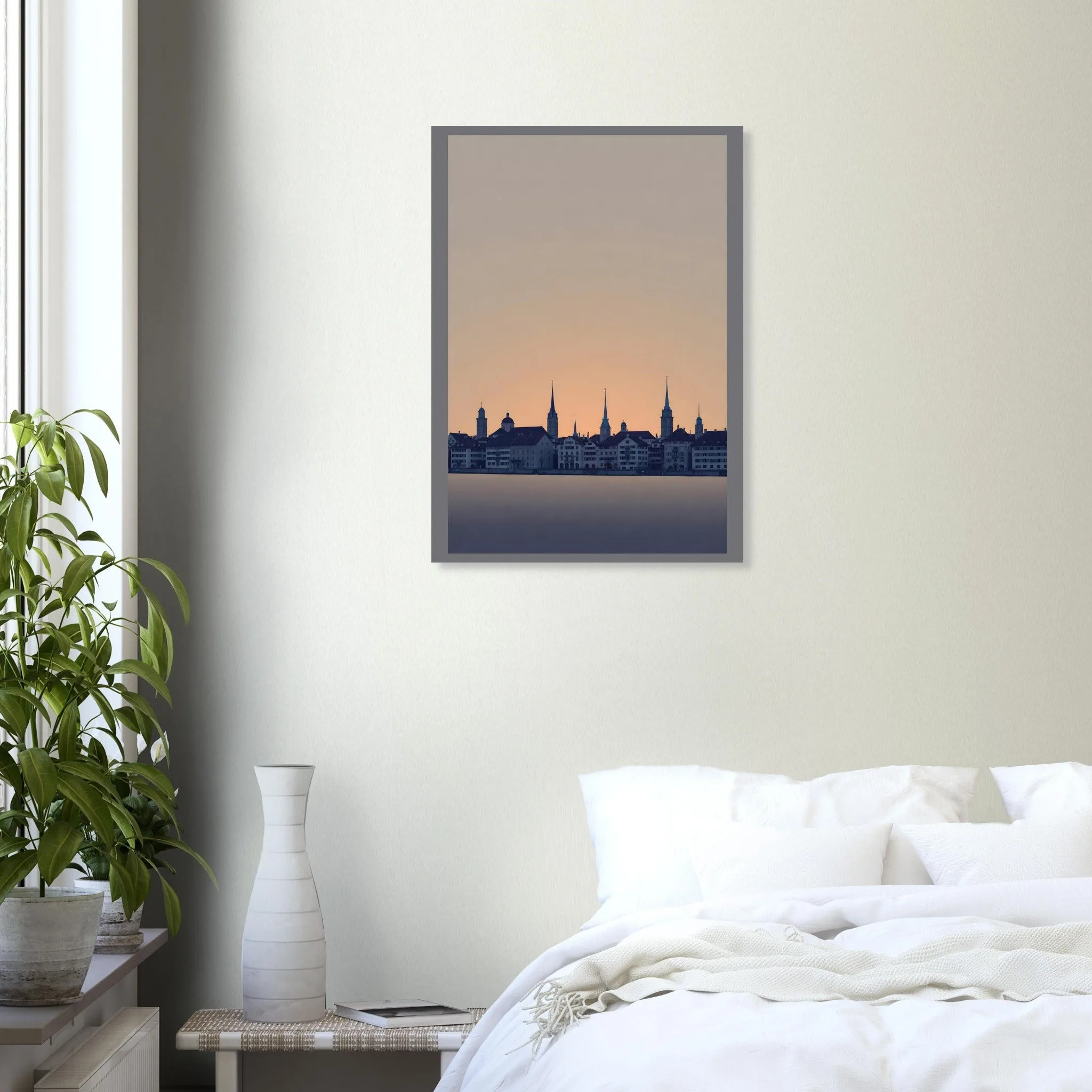
Silhouette skyline
from €19
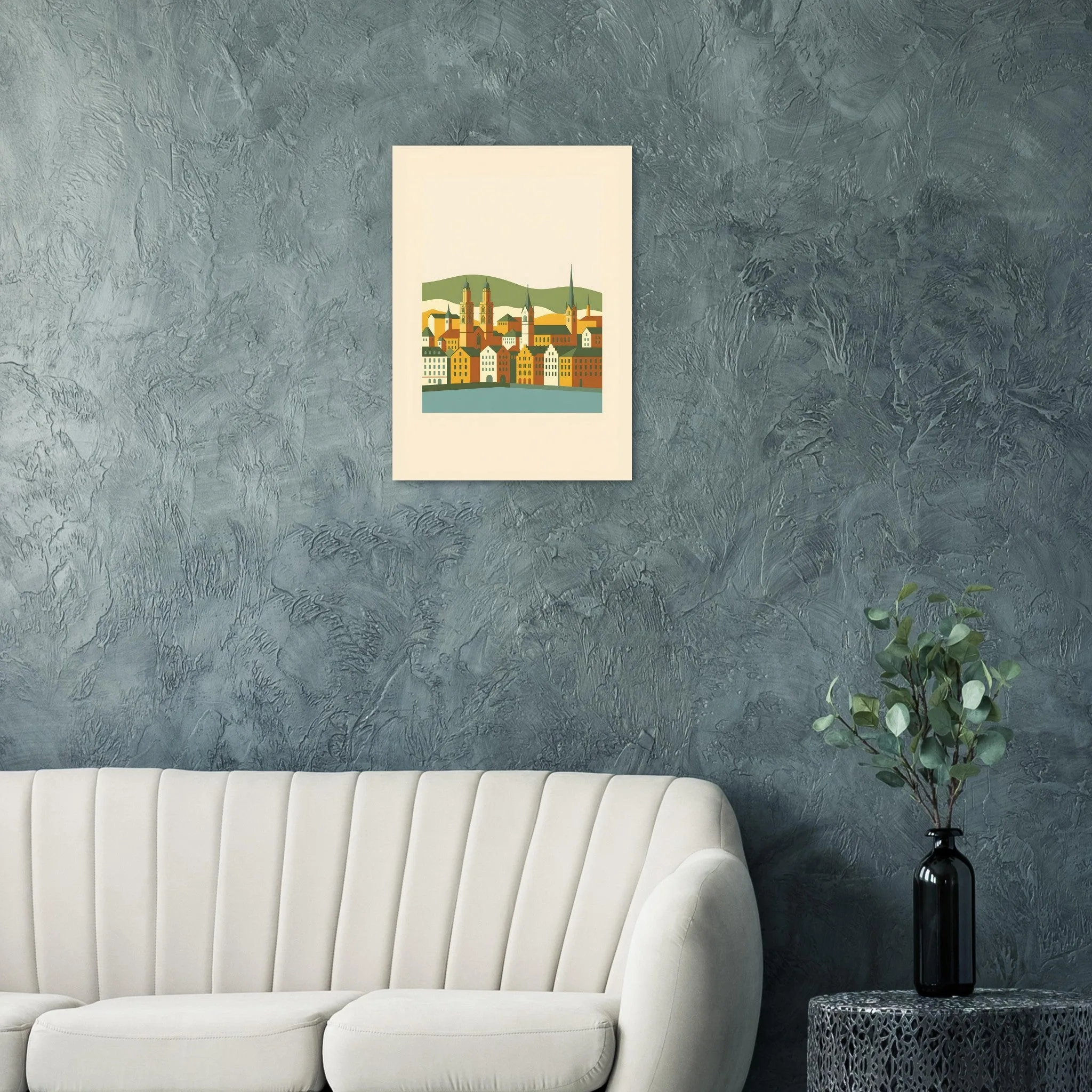
Mid-century modern
from €19
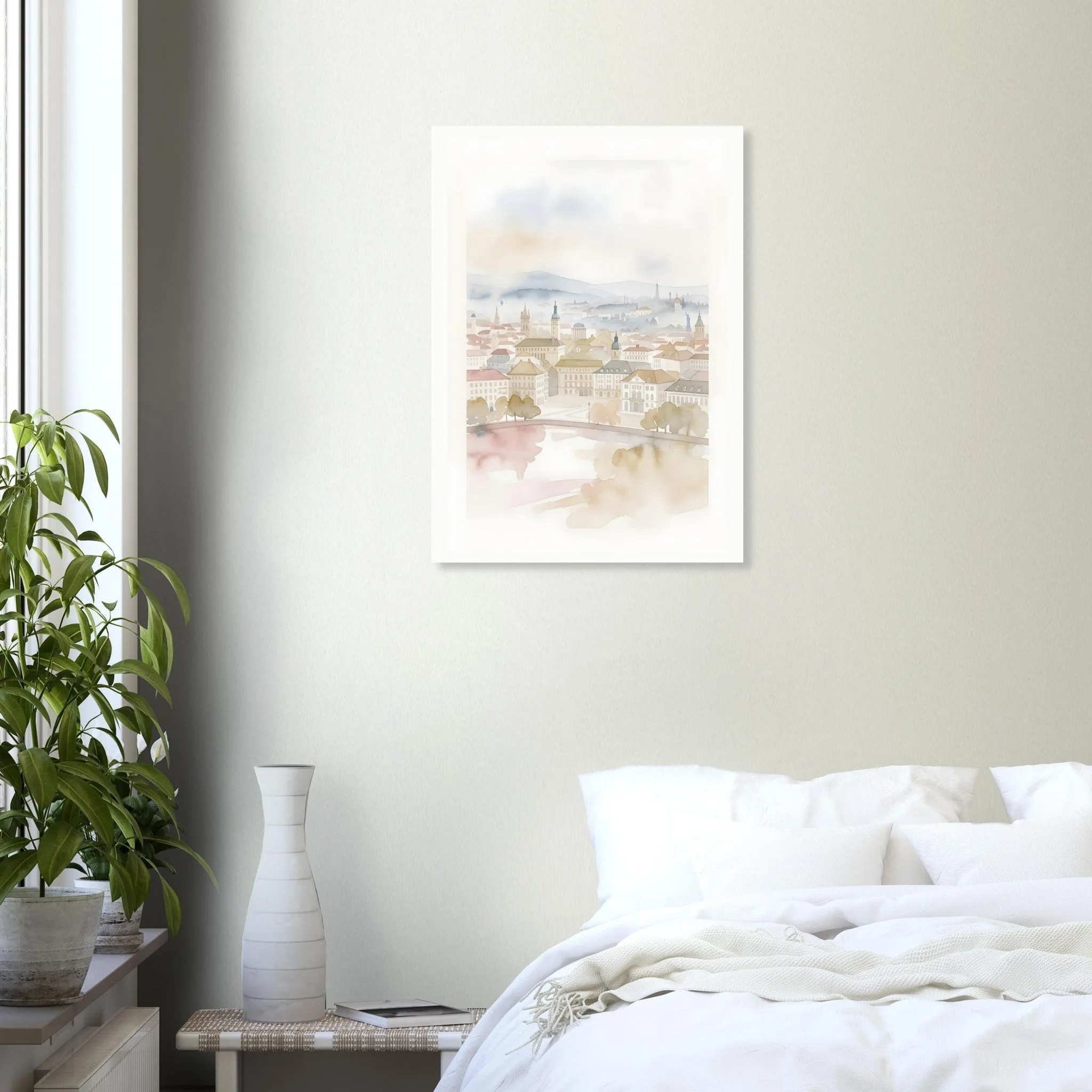
Watercolour landscape
from €19
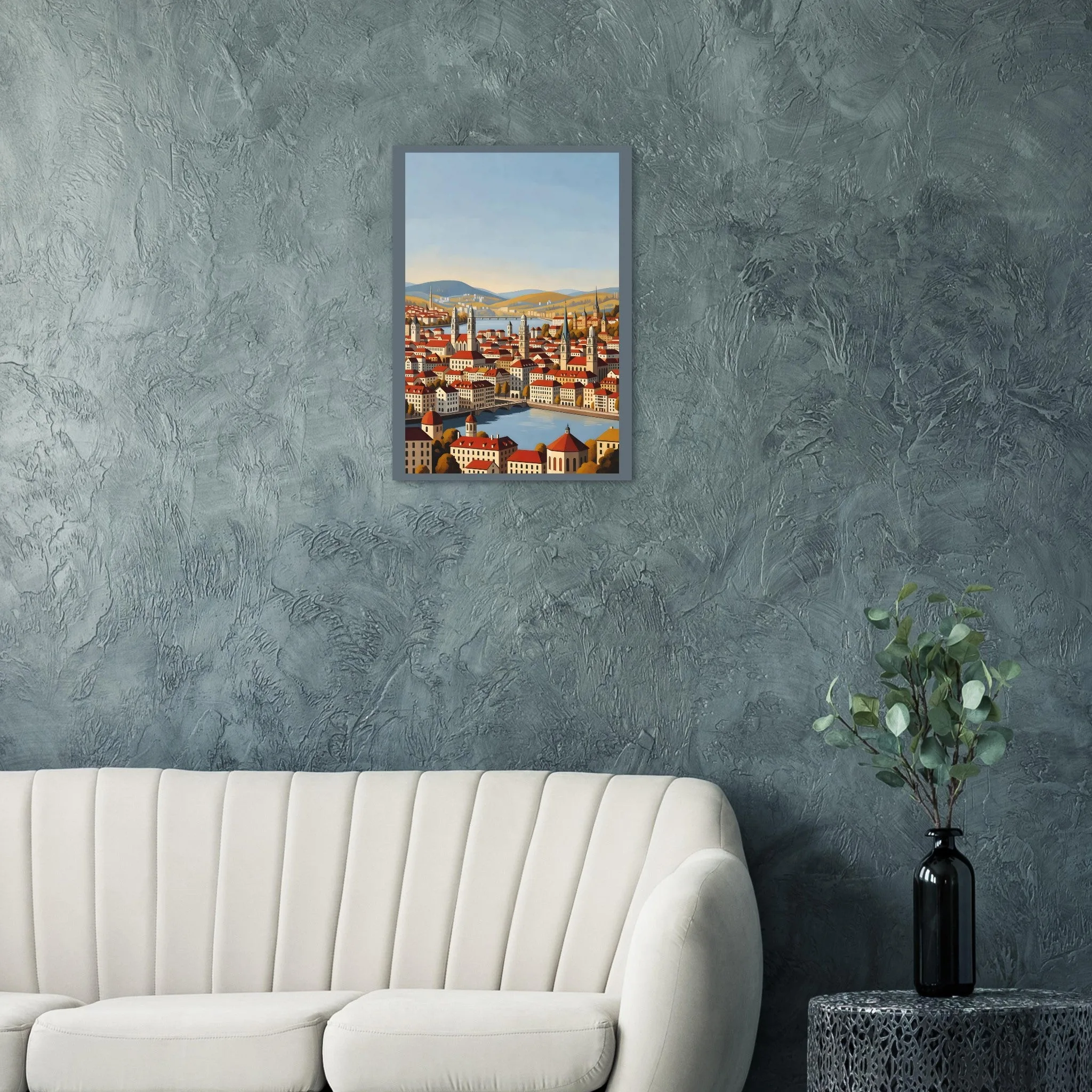
Vintage travel poster
from €19
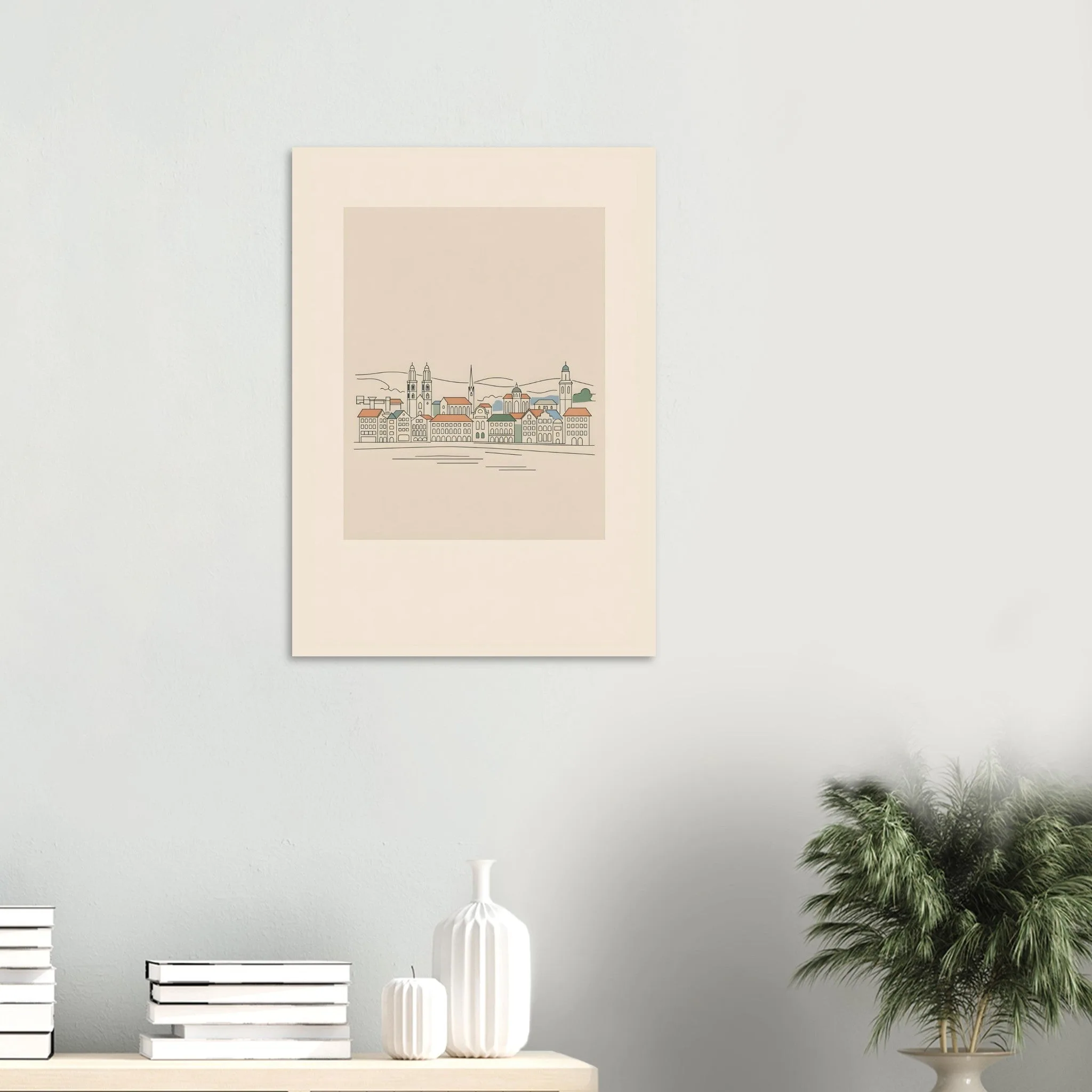
Minimalist line art
from €19
Zurich has a way of feeling both precise and gentle. At 408 metres above sea level, it sits where the city meets water and rail lines, with Lake Zurich opening to the south-east and the Limmat carrying the light through the centre. The old town still holds the layered texture of a place that began around the year 200, long before it became the largest city in Switzerland and the capital of the canton of Zurich.
What people often remember is not just the scale — a municipality of 87.88 km² and a population of 452,421 — but the mood: trams gliding past stone façades, the clear geometry of bridges, and the calm that settles over the river in the early evening. Zurich feels efficient, but never without atmosphere. It is a city of movement, yet also of pauses: on the embankment, by the water, in the old lanes where the city’s history seems to sit close to the surface.
There is a practical side to that character too. Zurich is a hub for railways, roads, and air traffic, and both Zurich Airport and Zurich’s main railway station are among the busiest in the country. That constant arrival and departure gives the city its own rhythm — a place many people pass through, and many others carry with them long after they have left.
Zurich does not announce itself loudly. It tends to stay composed, even in memory: the shimmer of the lake, the steady flow of the Limmat, the old centre rising in layers around the Grossmünster and the narrow streets nearby. The city’s German name, Zürich, carries the same quiet confidence as the place itself. It is a city of clear lines and soft distances, where the view can shift from a medieval lane to open water in just a few steps.
Its character is shaped by both geography and movement. North-central Switzerland gives it a position that feels connected in every direction, and the city’s role as a transport hub has long made it a place of crossings. Yet Zurich is never only a transit point. It is also the administrative heart of the canton of Zurich, and the district of Zurich is identical to the city area, a neatness that somehow suits the city’s orderly temperament. Even so, the atmosphere is not sterile. There is warmth in the café windows, in the evening light on the river, in the way the old town seems to hold onto memory.
For many people, Zurich is tied to personal chapters rather than grand narratives. Some know it through work, arriving at the station with a suitcase and a plan. Others know it through summers by the lake, or winter mornings when the air feels especially clear. The city’s scale matters too: large enough to feel alive at every hour, compact enough to keep a human edge. Its 452,421 residents give it density without sprawl, and its long history — beginning around 200 — adds a sense of continuity beneath the present-day pace.
That is part of what makes Zurich so distinctive as a subject for wall art. It is not only about landmarks, though the city has them in abundance. It is about the meeting of stone and water, the measured skyline, the sense that the city is always balancing movement and stillness. A Zurich view can feel modern in one moment and deeply rooted in the next, which is why it often resonates with people who have lived there, studied there, worked there, or simply stood at the water’s edge and felt themselves remember more than they expected.
Choosing Zurich wall art for the room it lives in
Zurich works beautifully in interiors that favour calm over clutter. In a living room, a wider format can echo the city’s open horizon along the lake or the sweep of the river through the centre. In a hallway, a smaller piece can feel like a held memory — a glimpse of the old town, a bridge, a line of rooftops at dusk. Bedrooms often suit softer, cooler tones, especially if the room already has pale wood, linen, or grey textiles. In warmer interiors, the city’s stone façades and evening reflections can bring balance without making the room feel heavy.
If the wall is large and visually quiet, a 50×70 cm format gives Zurich enough presence to breathe. A3 often feels right above a desk, in a reading corner, or beside shelving, where it can add a sense of place without dominating. A4 is useful when the wall is narrow or when you want a more intimate, collected feeling — the kind of scale that works on a gallery ledge or in a layered arrangement with other memories from travel or home. Framed or unframed, the choice changes the mood: framing can sharpen the city’s lines, while an unframed print keeps the atmosphere a little looser and more immediate.
When Zurich becomes a gift
Zurich prints tend to speak to people who have a personal reason to look back. Former residents often recognise the city in fragments: a station platform, a walk along the lake, the familiar geometry of the old centre. Expats and students may see a chapter of life they still carry with them, while travellers often remember the city’s clarity more than any single monument. Locals, too, sometimes want a version of home that feels quiet and dignified rather than overtly decorative.
That makes Zurich a thoughtful gift for housewarmings, birthdays, Christmas, or retirement. It can mark a move into a first flat, a return after years abroad, or a farewell to a city that shaped someone’s routines. Because the city is so closely tied to memory, the gift does not need explanation. It already carries the feeling of arrival, departure, and belonging at once.
What sets our Zurich prints apart
Our Zurich posters are built around verified geographic and historical details, so the image of the city stays grounded in what is real: the lake, the city’s position in north-central Switzerland, its elevation of 408 metres, its long history, and the fact that the district and city boundaries are identical. That accuracy matters, but so does mood. The palette is kept warm and minimal, so the print feels like a memory of Zurich rather than a tourist version of it.
Printing is done locally, on 170 gsm FSC semi-gloss silk paper with archival inks, so the surface has a soft presence without glare. The result is crisp enough for architectural detail and gentle enough for living spaces. If you prefer a ready-to-hang look, framing can give the piece a more finished edge; if you want something lighter and more flexible, an unframed print keeps the atmosphere open.
Sizes and prices at a glance
Choosing a size often comes down to where the print will live. A4 is available from €19 and suits smaller walls, shelves, or gift-giving. A3 starts at €29 and offers a balanced middle ground for most rooms. The 30×40 cm format is €34 and works well when you want something slightly more substantial without going too large. For a fuller statement, 50×70 cm is €49 and gives Zurich the room it needs on a wider wall.
It is a simple range, but a practical one. The smaller formats feel personal; the larger ones let the city’s structure and atmosphere show more clearly. Whether the print ends up in a study, a hallway, or the centre of a living room wall, the scale can be chosen to match the way Zurich is remembered there: as a glance, a landmark, or a whole landscape of belonging.
Frequently asked questions
What sizes do Zürich posters come in?
Our Zürich posters come in four standard sizes: A4 (21×30 cm) from €19, A3 (30×42 cm) from €29, 30×40 cm from €34, and 50×70 cm from €49. All sizes are printed on 170 gsm semi-gloss FSC-certified silk paper.
How long does shipping take?
We print locally via Gelato in 32+ countries. In Europe, your order typically arrives within 3–5 business days of purchase. Free EU shipping on every order — no minimum.
What's the print quality like?
We print on 170 gsm FSC-certified semi-gloss silk paper using archival inks. Colours are warm, muted, and lightfast for years — made to stay on a wall, not fade in a season.
Can I order a framed Zürich poster?
Framed options are coming soon. For now, we ship unframed posters — our standard sizes fit common off-the-shelf frames from IKEA, HAY, Desenio, and others.
Where do the designs come from?
Each Zürich design begins with verified facts from open geographic sources — Wikipedia, OpenStreetMap, GeoNames. We only depict what's historically and culturally rooted in a place, never inventions.
Can I return my poster if I'm not happy?
Yes. We offer 30-day free returns. If your poster doesn't feel right once it's on your wall, send it back for a full refund.