Lübeck Poster — Germany Wall Art
Minimalist posters and wall art of Lübeck, Germany — premium print on 170 gsm coated silk paper, shipped to 32 countries.
Lübeck wall art with Hanseatic calm
Our designs
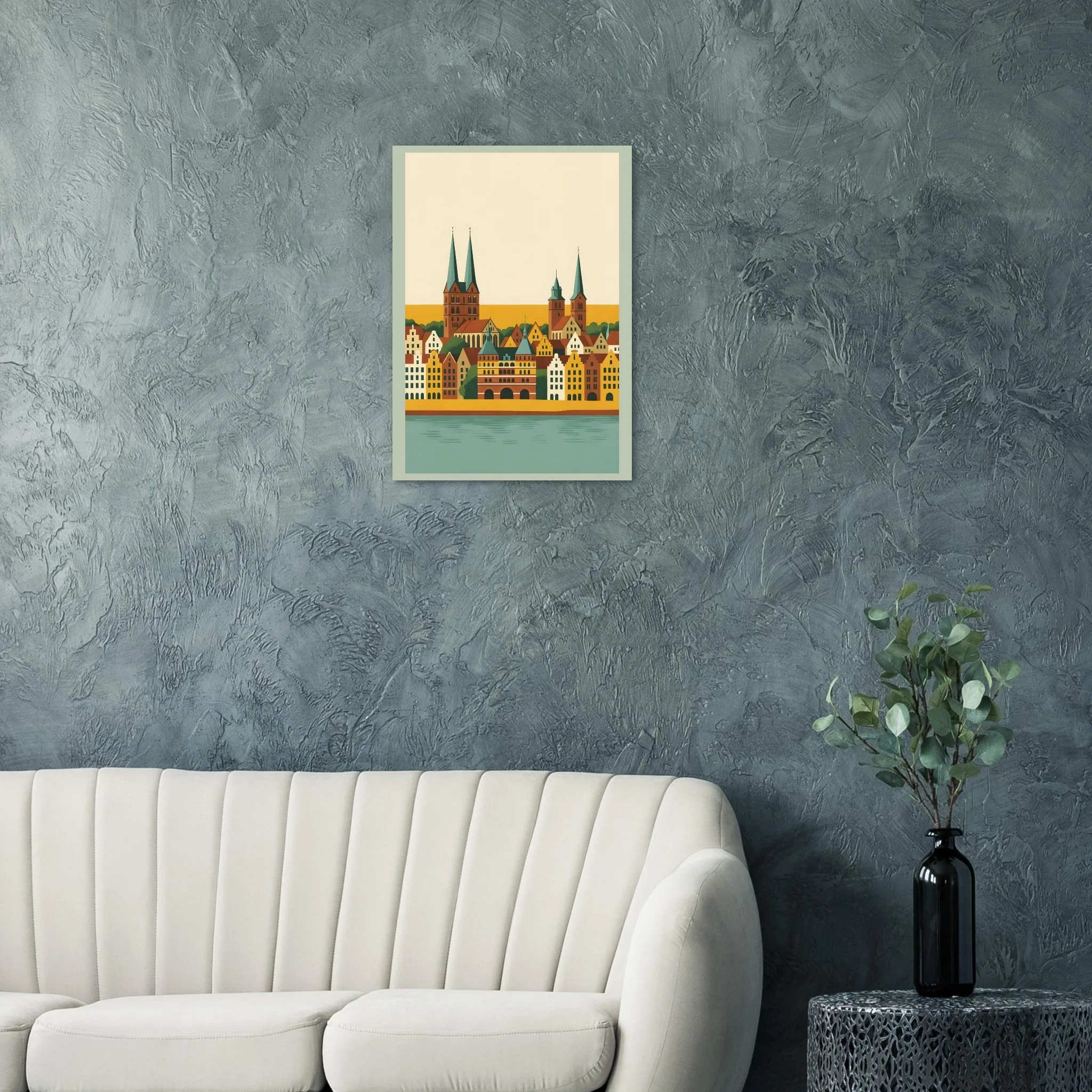
Mid-century modern
from €19
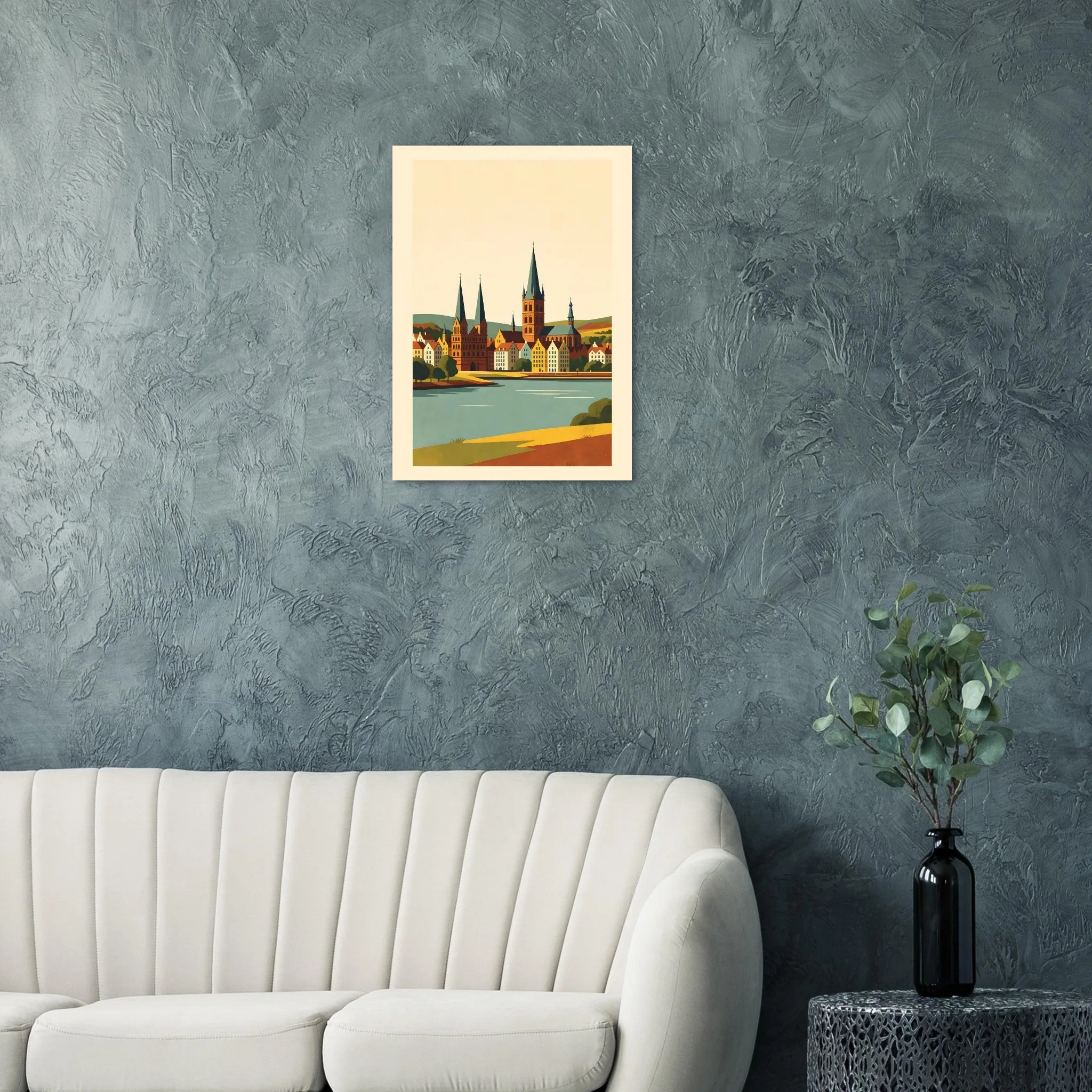
Mid-century modern
from €19
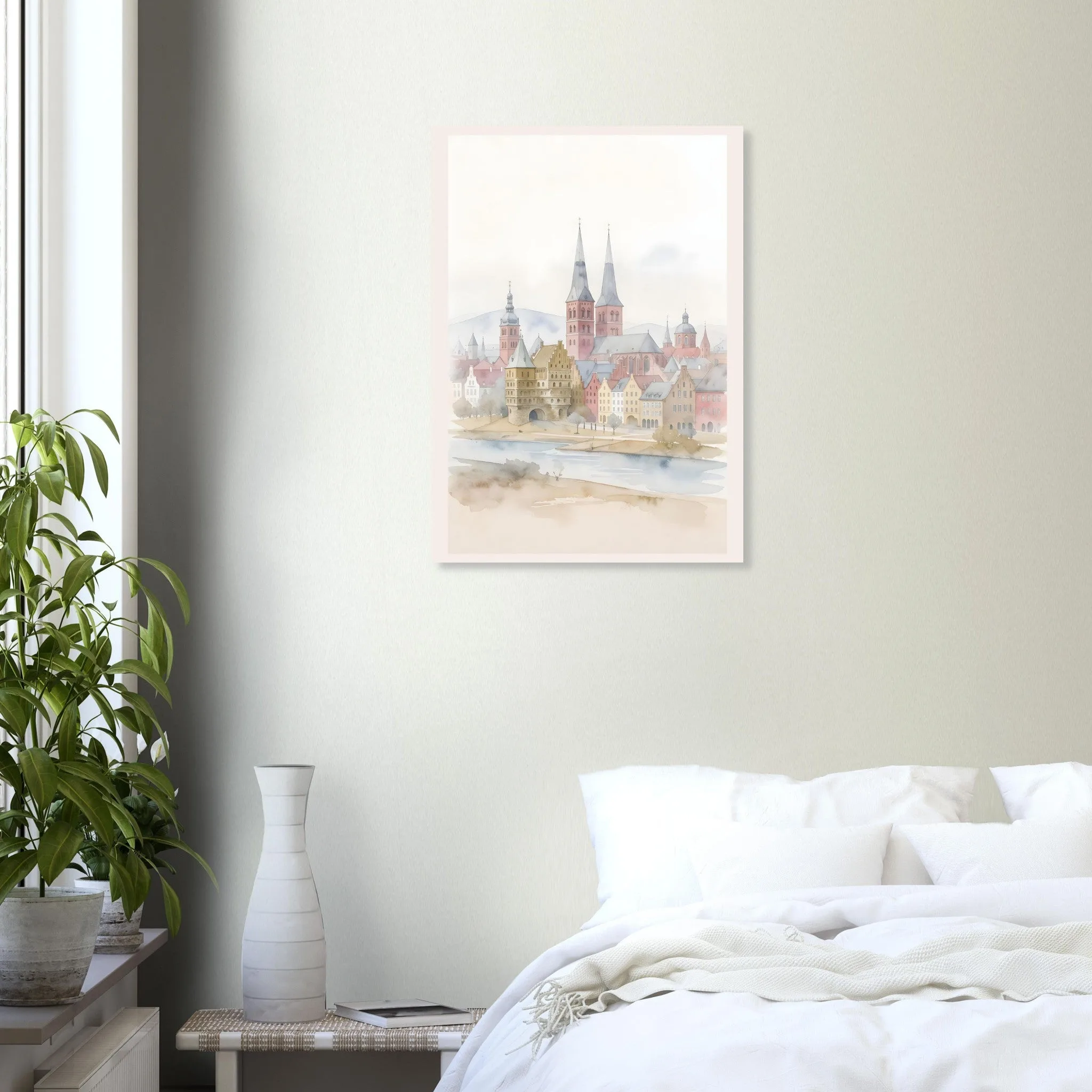
Watercolour landscape
from €19
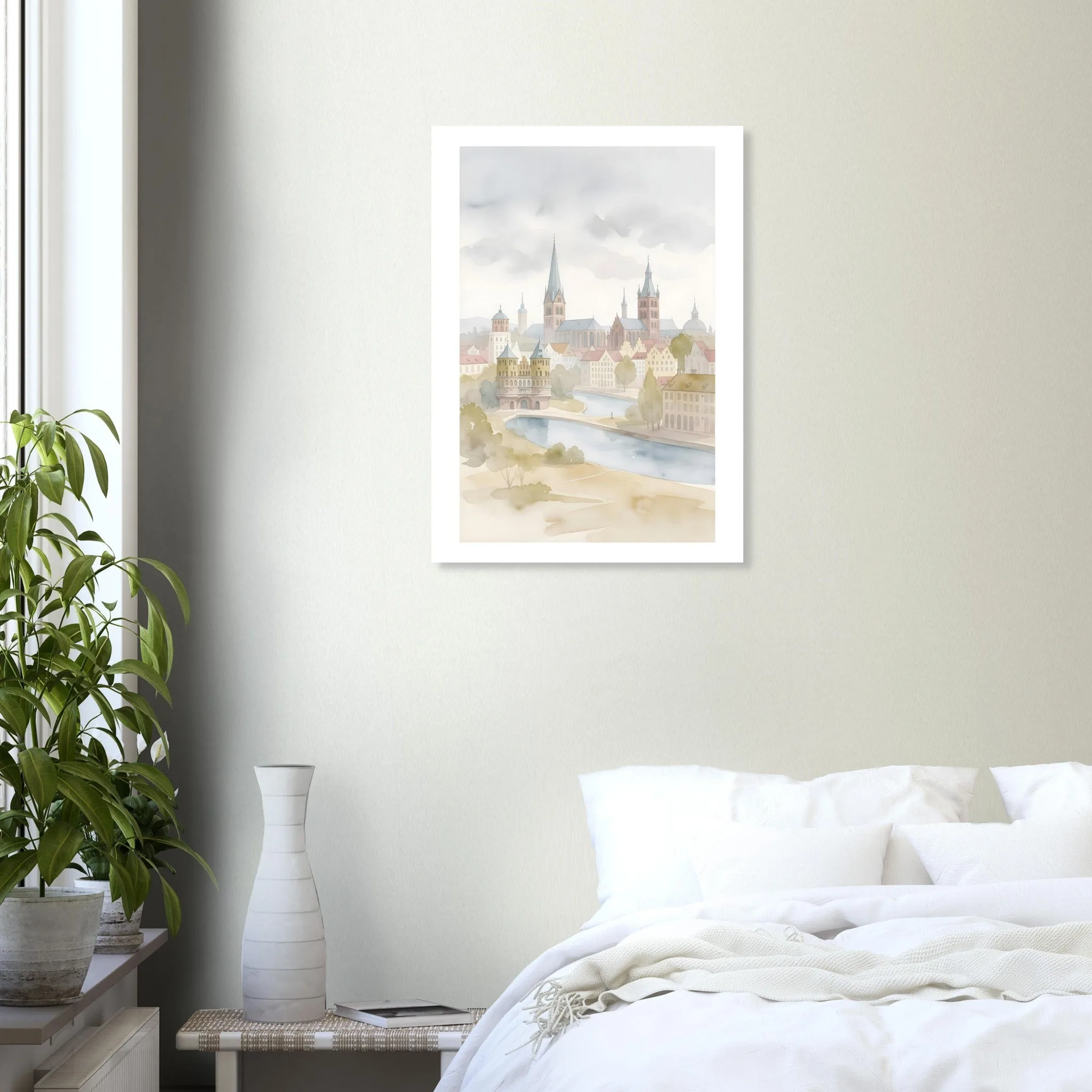
Watercolour landscape
from €19
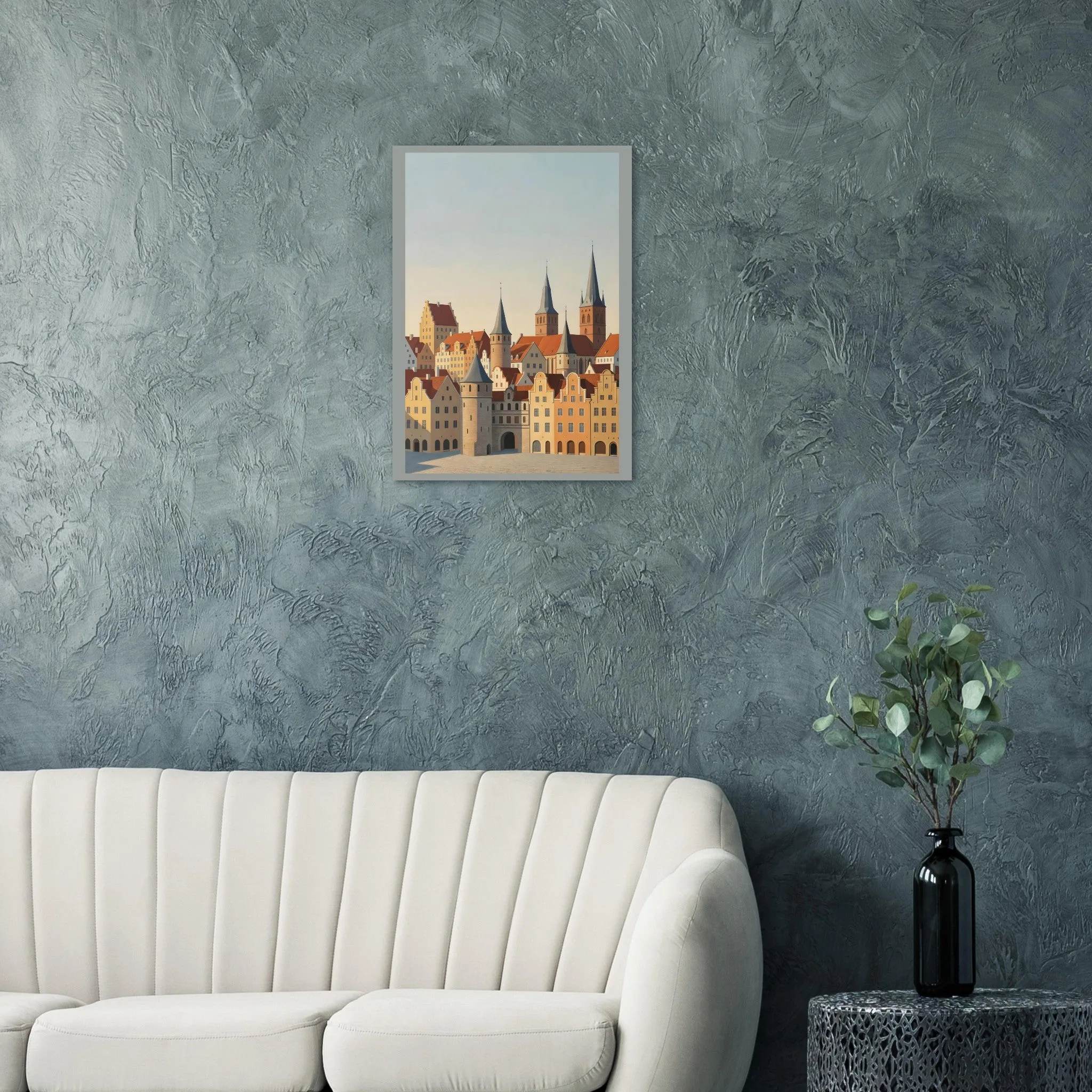
Vintage travel poster
from €19
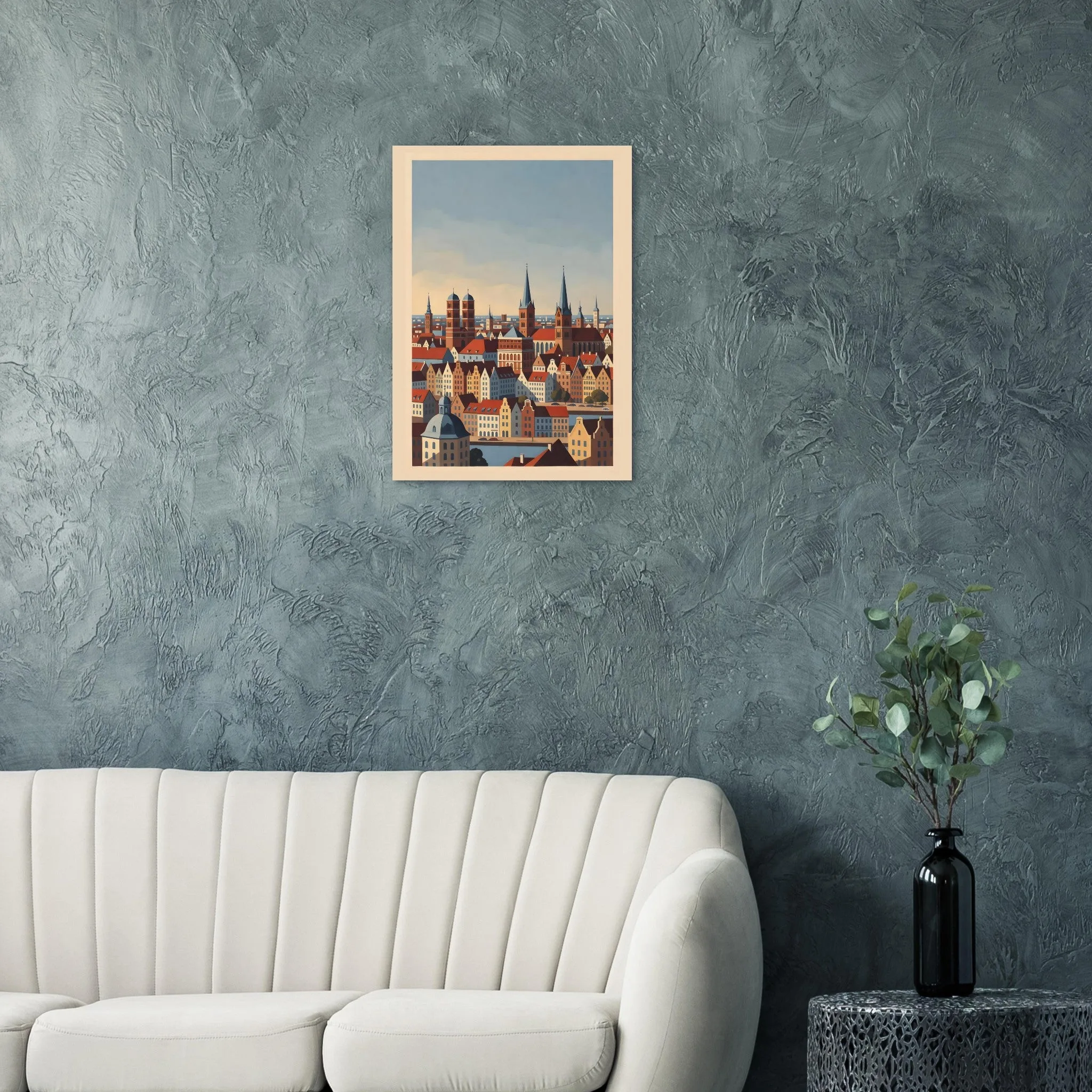
Vintage travel poster
from €19
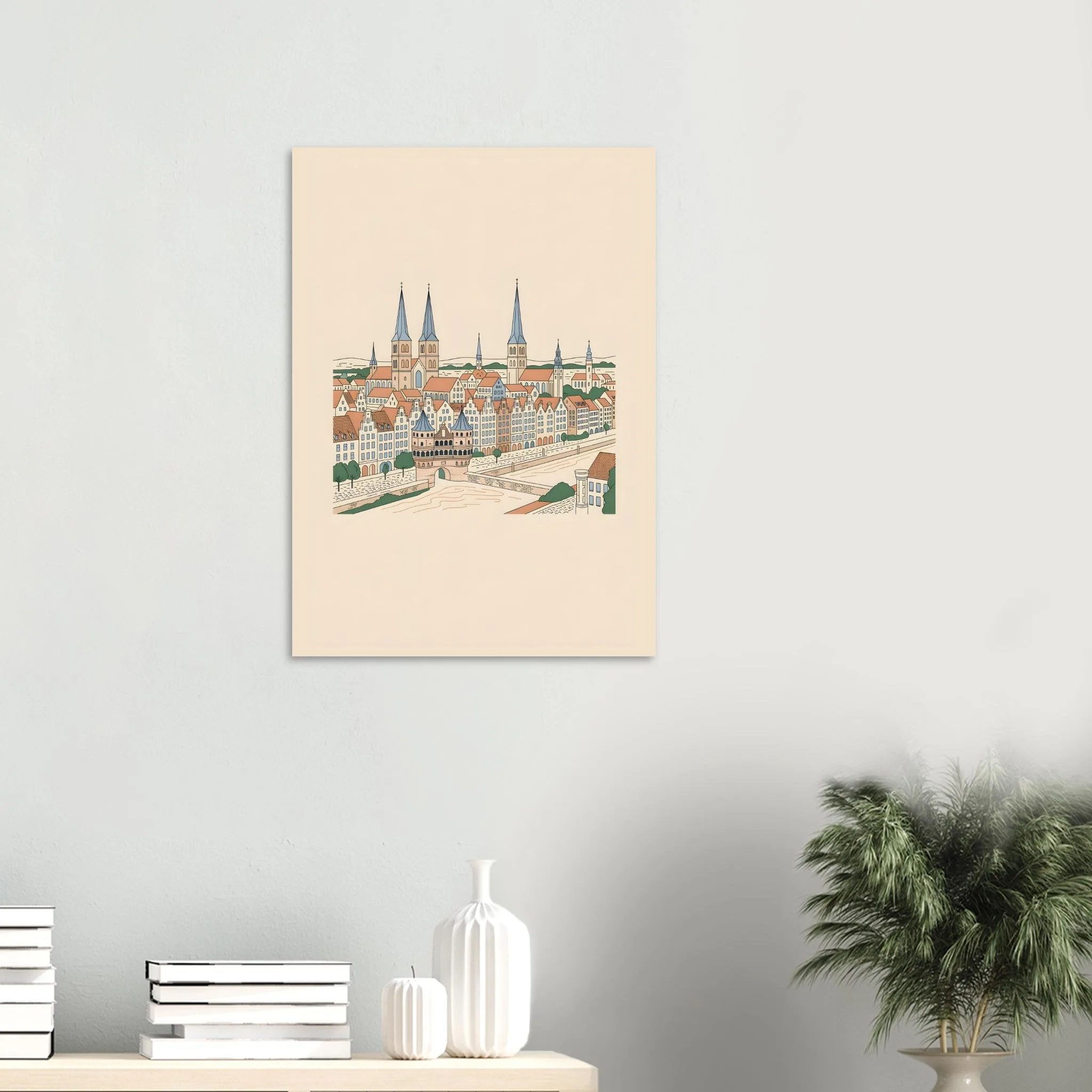
Minimalist line art
from €19
Lübeck has a way of staying in the mind as a city of edges and reflections: brick facades by the water, narrow streets that seem to hold the past close, and the steady presence of the Trave running through it all. In northern Germany, in Schleswig-Holstein, it feels both maritime and inward-looking, as if the city has always known how to keep its history near at hand. With around 220,000 inhabitants, it is large enough to feel alive and layered, yet its old centre still carries the slower rhythm of a former Hanseatic capital.
The city was founded in 1143 at its present site and later became one of the great names of the Hanse, a trading world that shaped the Baltic for centuries. Even now, Lübeck is often remembered through its UNESCO-listed old town, its medieval brick architecture, and the silhouettes that define its skyline — the Holstentor, the Marienkirche, the Rathaus, the Burgtor, and the seven towers that rise above the roofs. It is a city of memory as much as of geography.
That feeling is not only historical. Lübeck still lives with the sea air of the Baltic coast, the sense of a harbour city, and the familiar sweetness of Lübecker marzipan. For many people, it is where they once lived, studied, worked, or returned to after a long time away. For others, it is a place first met on a cold walk over cobbles, when the red brick seemed to glow in winter light.
Lübeck belongs to that rare group of cities whose outline alone can trigger memory. The old town, protected as a UNESCO World Heritage site since 1987, is full of medieval fragments that still feel part of daily life rather than sealed away from it. You notice the brick, first of all: the deep red walls, the Gothic forms, the weight of the buildings against the northern sky. Then the landmarks appear one by one, each with its own kind of patience. The Holstentor stands like a gate from another century; the Marienkirche lifts its towers above the streets; the Rathaus carries the long civic history of a city that once mattered far beyond its size. Nearby, the Heiligen-Geist-Hospital and the Burgtor add to that sense that Lübeck has kept its old self intact without becoming a museum piece.
The city’s place in northern Germany still shapes how it feels. Lübeck lies in the southeast of Schleswig-Holstein, close to the Lübeck Bay on the Baltic Sea, and that maritime setting gives the city a particular light. It is not a dramatic coastal resort, but a working northern city with a harbour, a university, a technical university, a music university, and a cultural life that includes the Theater Lübeck, the Musik- und Kongresshalle, and many museums. The result is a place that can feel both scholarly and salty, formal and familiar. On some streets you sense the old confidence of a Hanseatic city; on others, the everyday rhythm of a modern regional centre.
There is also a distinctive human scale to Lübeck. It is the second-largest city in Schleswig-Holstein after Kiel, and the second-largest on the German Baltic coast, yet its historic core still invites walking rather than rushing. At an elevation of about 13 metres, spread across an area of 214.21 square kilometres, it sits low and open, with the water and sky close by. The city’s population of 219,044 gives it enough density for energy, but not so much that the old streets disappear into noise. That balance is part of its appeal: a city that has grown, but not forgotten its shape.
For many visitors, Lübeck is remembered through small sensory details. The sound of shoes on old paving stones. The taste of marzipan bought as a gift and eaten later on the train. The sight of seven church towers marking the skyline in a way that is unmistakably Lübeck. Even the name carries a certain northern clarity. In German, the city is still spoken of as the Hansestadt Lübeck, and that Hanseatic identity remains more than a historical label. It suggests trade, independence, brick, water, and a civic pride that has lasted long after the ships of the Hanse have gone.
That is why Lübeck works so well as a subject for wall art. A city like this is never only about architecture, and never only about nostalgia. It is about the feeling of returning to a place you know by heart, or finding one that seems familiar on first sight. For someone who grew up here, studied here, or simply walked through the old town once and never quite let it go, Lübeck carries a quiet emotional weight. It is a city of thresholds, of gates and bridges, of old brick and northern weather, and those qualities stay with you.
Choosing a Lübeck print for the room you live in
A Lübeck motif can sit easily in many kinds of interiors because the city itself holds both warmth and restraint. In a living room, it often works best where there is space to let the skyline breathe, especially if the room already has natural textures such as oak, linen, or stone. In a bedroom, the calmer side of Lübeck comes forward: the muted red of brick, the quiet geometry of the old town, the sense of water nearby. Kitchens and dining spaces suit it too, particularly if you like places that feel rooted and a little maritime.
Size matters less as a rule than as a response to the wall. A smaller format can be enough above a shelf, in a hallway, or in a reading corner where the city becomes a private reminder rather than a statement. Larger formats suit open walls, long corridors, and rooms that need a clear focal point. If your interior is cool-toned, with grey, white, or steel finishes, Lübeck’s warmer brick notes can bring balance. In warmer rooms, the same tones feel deeper and more atmospheric, especially beside dark wood or soft beige.
Framed or unframed is mostly a matter of how finished you want the room to feel. A frame gives Lübeck more presence and can make the old-town lines feel architectural. Unframed prints keep the look lighter and more flexible, especially in modern spaces where you want the image to sit quietly rather than dominate. Either way, the subject remains the same: a city that carries history with unusual ease.
A thoughtful gift for people with Lübeck in their story
Lübeck wall art is often chosen as a gift by people who are not just decorating a wall but marking a connection. Former residents tend to recognise the city immediately, often with a kind of private smile. Travellers remember the old centre, the gates, the brickwork, the feeling of being in a city that still knows its own name. Expats and people who moved away often want something that brings back the place without needing to explain it. Locals, too, sometimes give Lübeck as a gift because it feels both personal and unmistakable.
It suits housewarmings because it adds a sense of place to a new home. It works for birthdays when the recipient has lived in or loved the city. At Christmas, Lübeck can feel especially fitting, with its winter streets and the comfort of familiar northern imagery. For retirement, it is a gentle way to honour a place that has shaped a life, whether that life was spent there or simply returned to again and again. The emotional value often lies in recognition: this is not just a city, but the city.
For someone who has family in Schleswig-Holstein, studied in the region, or spent time on the Baltic coast, Lübeck can feel like a memory made visible. It is a gift that does not need to be grand to be meaningful. A city with this much history carries its own weight.
What makes our Lübeck prints feel local
When a city has so many familiar landmarks, the difference is in how carefully they are treated. Our Lübeck prints are grounded in verified geographic and historical details, so the city is represented with the kind of accuracy that matters to people who know it well. The old town, the Hanseatic identity, the place in Schleswig-Holstein, the Baltic setting, and the distinctive skyline all inform the design choices. The aim is not to overstate the city, but to let its character come through clearly.
The visual language is intentionally warm and minimal, so that Lübeck’s own tones do the work. Brick reds, soft neutrals, and balanced contrasts suit the city better than anything overly decorative. The result feels contemporary while still respectful of the place itself. Each print is produced locally, on 170 gsm FSC semi-gloss silk paper, using archival inks for lasting colour and fine detail. That combination gives the image a crisp but gentle surface, with enough depth to suit both modern and traditional interiors.
There is also a practical kind of care in the printing. Clean lines matter for a city like Lübeck, where towers, gates, roofs, and facades create the whole impression. When those shapes are rendered with precision, the print feels more like a memory of the place than a generic city image. That is especially important for buyers who know Lübeck well and want something that feels true to it.
Sizes, prices, and what fits where
For smaller spaces or for layering with other frames, A4 at €19 is an easy starting point. It works well on narrow walls, in desk areas, or as part of a larger gallery arrangement. A3 at €29 gives the image more presence without becoming overpowering, which makes it a versatile choice for bedrooms, studies, and medium-sized living rooms. The 30×40 cm format at €34 is a particularly natural fit for many standard frames and tends to feel balanced in hallways or above sideboards. For a more generous statement, 50×70 cm at €49 brings Lübeck into the room with clarity and calm.
If you are choosing between sizes, think about the distance from which the print will usually be seen. A smaller print rewards close viewing, while a larger one can anchor a room from across the space. Lübeck’s skyline and old-town geometry work well at every size because the city’s shapes are so recognisable. The final choice is often less about decoration than about how much of that memory you want to live with every day.
However you display it, Lübeck remains a city that carries itself with quiet confidence: Hanseatic, brick-built, and shaped by water. For some, it is home. For others, a return. For many, it is simply one of those places that never quite leaves you.
Frequently asked questions
What sizes do Lübeck posters come in?
Our Lübeck posters come in four standard sizes: A4 (21×30 cm) from €19, A3 (30×42 cm) from €29, 30×40 cm from €34, and 50×70 cm from €49. All sizes are printed on 170 gsm semi-gloss FSC-certified silk paper.
How long does shipping take?
We print locally via Gelato in 32+ countries. In Europe, your order typically arrives within 3–5 business days of purchase. Free EU shipping on every order — no minimum.
What's the print quality like?
We print on 170 gsm FSC-certified semi-gloss silk paper using archival inks. Colours are warm, muted, and lightfast for years — made to stay on a wall, not fade in a season.
Can I order a framed Lübeck poster?
Framed options are coming soon. For now, we ship unframed posters — our standard sizes fit common off-the-shelf frames from IKEA, HAY, Desenio, and others.
Where do the designs come from?
Each Lübeck design begins with verified facts from open geographic sources — Wikipedia, OpenStreetMap, GeoNames. We only depict what's historically and culturally rooted in a place, never inventions.
Can I return my poster if I'm not happy?
Yes. We offer 30-day free returns. If your poster doesn't feel right once it's on your wall, send it back for a full refund.