Duisburg Poster — Germany Wall Art
Minimalist posters and wall art of Duisburg, Germany — premium print on 170 gsm coated silk paper, shipped to 32 countries.
Duisburg on the wall
Our designs
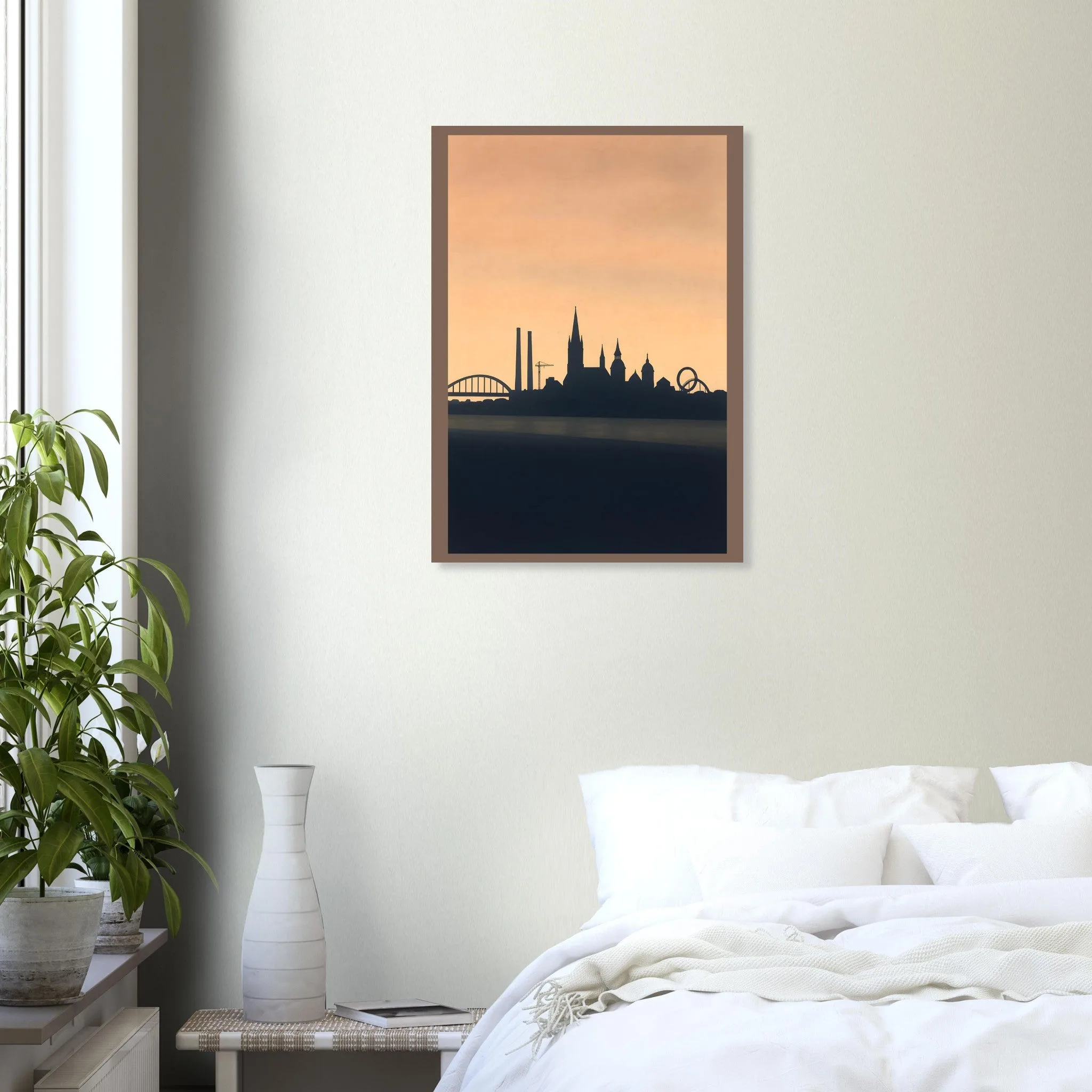
Silhouette skyline
from €19
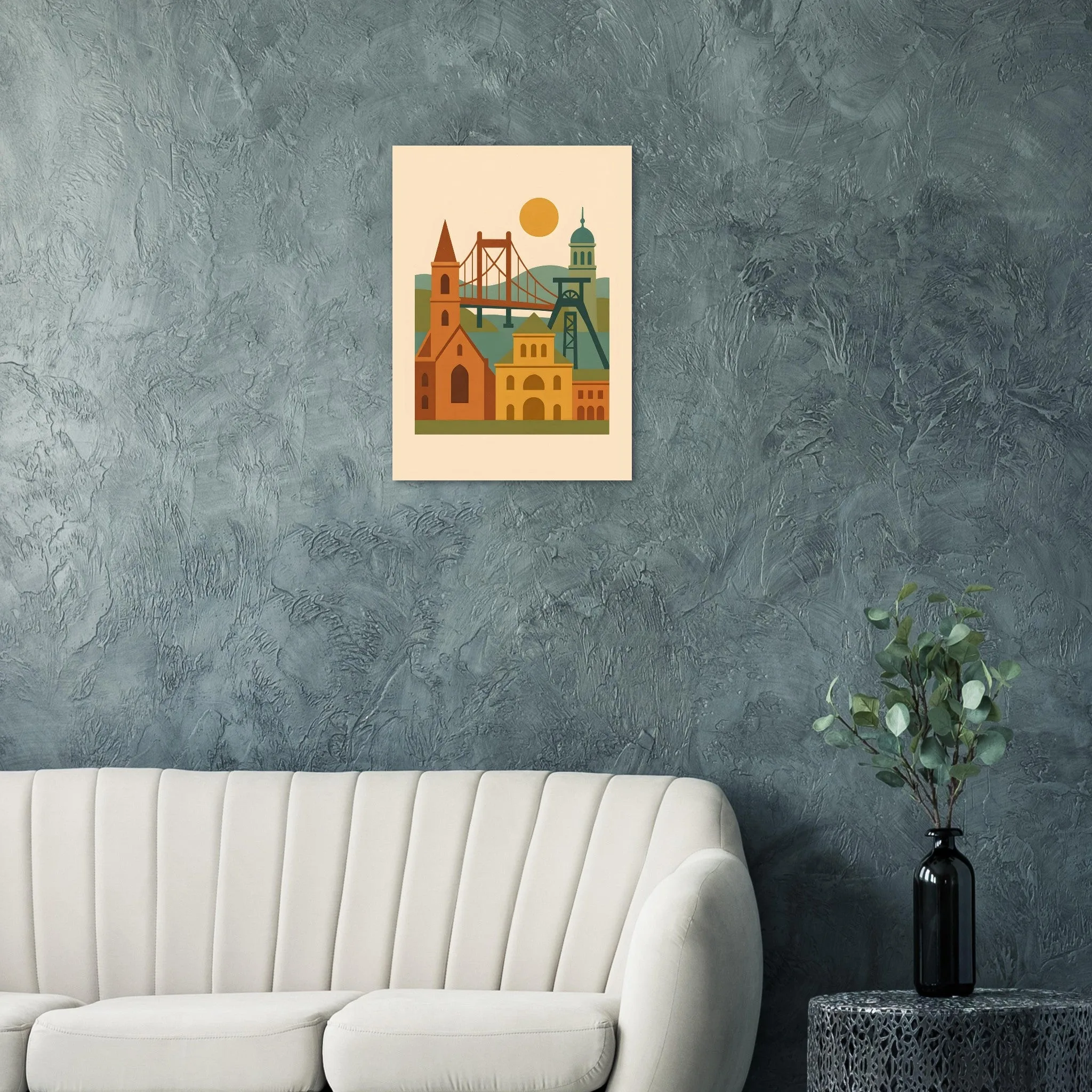
Mid-century modern
from €19
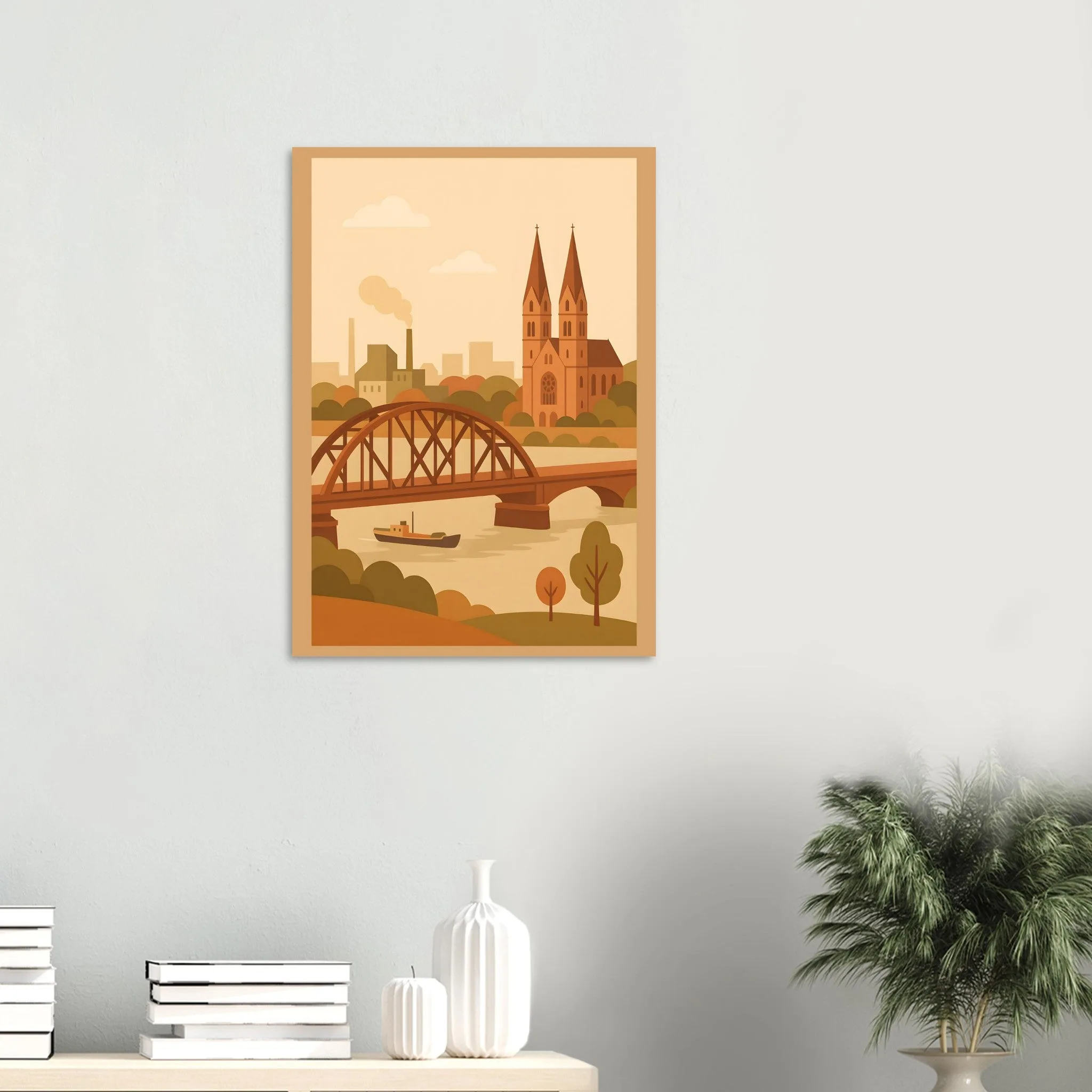
Flat vector illustration
from €19
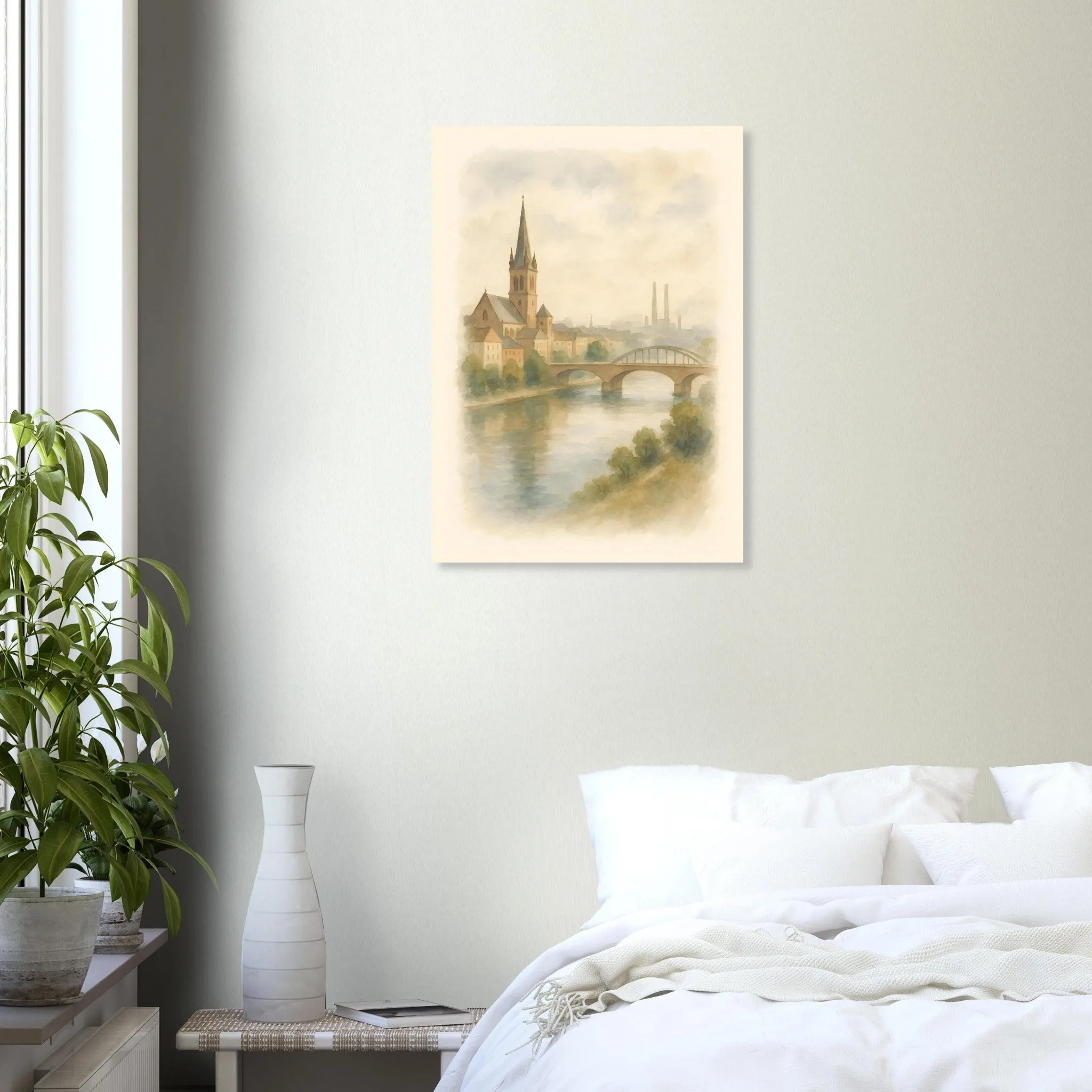
Watercolour landscape
from €19
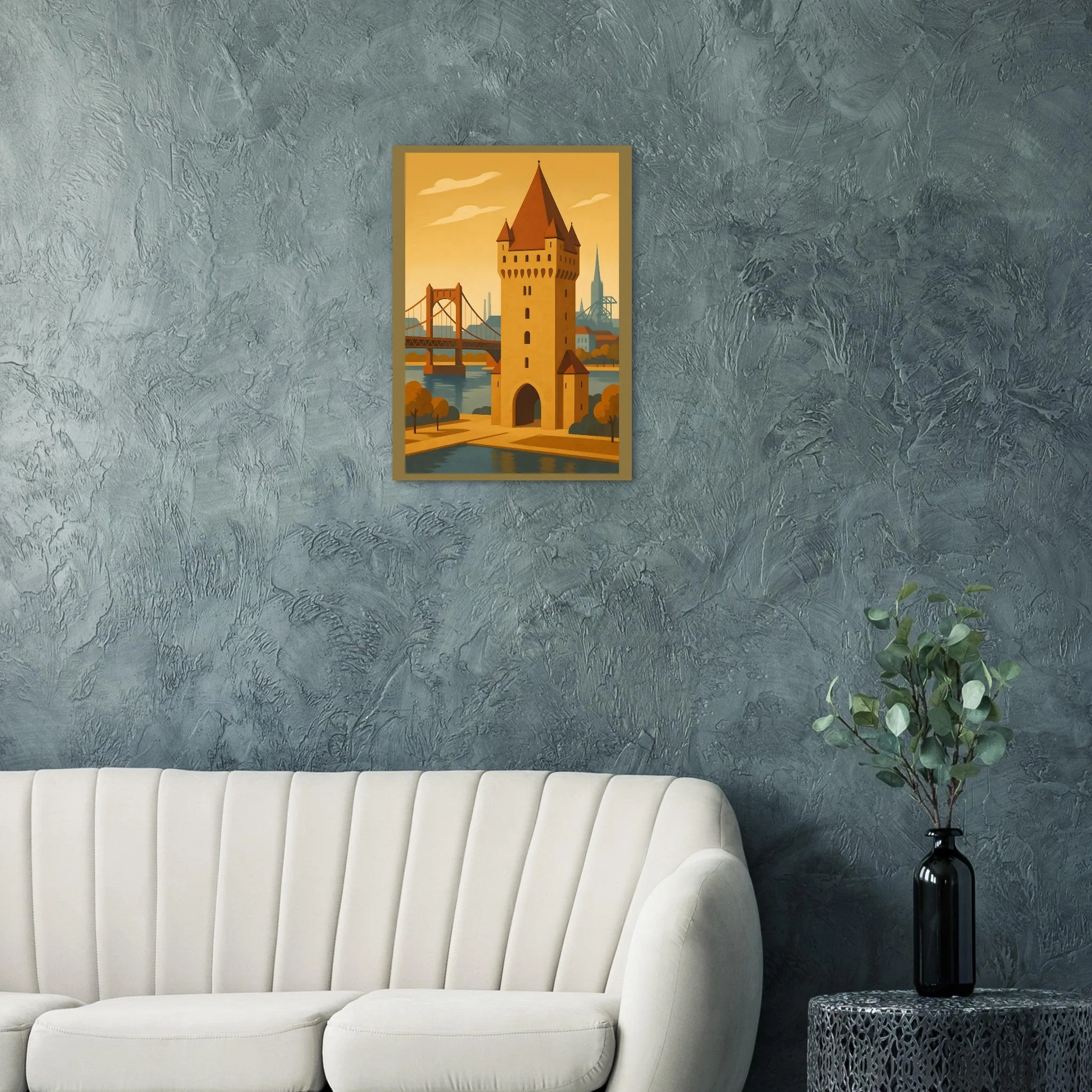
Vintage travel poster
from €19
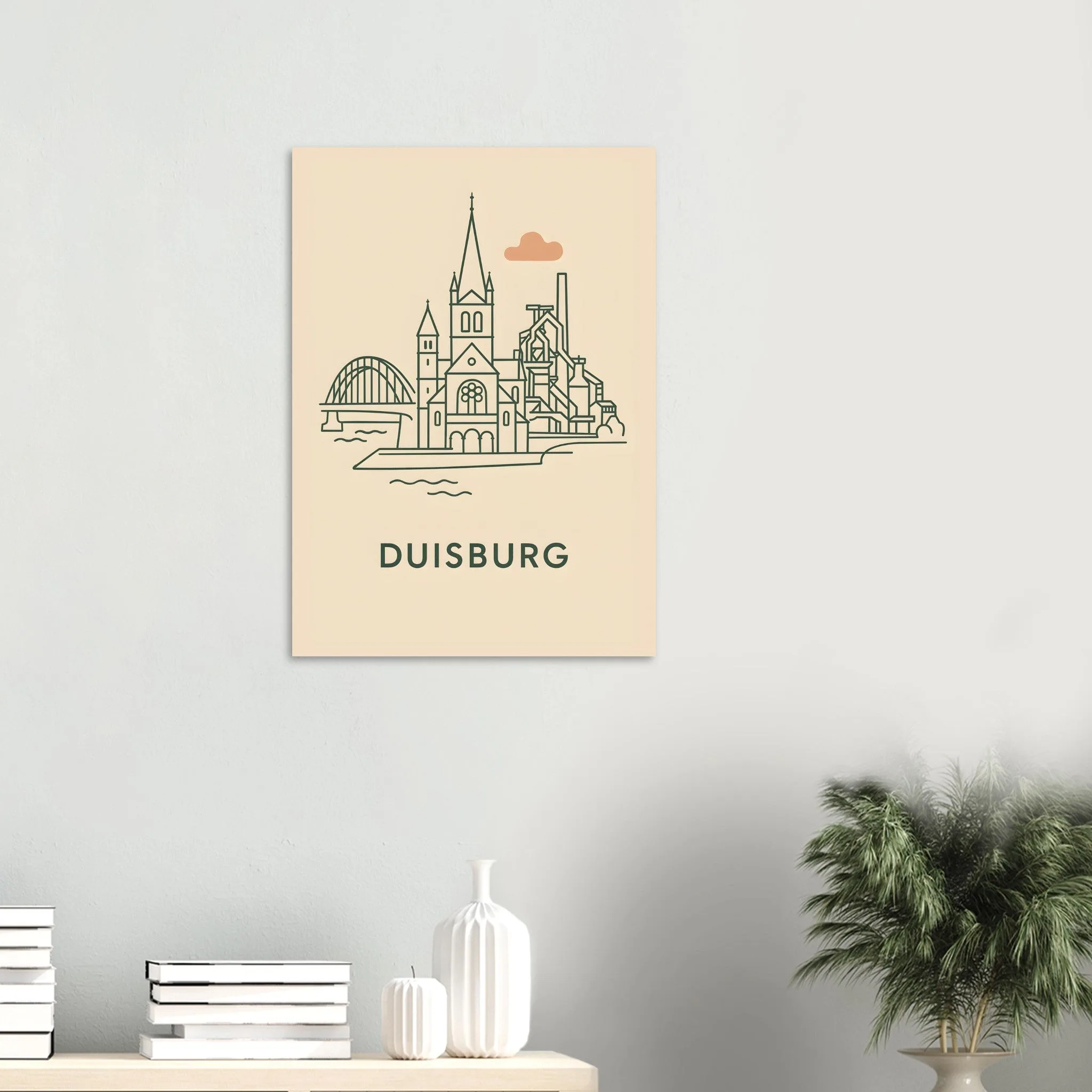
Minimalist line art
from €19
Duisburg has a way of feeling broad and grounded at once. With an area of 232.8 km² and a population of 591,635, it is a city that stretches out rather than gathers itself tightly, and that scale leaves its own impression: long horizons, working water, and streets that seem to carry more than one history at a time.
Set at an elevation of 33 m, in the Regierungsbezirk Düsseldorf, Duisburg sits in that part of North Rhine-Westphalia where industry, river life, and everyday neighbourhood routines sit side by side. The city’s character is not made from one postcard view. It comes from the feeling of moving between harbour edges, older streets, and the practical rhythm of a place shaped by trade and movement.
For many people, Duisburg is memory before it is destination. It may be the city you left, the one you visited on a grey afternoon, or the place whose name still sounds familiar in the mouth. However you know it, Duisburg carries a certain directness — unadorned, steady, and quietly full of detail.
There is a particular mood to Duisburg that suits wall art surprisingly well. It is not a city that asks for ornament. It feels more convincing in clean lines and open space, in tones that leave room for light to do its work. That is part of its appeal: the city’s scale is generous, but its atmosphere is often intimate in the small things — the shift of water, the geometry of bridges, the weight of brick, the hush that settles over the harbour in the evening.
The city’s size matters here. At 232.8 km², Duisburg is large enough to hold many different moods inside one boundary, from dense urban stretches to quieter edges where the day seems to slow down. And because more than 591,000 people live here, the place never feels like a static monument. It is lived in, crossed, worked in, and remembered in motion. That living quality gives Duisburg a visual language of its own: strong, practical, and never entirely still.
Water is one of the city’s most persistent companions. Even when you are not standing directly at the harbour, the sense of exchange is close by — the feeling that things arrive, are transformed, and move on. Duisburg’s identity is tied to that movement, but it is also softened by everyday life around it: the ordinary streets, the familiar corners, the pauses between louder scenes. In a city like this, atmosphere often comes from contrast rather than spectacle.
Set only 33 m above sea level, Duisburg has a low, grounded feel that suits its broad urban profile. Nothing about it seems overly elevated or distant. Instead, it feels accessible, open to weather and light, and shaped by the practical realities of a river city in North Rhine-Westphalia. That groundedness is part of why images of Duisburg can feel so personal: they recall not only a place, but a pace.
For some, the strongest memory may be of the harbour at blue hour, when the city seems to hold its breath. For others, it is the everyday Duisburg that stays with them — the commute, the familiar skyline, the sense of returning to a place that does not need to perform. Either way, the city has a visual honesty that rewards restraint. Warm minimalism suits it because Duisburg already contains the texture; the image only needs to let it breathe.
If you know Duisburg well, you may recognise that mix of openness and industry, of distance and familiarity. If you know it less well, the city still communicates something clear: a place with working roots, a strong sense of scale, and a memory that tends to linger rather than shout.
Finding the right place for a Duisburg print
In the home, Duisburg works best where its calm geometry can settle into the room. A larger print can anchor a living room wall, especially above a sofa or on a broad side wall that needs a sense of direction. In a hallway, the city’s open feel can create a gentle arrival moment, while a smaller format can sit comfortably in a study or bedroom where you want the atmosphere to stay quiet and considered.
Warm interiors — oak, brass, sand, tobacco, soft beige — tend to bring out Duisburg’s grounded side. Cooler rooms with grey, black, or white surfaces can also suit it, especially when the composition leans into harbour light or architectural lines. If a room already has a lot happening in it, a restrained city print can give it somewhere to rest. If the room is sparse, Duisburg can add structure without crowding the space.
Size matters less than proportion. A4 can feel intimate and personal, good for a shelf corner or a narrow wall. A3 brings a little more presence, while 30×40 cm often feels balanced in everyday rooms. 50×70 cm is the choice for a statement wall, where the city can breathe and the details have room to unfold.
A gift for people with Duisburg in their story
A Duisburg poster can be a thoughtful gift because it speaks to belonging without needing explanation. Former residents often recognise the city immediately, not just as a place, but as a chapter of life: childhood streets, a first flat, a train station seen too many times to count. Travellers may remember the city through a visit that felt unexpectedly vivid, while expats often keep a visual link to home as a way of making a new place feel less temporary.
It also works well for locals, especially when you want something that feels more personal than generic city décor. For a housewarming, it can help a new home begin with a place that already matters. For a birthday, it feels considered rather than hurried. At Christmas, it brings a quiet sense of memory to the season. And for retirement, it can mark a return to what has shaped someone’s life for years: the streets, the harbour, the city they know by heart.
Because Duisburg is a city that many people carry in layered ways — through work, family, travel, or long habit — the gift often lands with more emotion than expected. It says: I know this place means something to you.
What sets our Duisburg prints apart
Our Duisburg posters are built around verified geographic and historical facts rather than invented atmosphere. That matters when the goal is memory and recognition. The city’s scale, its position in the Regierungsbezirk Düsseldorf, its elevation of 33 m, and its population of 591,635 all help shape the way the place is understood — not as a vague urban symbol, but as a real city with a distinct profile.
The visual language stays warm and minimal, so the image feels present without becoming busy. We print locally in Europe on 170 gsm FSC-certified semi-gloss silk paper, using archival inks for strong colour and lasting detail. The result is crisp without looking glossy in a harsh way, which helps the work sit naturally in living spaces rather than feeling overproduced.
You can choose framed or unframed depending on how you want the piece to live in the room. Unframed prints keep things light and flexible; framed versions give the image a more finished, architectural edge. Either way, the aim is the same: a city print that feels calm, durable, and true to place.
Sizes and prices, clearly laid out
If you are deciding between formats, it helps to think about the wall first and the budget second. A4 at €19 is an easy choice for smaller spaces, gifting, or gallery walls that grow over time. A3 at €29 offers a little more presence without asking for much room. 30×40 cm at €34 is a versatile middle ground, especially for bedrooms, entrances, or compact living areas. 50×70 cm at €49 is the most confident option, suited to larger walls where the city can take on a more immersive feel.
That range makes it possible to match the print to the room rather than forcing the room to adapt. A smaller Duisburg piece can become part of a collected wall, while a larger one can carry a whole space on its own. In both cases, the city’s calm, direct character remains the point.
Duisburg does not need to be nostalgic to feel personal. Its strength is in the way it stays with you — in scale, in water, in the memory of a place that feels solid underfoot.
However you choose to display it, a Duisburg print works best when it is allowed to feel like a memory rather than a statement. The city already brings enough substance: wide enough to hold many lives, specific enough to be recognised at a glance, and familiar enough to mean something long after the first glance has passed.
Frequently asked questions
What sizes do Duisburg posters come in?
Our Duisburg posters come in four standard sizes: A4 (21×30 cm) from €19, A3 (30×42 cm) from €29, 30×40 cm from €34, and 50×70 cm from €49. All sizes are printed on 170 gsm semi-gloss FSC-certified silk paper.
How long does shipping take?
We print locally via Gelato in 32+ countries. In Europe, your order typically arrives within 3–5 business days of purchase. Free EU shipping on every order — no minimum.
What's the print quality like?
We print on 170 gsm FSC-certified semi-gloss silk paper using archival inks. Colours are warm, muted, and lightfast for years — made to stay on a wall, not fade in a season.
Can I order a framed Duisburg poster?
Framed options are coming soon. For now, we ship unframed posters — our standard sizes fit common off-the-shelf frames from IKEA, HAY, Desenio, and others.
Where do the designs come from?
Each Duisburg design begins with verified facts from open geographic sources — Wikipedia, OpenStreetMap, GeoNames. We only depict what's historically and culturally rooted in a place, never inventions.
Can I return my poster if I'm not happy?
Yes. We offer 30-day free returns. If your poster doesn't feel right once it's on your wall, send it back for a full refund.